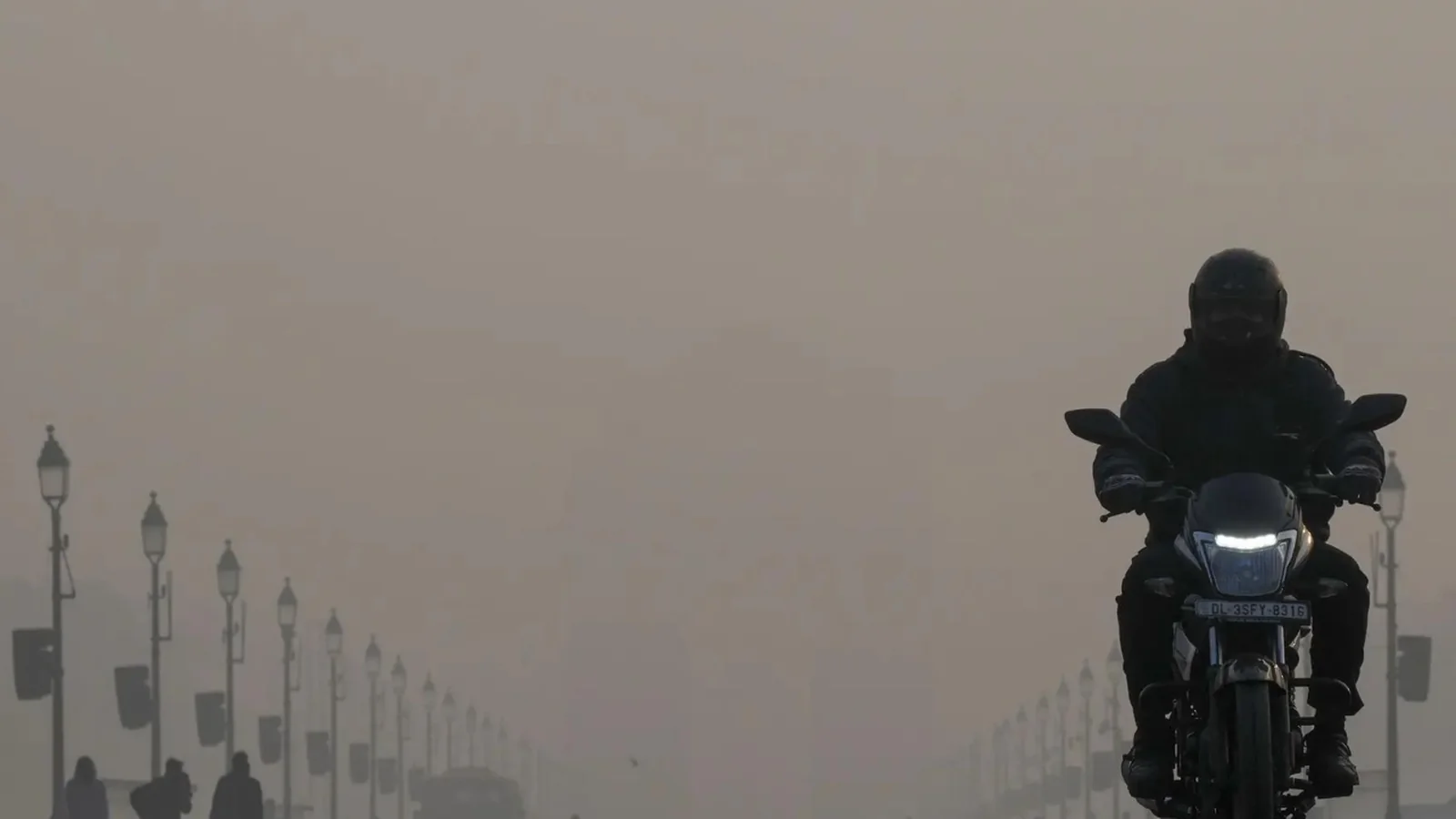
Delhi recorded its most polluted Diwali eve in the past ten years, with the air quality index hovering at 369 in the very poor category on Saturday. The reading was a little better than the previous day, but not enough to spare the city the unwanted record.
The worst polluted pre-Diwali day in the record was in 2016, when the index hit 404 on October 29. The pollution control board started measuring the air quality index in 2015, and the figures since then show how bad the days around Diwali have become.
The index fell from 382 on Friday to 369 on Saturday because of stronger winds, but experts said the relief was small. With pollution predicted to spike further from Sunday, they said weather conditions had also lined up to make Monday the most polluted day immediately after Diwali in several years.
Data from the Central Pollution Control Board shows the day before Diwali at 296 in 2025, 307 in 2024, 220 in 2023, 259 in 2022, 314 in 2021, 339 in 2020, 287 in 2019, 338 in 2018 and 302 in 2017. The 2026 figure of 369 stands above all of them.
Severe air likely on Monday
Experts said the city air was likely to worsen into the severe range, above 400 on a scale of 500, because of high emissions from local and regional sources, extra emissions from firecrackers and stubble burning, and calm winds. In all likelihood, November 9 could emerge as the most polluted post-Diwali day in several years.
Gufran Beig, founder of the System of Air Quality and Weather Forecasting and Research and chair professor at the National Institute of Advanced Studies, said delayed stubble burning could push the peak farm-fire period into the second week of November. The impact could be particularly noticeable around midnight on November 8 and during the early hours of November 9.
Satellite data showed a sharp rise in farm fires, with a 5.5 times rise in INSAT-3DS fire pixels and a 1.7 times rise in NASA NOAA-20 fires from November 1 to November 7. The fires add smoke to air that is already loaded with dust and vehicle exhaust.
At 4 pm on Saturday, IIT-Delhi was the most polluted monitoring station in the city, with an index of 452. Eighteen of the city’s monitoring stations had recorded severe air quality earlier in the week.
Green crackers only, in two slots
The Supreme Court has allowed only green crackers to be burst on November 7 and 8, during two slots: 6 am to 7 am and 8 pm to 10 pm. Reports from residents’ groups said the norms were being flouted in several places, with little checking on the ground.
The graded response action plan’s Stage III curbs were reimposed across Delhi-NCR as air quality worsened ahead of Diwali. The curbs restrict construction work and the use of older diesel vehicles, among other measures, and schools were watching whether classes would shift online.
Delhi’s air has stayed in the very poor category for four days in a row, according to the pollution control board. On Thursday the index was 369, only a few points better than Wednesday’s 377, and on Tuesday it settled at 350.
What the forecast says
The Air Quality Early Warning System has forecast that Delhi’s air quality could remain in the severe to very poor categories over the next six days. Its forecast said the ventilation index over Delhi was expected to fall to 2,500 square metres per second on November 8, which means pollutants disperse slowly.
For residents, the advice remains the same as in past years: stay indoors during the worst hours, avoid morning walks on the most polluted days, and keep windows shut when the smoke is thick. Hospitals usually see a rise in patients with breathing trouble in the days after Diwali.
The festival itself will be watched closely this year, because the combination of firecrackers, farm fires and still air could push the city past its worst post-Diwali readings. The coming days will show whether the green cracker rule and the Stage III curbs made any difference.