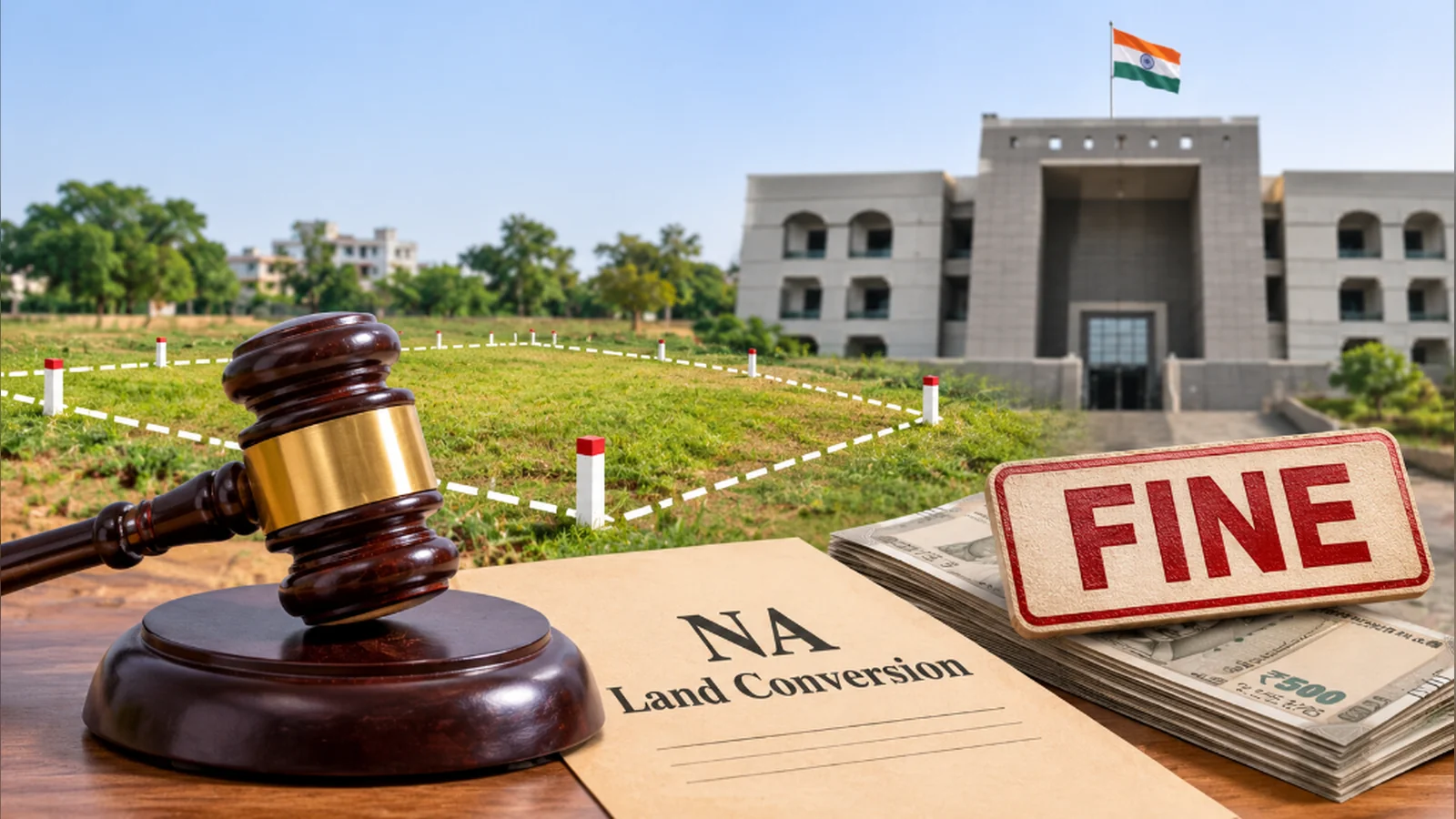
Gujarat High Court fined the Ahmedabad Collector Rs 1 lakh personally for repeatedly defying its directives over an NA land conversion application. Justice Moksha K. Thakkar said the Collector acted as if possessing superpower authority.
The Rs 1 lakh must be paid from the Collector's salary and deposited with the High Court registry within one month, to compensate applicant Bhumikaben for persistent litigation harassment, and will be handed to her. If unpaid, state authorities must deduct it from his salary.
The application and the first rejection
Bhumikaben applied on 19 December 2024 under Section 65 of the Gujarat Land Revenue Code, 1879, for NA land conversion. The Collector rejected it on 11 February 2025, citing past transactions, tenancy Section 63 and farmer status.
The High Court set that rejection aside and directed a fresh review of the application, expecting the Collector to reconsider it on the court's directions.
A second rejection on the same grounds
She reapplied in April 2026. The Collector rejected it again on 6 August 2026 on the same grounds, citing a claimed pending Letters Patent Appeal.
The state's lawyer conceded before the court that no such appeal had ever been filed. The court found the Collector had repeated the same rejection despite its earlier direction, and likened the conduct to contempt of court.
A personal fine
The court imposed the Rs 1 lakh fine on the Collector personally, to be paid from his salary, rather than from public funds. The money will go to Bhumikaben, as compensation for the persistent litigation harassment she faced.
The order makes clear that the fine is a personal consequence for defying the court's directives, not a cost to be borne by the state.
A message on following court orders
The case is a reminder that court directives must be followed, and that repeating a rejected decision on the same grounds, while citing an appeal that was never filed, can draw a personal penalty.
Whether the Collector pays within the month, or the amount is deducted from his salary, the order closes a long-running dispute over a single land conversion application.