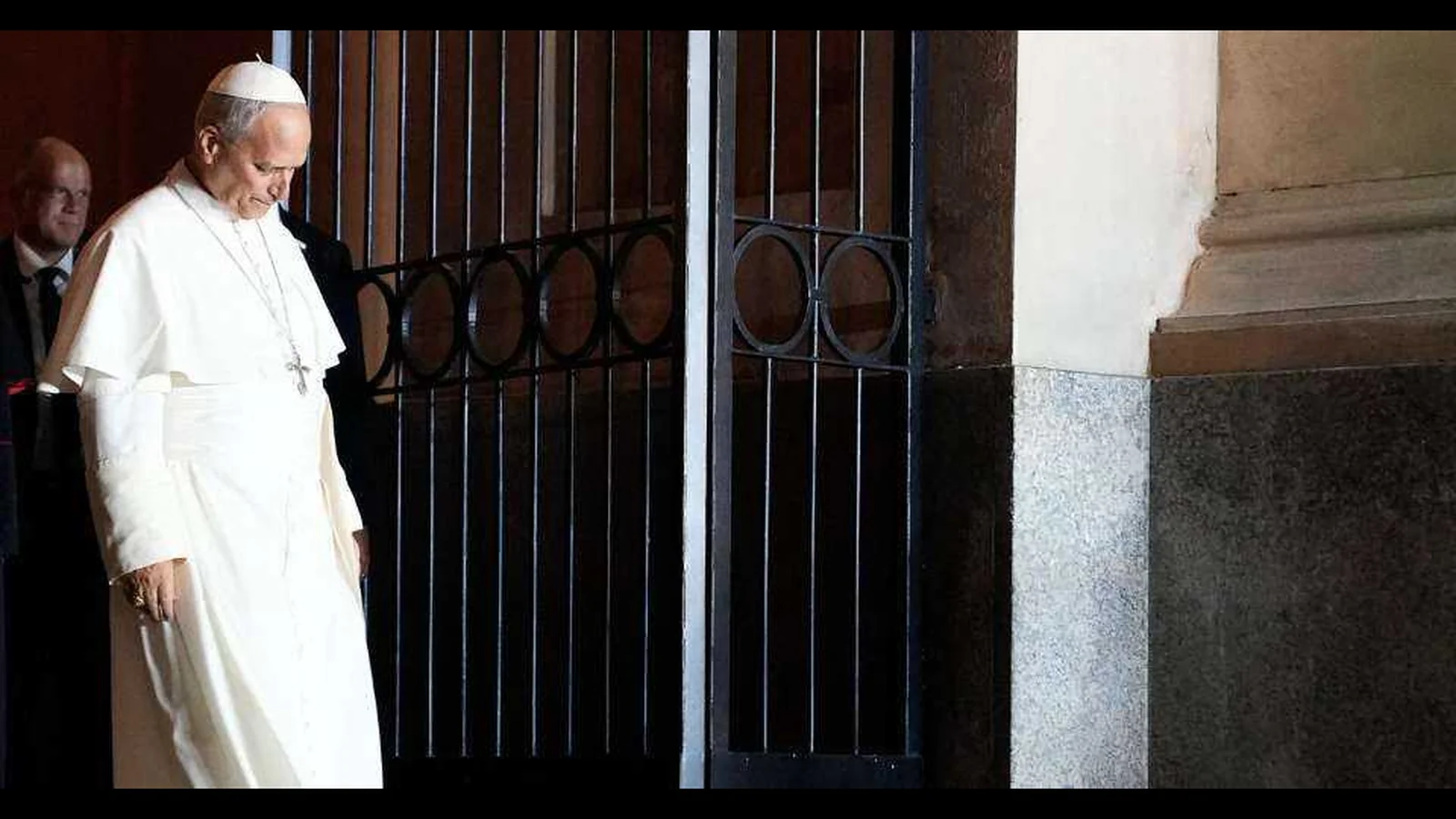
Pope Leo XIV arrived in Uruguay on the afternoon of November 6, telling journalists aboard his 13-hour transatlantic flight from Rome that he was convinced that this trip had to go forward, following lung cancer surgery a little more than three weeks earlier.
The 71-year-old pope appeared energetic as he interacted with journalists aboard the plane at the start of his 12-day journey to Uruguay, Argentina and Peru, scheduled for November 6 to 17. The trip is his first visit to Latin America since his election and brings him back to a region that shaped his ministry as an Augustinian missionary priest and bishop in Peru.
The pope is making the trip just 24 days after undergoing a lobectomy surgery for a localised lung adenocarcinoma on October 13. During the surgery, doctors removed the lower lobe of the pope's right lung. His doctors confirmed the following week that he did not require further oncological treatment after surgery.
A packed three days in Uruguay
On November 7, the pope flew to the city of Paysandu, a cultural and economic hub on Uruguay's border with Argentina, to celebrate Mass. About 30,000 pilgrims were expected at the Mass in a park in the western city.
He then returned to Montevideo to visit Casavalle, the neighbourhood with the highest homicide rate in the capital, as well as the Catholic University and the Centenario Stadium, where he presided over a prayer vigil for 60,000 people. His visit to Uruguay is the first to the country by a pope in nearly four decades, since 1988.
On his final day in Uruguay, the pope will celebrate the country's patroness, Our Lady of the Thirty-Three, on the morning of November 8. The date coincides with the annual pilgrimage to the national Marian shrine, which is closely tied to the country's independence movement. The feast commemorates the Virgin of the Thirty-Three, a small wooden icon of the Virgin Mary that is intricately connected to Uruguay's independence.
On to Argentina, then home to Peru
The pope will then fly to Argentina, where he will visit from November 8 to 11. Argentina is the homeland of his predecessor, Pope Francis, and the visit carries its own weight for a pope who has spent much of his life in South America.
The 12-day apostolic journey is the longest and farthest trip of his pontificate, and one of the most intense papal trips in decades. He will meet political leaders, prisoners and the poor, as well as old friends, across the three countries.
The highlight of the tour will be Peru, where he spent nearly two decades as a missionary and which he has referred to as one of his many homes. The trip will also bring him to neighbouring Argentina before he returns to Peru, the country where he served as a missionary priest and bishop for two decades.
In fairly good shape
The pope told reporters on the plane carrying him across the Atlantic that he was in fairly good shape. Vatican officials said doctors were confident about his ability to travel after the surgery, and noted that he had passed the 14-day convalescence period required by doctors after his October 13 operation.
Uruguay is the region's least Catholic and most secular country, which makes the visit a test of a different kind for the pope. The crowds in Montevideo and Paysandu, and the 60,000 people at the stadium vigil, suggest the visit has drawn the country out in numbers not seen for a papal visit in almost forty years.