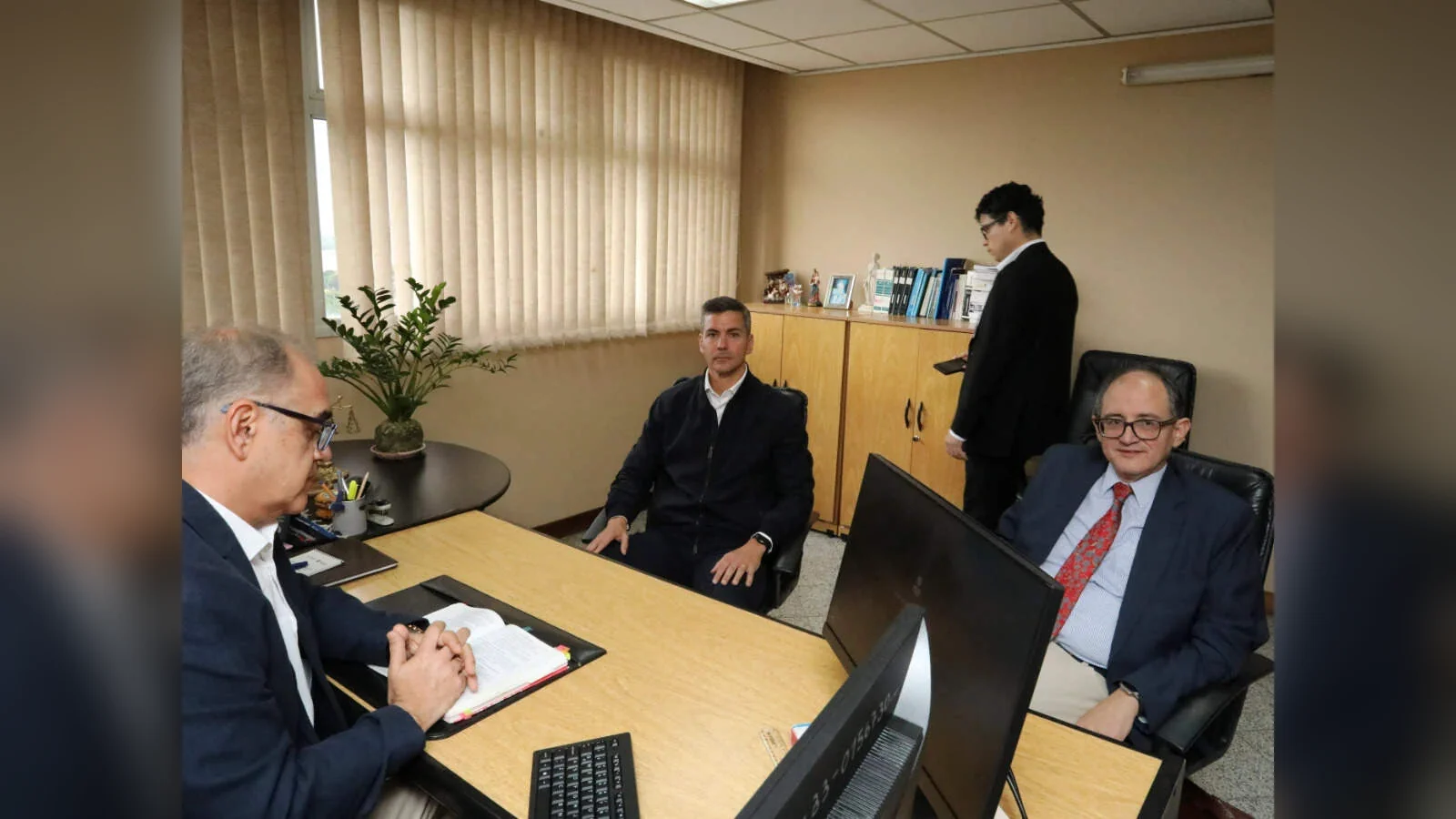
Paraguay's former president was taken to the attorney general's office for questioning on Saturday, just hours after being ousted by Congress over the collapse of a major bank. The Central Bank said it was working to compensate hundreds of thousands of people who were locked out of their accounts this week.
Paraguayan prosecutors on Friday ordered the arrest of Pena and former Central Bank chief Carlos Carvallo as part of a criminal investigation into alleged breach of trust and other offences tied to the collapse of Ueno Bank. Pena was transferred to a military base late Friday as hundreds of protesters gathered outside his home.
The arrest order was issued soon after the Senate removed Pena from office in a unanimous vote. The vote came just three days after regulators seized Ueno Bank, freezing nearly 3 million customers' access to their savings and triggering a political crisis. Pena was replaced by Vice President Pedro Alliana, who began naming a new Cabinet on Saturday.
Charged after three hours of questioning
Pena arrived at the attorney general's office under police escort on Saturday morning. He was grilled for around three hours over his links to Ueno Bank, a digital-first lender with which nearly half of Paraguay's population of 6.5 million have accounts.
Prosecutors charged him with breach of trust and administration for personal gain. A judge, Humberto Otazu, ordered him held in pretrial detention at a military facility, saying detention was necessary to ensure he remained in the country while the case proceeded. His lawyer, Ricardo Preda, said Pena was pleading not guilty.
Each of the two charges could carry a sentence of up to ten years in prison, prosecutor Nancy Salomon said. Otazu also ordered former central bank chief Carlos Carvallo held in pretrial detention after prosecutors charged him with breach of trust, producing false public documents and administration for personal gain.
What prosecutors allege
Prosecutors allege that Pena used his position as president to influence decisions by government agencies and state-owned entities to keep large amounts of public money deposited at Ueno, despite maintaining financial ties to the lender. An indictment states that between 2023 and 2026, Ueno Bank allegedly received deposits and loans from public and pension entities, and allegedly granted loans to companies linked to the bank's economic group in an irregular manner.
Pena, who was a shareholder in Ueno's holding company until March 2025, has denied wrongdoing and said the bank's problems were a regulatory matter. He had submitted his resignation on Thursday, but Congress did not accept it and pressed ahead with an impeachment trial instead, stripping him of the immunity he would have enjoyed had he stepped down.
The Senate voted unanimously to remove him, with all 44 senators present voting in favour. Pena is the second Paraguayan president ousted by impeachment since the end of General Alfredo Stroessner's 35-year dictatorship in 1989. Lawmakers accused him of using his political influence to steer hundreds of millions of dollars in public funds into Ueno while regulators overlooked risky insider lending.
Depositors wait for their money
The central bank said on Saturday that the equivalent of 160 million dollars had been paid out to nearly 1.2 million savers under the state deposit guarantee scheme. The bank's collapse left almost three million depositors, including pensioners, unable to reach their money, and protests broke out in Asuncion.
In a separate case against Ueno's executives, prosecutors have charged 27 people, including the bank's controlling shareholder, with crimes such as breach of trust and attempted fraud. Six bank directors are in pretrial detention.
Alliana, who was sworn in on Friday to serve out the term until August 2028, promised not to abandon the almost three million depositors affected by Ueno's demise. The removal of Pena, an ally of US President Donald Trump, marks the biggest political crisis in Paraguay in more than a decade. The allegations against Pena have not yet been established in court, and he has not been convicted of any offence.