The International Court of Justice (ICJ) has ruled that Myanmar committed genocide against its Rohingya Muslim minority during a military crackdown in 2017, in a landmark judgment delivered on Thursday, November 19. It is the first time the court has found a state responsible for committing genocide.
The judgment was read out over about three hours at the Peace Palace in The Hague by ICJ President Yuji Iwasawa. The ruling is final and cannot be appealed, though the court has very limited means of enforcing it.
The case was brought by The Gambia, a Muslim-majority West African country, in November 2019, with the backing of the Organisation of Islamic Cooperation. It argues that Myanmar bears state responsibility for genocide resulting from a 2017 military offensive that drove at least 730,000 Rohingya from Myanmar into Bangladesh.
What happened in 2017
The case centres on the Myanmar military's campaign in northern Rakhine State in August 2017. On August 25, 2017, members of the Arakan Rohingya Salvation Army attacked border posts in the region, and the Myanmar army responded with what it called clearance operations.
Survivors have recounted killings, mass rape and the burning of villages. A United Nations fact-finding mission concluded that the campaign included genocidal acts. Doctors Without Borders estimated that at least 6,700 Rohingya were killed in the first month alone.
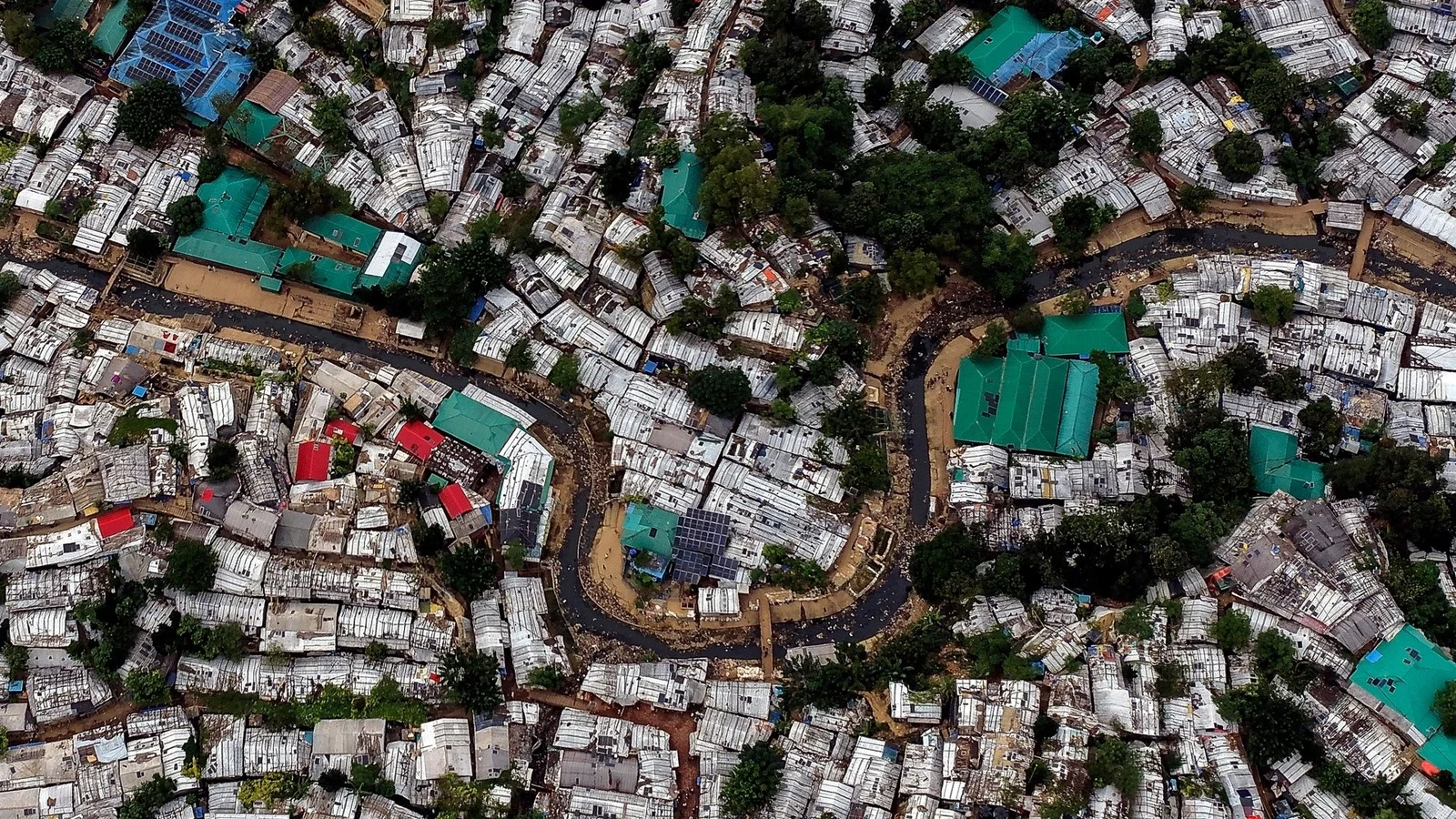
About 1.2 million Rohingya now live in the refugee settlement at Cox's Bazar in Bangladesh, where many are following the judgment. Roughly 550,000 remain in Myanmar, with restrictions on their movement, healthcare and livelihoods.
What the court decided
Under the 1948 Genocide Convention, genocide requires proof of the specific intent to destroy, in whole or in part, a national, ethnic, racial or religious group. The court found that the only reasonable inference from the evidence was that Myanmar's forces acted with that intent, against a substantial part of the Rohingya group.
Judge Iwasawa said the court found that Myanmar's security forces killed thousands of Rohingya civilians, about 10,000 according to the evidence cited by the court, perpetrated widespread acts of sexual violence and extreme violence against children, and attacked Rohingya as they fled.
Myanmar had denied genocide and said its forces responded legitimately to attacks by armed groups. It argued there is no direct evidence of an intent to destroy the Rohingya. The court rejected that argument.
The ruling is the first time the ICJ has found a state responsible for committing genocide. In 2007, it found that Serbia had failed to prevent the 1995 Srebrenica massacre, in which more than 8,000 Muslim men and boys were killed, but ruled that Serbia had not itself committed genocide. It is only the fourth time since the Holocaust that an international court has ruled the genocide threshold was met.
In January 2020, the court issued provisional measures ordering Myanmar to take all measures in its power to prevent genocidal acts and preserve evidence. Eleven states, among them the United Kingdom, France, Germany and Canada, were authorised to intervene in the proceedings.
What happens after the ruling
The court ordered Myanmar to investigate suspected perpetrators and prosecute them if warranted, to pay compensation to Rohingya victims in an amount to be determined later by the court, and to allow the safe return of the Rohingya and the reunification of families. If Myanmar ignores the ruling, The Gambia could ask the UN Security Council to act.
The judgment could also set precedents for other cases, including South Africa's case accusing Israel of genocide in Gaza. The ICJ settles disputes between states, so it can find Myanmar responsible but cannot try individuals, which is the duty of the International Criminal Court.