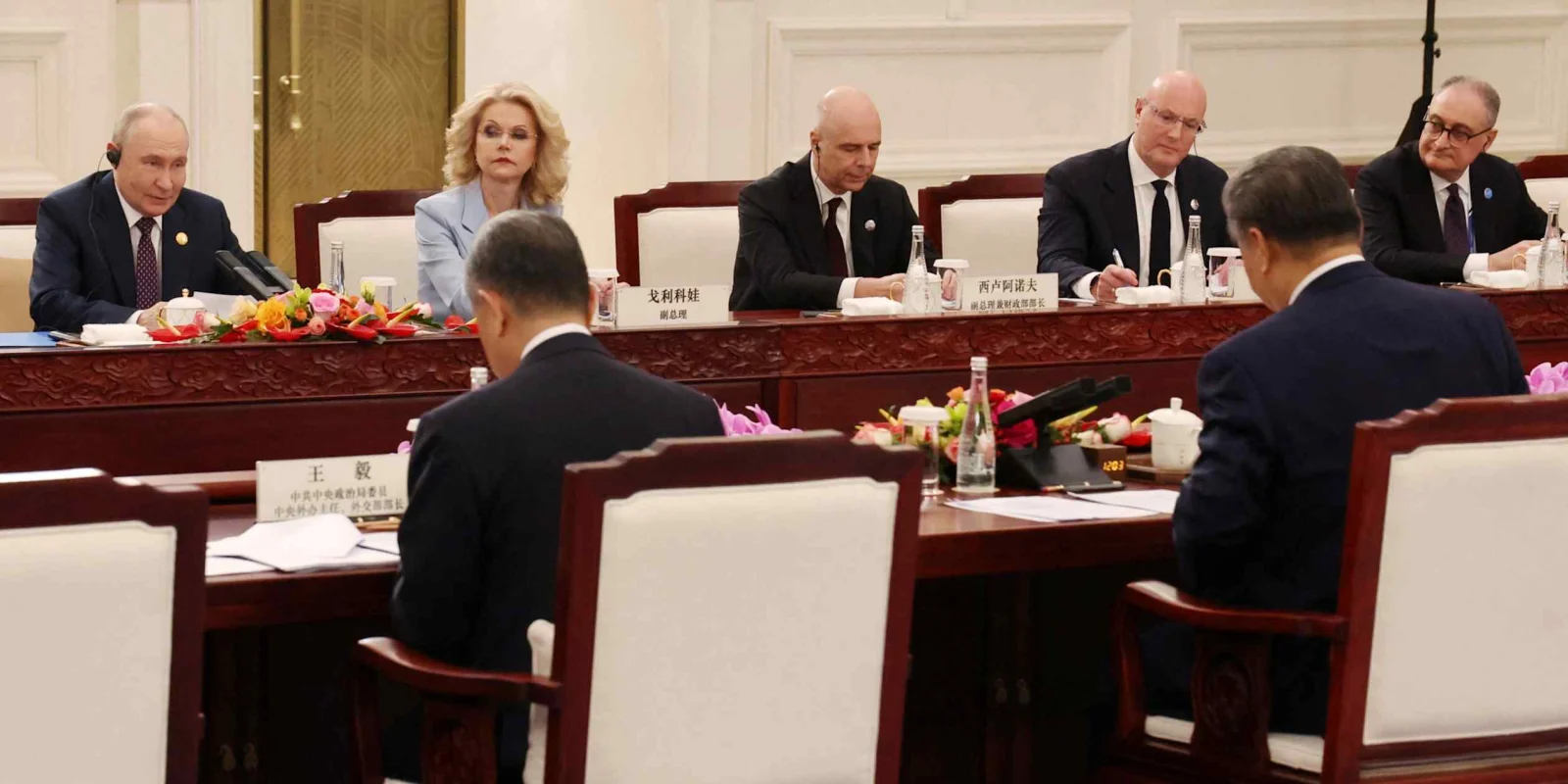
Chinese President Xi Jinping and Russian President Vladimir Putin met in Shenzhen around noon on Wednesday, sitting down together hours before a historic trilateral summit with US President Donald Trump that is due to take place on Thursday.
The meeting was the fifth between the two leaders this year, including one held virtually. Xi pledged to stand up against trade protectionism, while Putin criticised Western sanctions, describing those imposing them as "former hegemons", and said he expected "big benefit" from the trilateral meeting on Thursday.
The agenda for the three-way talks is wide. The leaders are expected to discuss the war in Ukraine, the war involving Iran, nuclear arms control after the expiry of the last US-Russia nuclear treaty in February 2026, trade and artificial intelligence.
Putin's visit is his first in-person appearance at an APEC summit in nine years, since Da Nang in 2017. He arrived early on Wednesday aboard the Russian presidential aircraft, according to China's Xinhua news agency, and both he and Xi addressed the APEC CEO Summit.
Trump still in Manila
Trump was still in Manila on Wednesday, where he met Quad leaders on Tuesday, the first such meeting of his second term. He is said to be eyeing one-on-one talks with Putin and with North Korean leader Kim Jong Un while in Shenzhen.
The Shenzhen trilateral will be followed by a fourth meeting between Trump and Xi this year, at the G20 summit in Miami in December. Commentators have already drawn comparisons with the Yalta Conference of 1945, when the leaders of the United States, the Soviet Union and Britain redrew the map of post-war Europe.
For Beijing, the week is a showcase of its convening power. China is hosting the APEC summit in Shenzhen, and the back-to-back meetings with Putin and Trump put Xi at the centre of the week's diplomacy.
The trilateral format itself is unusual. Three-way summits between the leaders of the United States, China and Russia are rare, and Thursday's meeting comes at a moment when all three are locked in disputes over trade, technology and the wars in Ukraine and West Asia.