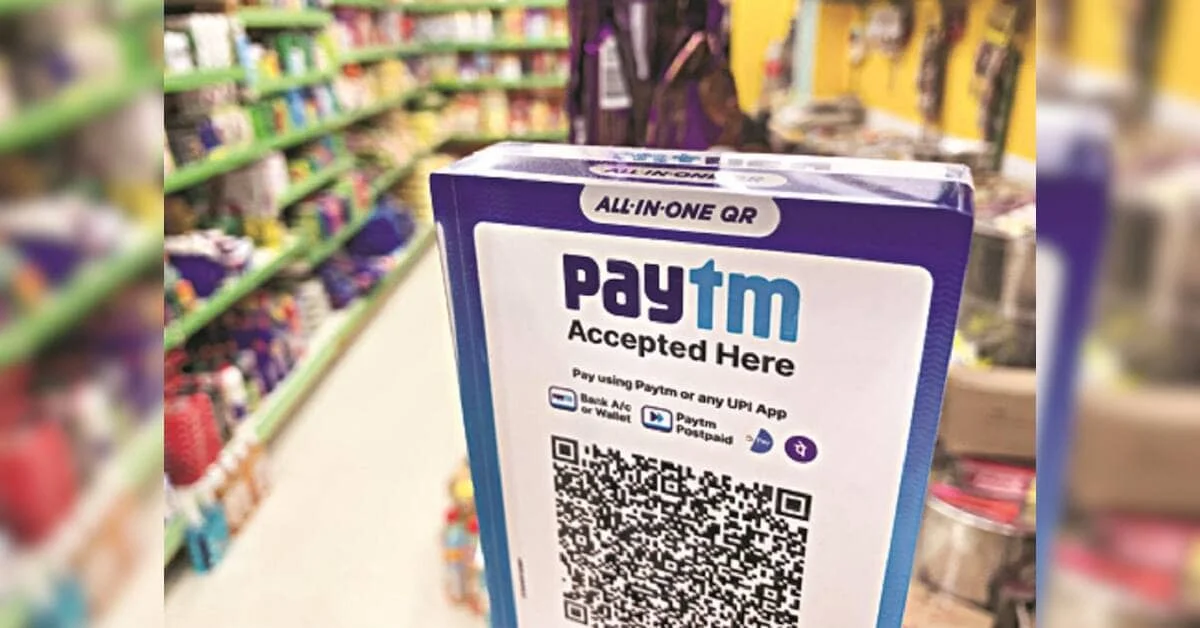
Shares of One97 Communications, the parent company of Paytm, fell nearly 9 per cent on Thursday, November 19, after reports said the proposed rollout of the Unified Payments Interface (UPI) merchant discount rate (MDR) could be delayed until after the 2027 Assembly elections. At around 11.15 am, Paytm shares were trading at Rs 1,716.50, down Rs 173.50 or 9.18 per cent during the session, with the selling pressure intensifying as trading progressed.
The sharp decline came after a report in The Financial Express said the government was wary of a potential backlash from merchants and trade associations against the introduction of transaction charges. The report said the government, the Reserve Bank of India (RBI) and the National Payments Corporation of India (NPCI) had yet to reach a consensus on the implementation timeline. The rollout could even be deferred until after the Uttar Pradesh Assembly elections if an agreement is not reached earlier, the report said, describing that as a worst-case scenario rather than a confirmed decision.
The weakness was not limited to Paytm. One MobiKwik Systems fell as much as 8.84 per cent to an intraday low of Rs 206.61, while Pine Labs declined up to 5.52 per cent to Rs 159.90. The proposed MDR framework was expected to open an additional revenue stream for digital payment companies, and the fresh uncertainty has weighed on investor sentiment across the sector.
What the proposed MDR framework would charge
Under the framework proposed by NPCI in September 2026, a merchant discount rate of 0.4 per cent would apply to eligible person-to-merchant UPI transactions above Rs 2,000, capped at Rs 300 per transaction. Transactions below Rs 2,000, person-to-person transfers and payments to small merchants would attract no MDR, and the charge would fall on merchants rather than customers. More than 95 per cent of person-to-merchant UPI transactions are expected to remain outside the framework.
The framework was initially scheduled to come into effect on October 15, 2026, but NPCI deferred it until after Diwali, with a revised date yet to be announced. In its September 2026 disclosure, Paytm had indicated that the introduction of MDR would generate incremental revenue from its merchant business, and in its second-quarter earnings release it said the framework could improve its overall payments processing margin by about 2.5 basis points. The delay has therefore pushed back expectations of an improvement in the company's payments economics.
Industry seeks a firm timeline
The prolonged uncertainty has prompted the payments industry to seek clarity from the government and NPCI. The Payments Council of India has made multiple representations to the finance ministry and NPCI, seeking a firm implementation timeline. The industry has also pointed out that government incentive payments for processing UPI and RuPay debit card transactions have remained outstanding for more than 18 months.
The matter has also reached the Supreme Court. On September 28, the court refused to grant an interim stay on the decision to introduce MDR on specified high-value person-to-merchant UPI transactions, while issuing notices to the Centre, the RBI, NPCI and the UPI and Services Steering Committee. Despite Thursday's decline, Paytm shares have risen more than 37 per cent so far in 2026, and global investment bank Jefferies raised its earnings estimates for the company on November 15 and kept a Buy call with a price target of Rs 2,300.