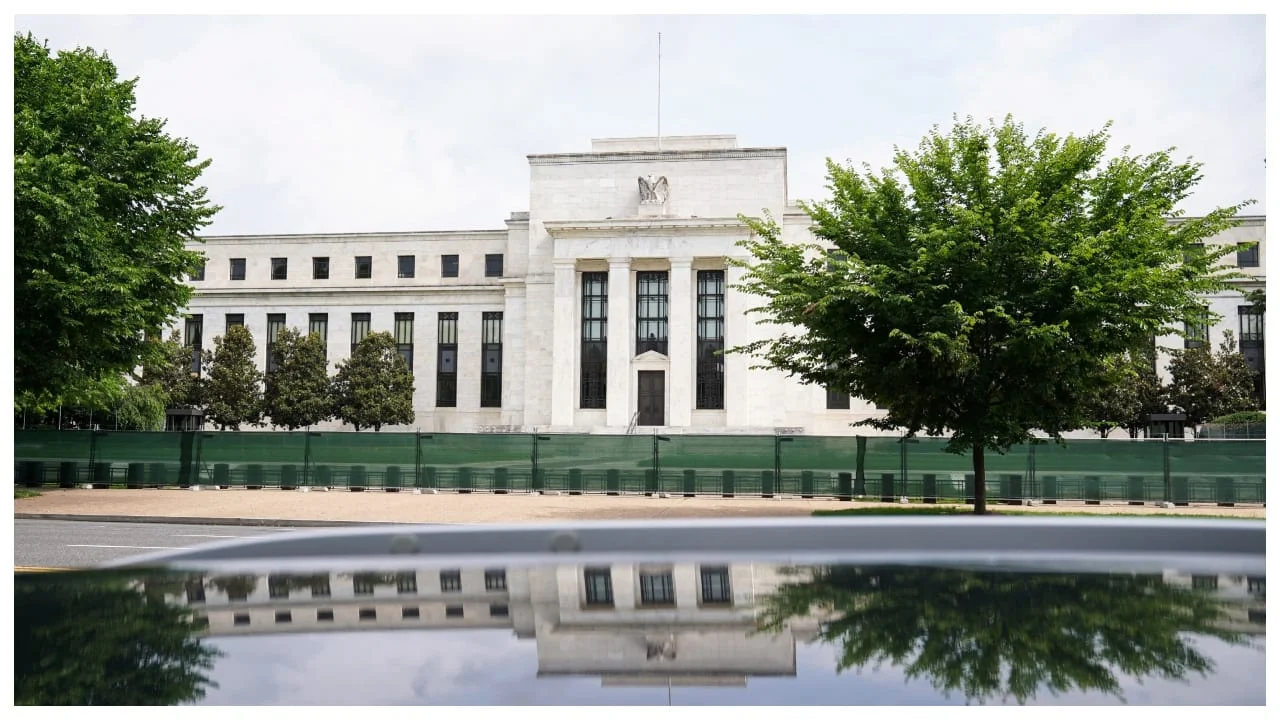
Almost all US Federal Reserve policymakers judged that further interest rate rises would likely be needed in the months ahead, minutes of the central bank's October meeting showed on Wednesday. The minutes said the rises would be needed to return inflation to the Fed's 2 per cent target in good time, and they put a December rate rise firmly on the table.
The Federal Open Market Committee held its benchmark rate steady at 3.75 to 4.00 per cent at its October 27-28 meeting, by a 10-2 vote. Two voting members, Governor Lisa Cook and Cleveland Fed President Beth Hammack, dissented in favour of an immediate 25-basis-point rise. The minutes showed the decision to hold was a close call for some of those who backed it.
A couple of participants said a rise of more than 25 basis points could be considered at the December meeting if incoming inflation data disappointed. Fed staff estimated that inflation measured by the personal consumption expenditures price index, the central bank's preferred gauge, rose to 3.6 per cent in the 12 months to September.
A bigger December move on the table
Fed Governor Christopher Waller pressed the case for a larger move in a television interview on Wednesday, the day the minutes were released. He said the central bank might need to "shock people" with a half-percentage-point increase at its December 8-9 meeting, or raise rates by 25 basis points and clearly signal another increase in January. Waller said inflation was spreading beyond energy-related price increases into services.
Not every official agrees a larger move is needed. New York Fed President John Williams dismissed the idea of a large increase earlier in the week, while San Francisco Fed President Mary Daly said further rises were needed but urged a measured approach. Fed Chair Kevin Warsh has said inflation remains "too high". The minutes also flagged the rapid buildout of artificial intelligence as a material source of inflation risk, and Warsh warned that weaker than expected returns from AI investment could trigger a broader economic slowdown.
What it means for Indian markets
The minutes weighed on Indian markets on Wednesday, with the Sensex falling 500.38 points to close at 82,031.81 and the Nifty dropping 159.45 points to 25,227.95 as investors braced for higher US rates. Both indices opened flat on Thursday. Traders now price in a December rise almost fully: CME Group's FedWatch tool put the chance of a quarter-point rise at 94.7 per cent after the minutes were published, with about 5.3 per cent assigned to a half-point move.
The November consumer price report is not due until December 10, the day after the Fed's meeting ends, so the October figures will be the final inflation reading officials have before they vote.