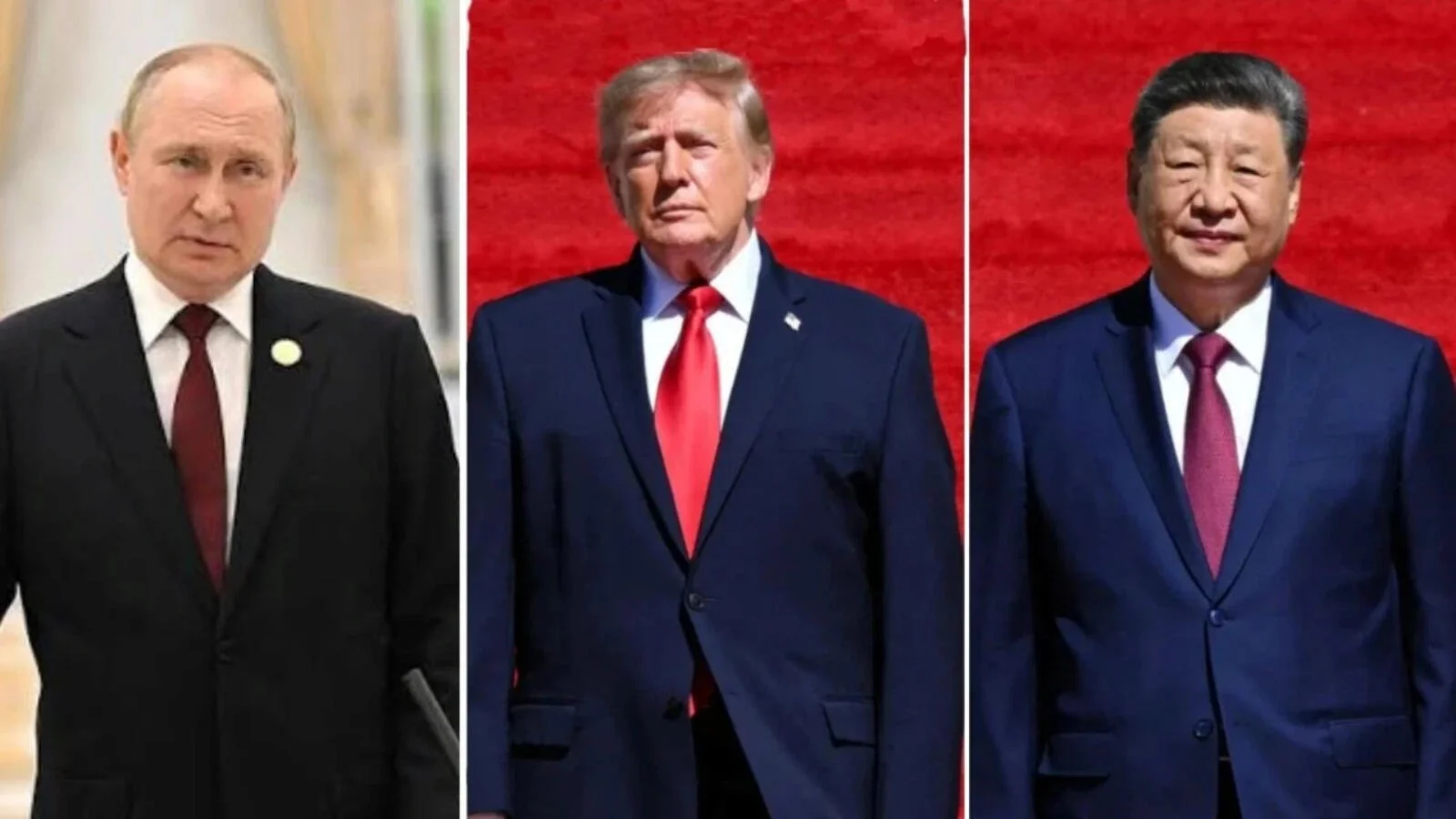
Donald Trump, Xi Jinping and Vladimir Putin will meet in Shenzhen on Thursday, November 19, for the first trilateral summit of the leaders of the United States, China and Russia. China's Foreign Ministry formally announced the meeting on Monday, November 16, describing it as a ground-breaking event. The three presidents have never sat down together in this format before.
The meeting takes place on the sidelines of the 33rd APEC Economic Leaders' Meeting, which runs in Shenzhen on November 18 and 19, with a CEO summit on November 17 and 18. APEC is a consensus-based forum of 21 economies focused on trade and investment, not a security body, and the trilateral is a separate session outside its formal programme. Putin and Xi are due to hold a working breakfast on November 18, and on November 19 Trump is scheduled for a bilateral meeting and working lunch with Xi, followed by the three-way session.
No agenda has been made public, and officials on all sides have given conflicting signals about what will be discussed. What is clear is that the meeting is unprecedented, and that it comes at a delicate moment for the war in Ukraine, nuclear arms control and the Iran conflict. US officials have told Reuters they do not expect any form of agreement to emerge from the meeting.
Why it is called Yalta 2.0
The label recalls the February 1945 conference at Yalta, at which Franklin Roosevelt, Winston Churchill and Joseph Stalin set out key parts of the post-war order. Yalta later became shorthand, particularly in Eastern Europe, for great powers settling the fate of smaller nations among themselves. The comparison has stuck because the Shenzhen meeting brings together the three leaders whose decisions now shape the wars in Ukraine and Iran, the future of nuclear arms control and the balance of power in Asia.
Analysts quoted by The Epoch Times say the summit may serve primarily as a diplomatic exercise, with each leader seeking political advantage while avoiding commitments that could undermine his interests. Trump is expected to push for a new nuclear arms control framework that includes China. Russia hopes to improve its international standing and advance negotiations to end the war in Ukraine on terms acceptable to Moscow. China, as host, may seek to tightly control the meeting's duration and public statements.
What is on the agenda
Nuclear arms control is expected to dominate. The New START treaty, the last remaining pact limiting the strategic nuclear arsenals of the United States and Russia, expired on February 5, 2026. Trump rejected a Russian offer to extend it by a year and demanded a new, improved and modernised deal that includes China. Beijing has shown little enthusiasm for trilateral nuclear limits, citing its smaller arsenal, though analysts estimate China's stockpile at more than 600 warheads now and say it could exceed 1,000 by 2030.
The Iran war is another likely subject. Trump said on November 8 that the topics would include trying to end the war in Iran, though China's Foreign Ministry declined to confirm that. Before departing for Asia, Trump told reporters: "At this three-way meeting we'll discuss denuclearization, the Iran war, trade, and my favorite topic, Ukraine." Artificial intelligence is also expected to be discussed, along with trade. The US is still not getting rare earths from China at the pace and level it wants, and a renewal of the trade truce beyond January 2027 is expected to be on the table.
Ukraine itself is the subject of conflicting signals. Washington has said the war will not come up at the trilateral, because the US is already engaged in mediation efforts with Kyiv and Moscow and China is not part of that track. Trump, however, has named Ukraine among the topics he intends to raise. Which account holds will only become clear once the meeting takes place.
What each leader wants from Shenzhen
Trump wants a nuclear framework that brings China inside the tent, progress on trade and rare earths, and a show of American leadership on the world stage. Xi would like to use the summit to demonstrate China's status as a major power, and would welcome a resolution to the Iran war, which has hurt China's trade and energy imports. He is reluctant to join any new nuclear treaty, and is content to let the Russia-Ukraine war drag on, bogging Washington down in that theatre.
Putin stands to gain the most from the photograph alone, analysts say, because the meeting puts him on equal footing with the leaders of the world's two largest powers despite Western sanctions and diplomatic isolation. He may also push for an end to the Ukraine war on terms favourable to Russia. Unlike Xi, he may not be averse to a new nuclear pact, which would cost Moscow little. For all three, the meeting is a chance to be seen shaping the global order, even if no agreement follows.