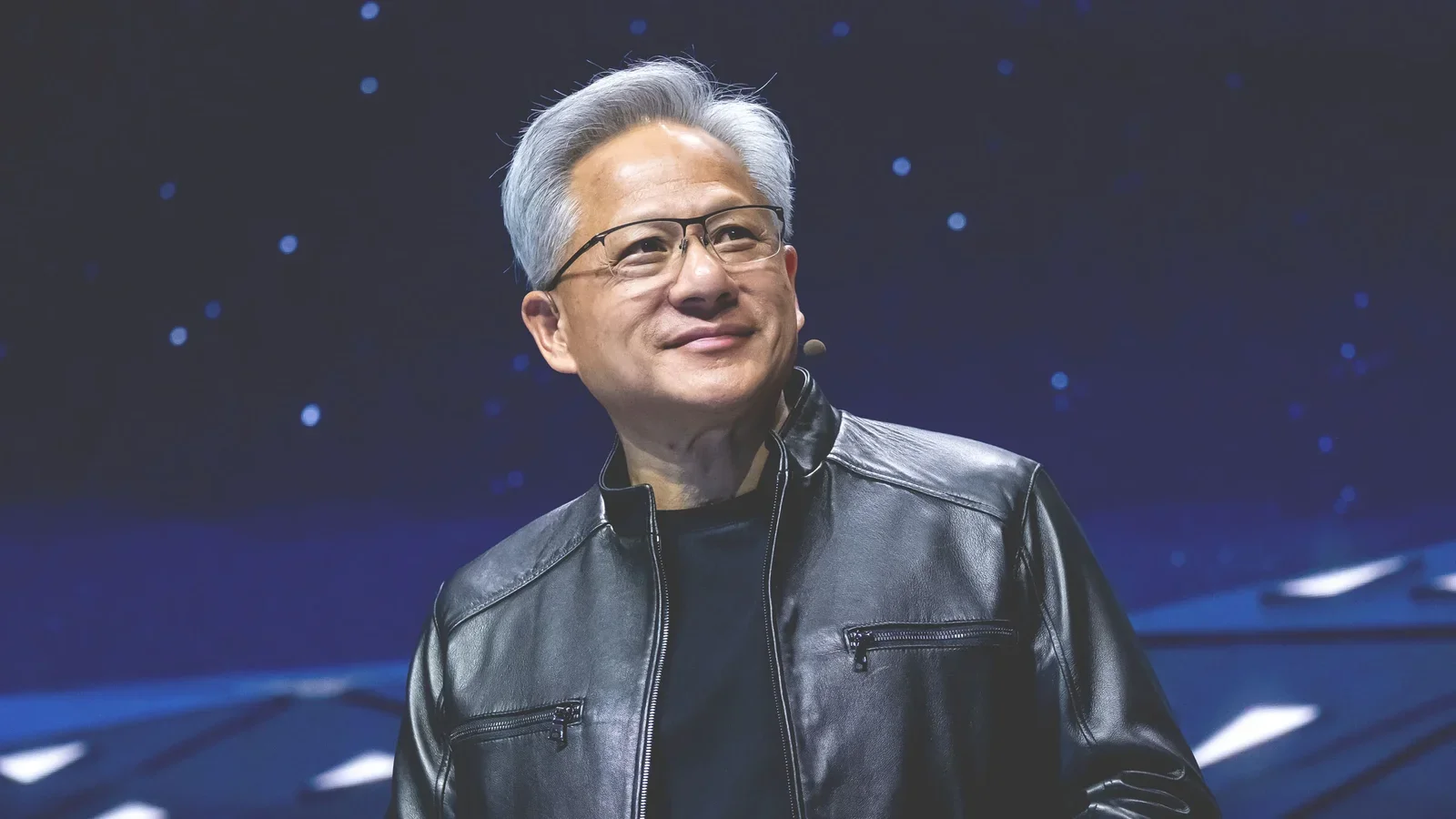
US President Donald Trump on Monday 9 November said he spoke to Nvidia chief executive Jensen Huang after a media report linked Huang to a businesswoman accused of passing information to China, and that Huang told him he had no idea the woman was a spy. Trump said he believes Huang, and he said the FBI is now looking into the issue. The remarks came at an impromptu White House briefing, and they put the president publicly behind one of his closest allies in Silicon Valley while two inquiries are open.
"I asked him that question, Did you have any idea that she was a spy? He said, I had no idea that she was a spy, and I really believe him," Trump told the White House briefing, according to reports of his remarks. "I know the FBI is looking into it," Trump said. "I think that he'll be in good shape," he added. Trump also called Huang a very honorable man and an amazing guy, and he said he called Huang earlier in the day to see how he was doing.
The allegation itself remains an allegation, and no charge has been announced. The FBI has not publicly announced an investigation or any charges, according to reporting that followed Trump's remarks. What Trump described was his understanding that the FBI is looking into the matter, in terms of something else, as he put it. The precise scope of what the FBI is examining has not been stated publicly.
The report behind the inquiry
Nvidia's board launched its own probe after the New York Times reported that Huang had a close relationship with a Chinese businesswoman whom US intelligence officials believe shared information with Beijing. The board said on Sunday that it was initiating an independent investigation in light of recent reporting that Huang has been the target of a foreign intelligence effort. The inquiry is to be overseen by outside counsel and a committee of independent directors, according to the board's statement.
The board said it has no reason to believe that either national security or Nvidia secrets were compromised, but it said the inquiry would examine all available information. The board also restated its confidence in Huang's leadership, saying Huang fully supports the review and has committed to cooperating with it. Huang, in a separate statement on Sunday, admitted to an extramarital affair and apologised to his wife, his children and Nvidia employees. He also pledged to cooperate fully with the investigation.
Reports identify the woman as Alice Huang, a Chinese businesswoman who is not related to Jensen Huang, and say US intelligence officials believed she had passed information to Beijing. People familiar with the matter told NBC News that the woman had been determined to be a Chinese spy, according to reports of that account. China has dismissed the spy plot claim as an unsubstantiated smear campaign, according to reports of the Chinese response. None of those claims has been tested in court, and this article treats them as reports and allegations, not as established facts.
Why the case matters for Nvidia
Nvidia is the world's most valuable chipmaker, and it sits at the centre of the global artificial intelligence industry. Its chips power much of the AI systems built by American technology companies, and Huang has become a regular presence in Washington as Nvidia has sought to sell advanced chips to the Chinese market. He is one of Trump's closest allies in Silicon Valley, and the relationship between the two dates to at least 2025, according to reports of their dealings.
Trump gave Huang the National Medal of Science last month, and he has repeatedly voiced support for the administration's agenda in the technology sector. On Monday, Trump said he wanted Huang to remain at the helm of the company, and he described Nvidia as one of the largest public companies in the world. Nvidia shares hit a seven month low on Monday, according to reports of the market reaction, as investors weighed the reports and the board inquiry.
Other prominent voices also backed Huang on Monday. Billionaire investor Bill Ackman and Tesla chief executive Elon Musk voiced support for the Nvidia chief after he admitted to being unfaithful to his wife, according to reports of their reactions. Ackman said Huang should not receive a free pass if the matter extended beyond a personal affair and involved a national security risk. The range of reactions shows the case is being read in two ways at once, as a personal matter and as a possible security question.
What is still unknown
Three questions remain open, and none of them can be answered from the statements made so far. The first is what the FBI is examining, since Trump described it only as something else and the FBI has not announced the matter publicly. The second is whether Nvidia's board review finds any security lapse, including whether any company information or national security material was compromised. The third is whether further detail emerges about the woman at the centre of the reports and what, if anything, she is alleged to have done.
Huang has said he loves his country and his company, and he has said he is committed to protecting Nvidia and supporting America's national security. Trump said he does not expect to raise the issue when he meets next week with Chinese President Xi Jinping, but he said Xi may ask him about the situation. The meeting is due at the Asia Pacific Economic Cooperation summit in Shenzhen, China. Until the FBI and the board say more, the verified facts are the report, the board inquiry, Huang's admission and apology, and Trump's public backing.