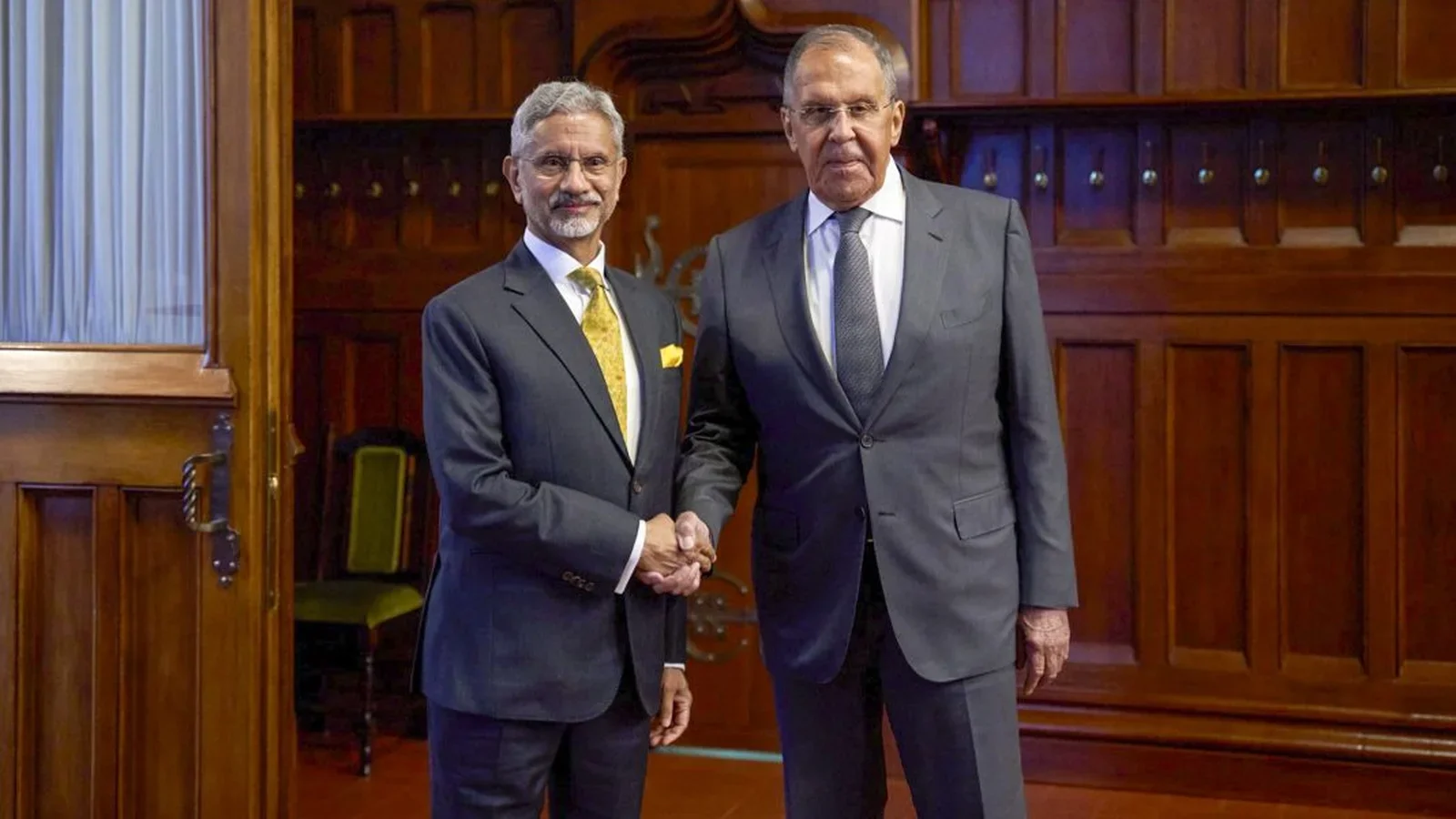
Prime Minister Narendra Modi spoke by phone with Ukrainian President Volodymyr Zelenskyy on 9 November, and hours later External Affairs Minister S. Jaishankar spoke by phone with Russian Foreign Minister Sergey Lavrov about the Ukraine conflict. The two calls took place on the same day, ahead of fresh talks involving Russian, Ukrainian and US officials.
Modi reaffirmed India's human-centric approach to the conflict and reiterated that the crisis must be resolved through dialogue and diplomacy, according to a statement issued by the Prime Minister's Office. He also conveyed India's readiness to contribute to all efforts aimed at a peaceful resolution.
In a post on X, Modi described the conversation as productive and said the two leaders had reviewed their wide-ranging bilateral cooperation and agreed to further strengthen India-Ukraine ties. He thanked Zelenskyy for sharing his perspectives on the conflict, its humanitarian aspects and various efforts to restore peace.
Zelenskyy said he had briefed Modi on the latest diplomatic developments and Ukraine's preparations for the upcoming negotiations in Abu Dhabi. He said Kyiv had consistently adopted a constructive approach towards ending the conflict and called on Moscow to demonstrate a similar willingness to de-escalate tensions.
Jaishankar speaks to Lavrov
Jaishankar said in a post on X: "Spoke this evening with Foreign Minister Sergey Lavrov of Russia. Our conversation focused on the Ukraine conflict and ongoing diplomatic initiatives." The conversation came hours after Modi's call with Zelenskyy.
Jaishankar had also met Lavrov in Atlanta on the sidelines of a G20-related event, where the two discussed the Ukraine conflict, according to the source report. The latest call continued that engagement with the Russian side.
The diplomatic outreach comes ahead of a fresh round of negotiations involving Russian, Ukrainian and US officials in Abu Dhabi, scheduled to begin on Tuesday 10 November. The two-day meeting is aimed at finding a way to end the war, which is approaching the five-year mark, according to the source report.
The upcoming talks follow earlier rounds of negotiations this year that failed to yield any visible progress towards ending the conflict, according to the source report. The negotiations also come after a localised truce was reached last month around the Russian-occupied city of Oleshky in southern Ukraine.
What Zelenskyy said after the call
Zelenskyy said it was important for India to identify the steps it could take and the diplomatic engagement it could pursue with other world leaders to help bring the war to an end. He said India was ready to mediate in establishing food corridors, and that Ukraine was counting on those efforts to continue.
Referring to Modi's earlier conversations with Russian President Vladimir Putin, Zelenskyy said the Indian Prime Minister had repeatedly conveyed that the time had come to end the war rather than prolong it. He said Modi had said more than once, including directly to the Russian leader, that now was the time to end the war, not to continue it.
During the conversation, Zelenskyy shared his perspective on recent developments surrounding the conflict. The two leaders also discussed measures to strengthen India-Ukraine bilateral cooperation across various sectors for the mutual benefit of their people, according to the source report.
The ceasefire around Oleshky, brokered with the assistance of US First Lady Melania Trump, reportedly facilitated the evacuation of some residents and the delivery of humanitarian supplies, according to the source report. That localised truce is one of the few recent developments cited ahead of the Abu Dhabi talks.