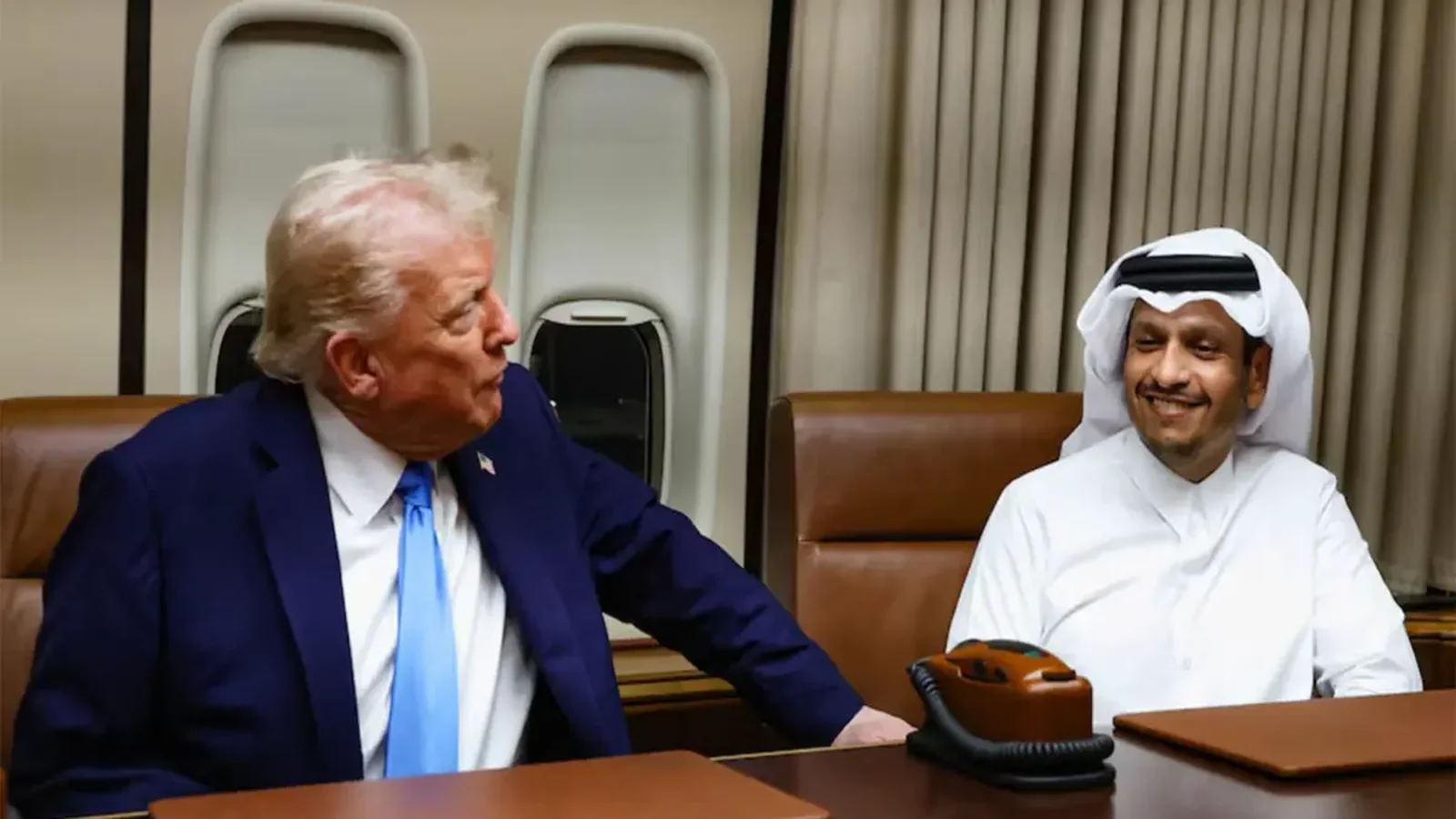
US President Donald Trump said Iran cannot have a nuclear weapon and called that position non negotiable, in a statement posted after talks with Qatari Prime Minister Sheikh Mohammed bin Abdulrahman bin Jassim Al Thani in Washington on Monday 9 November. The statement, published at 04:02 IST on Tuesday 10 November, is the newest remark in the diplomatic effort around Iran, and it follows the meeting rather than any new military action.
Trump described the conversation as excellent in a post on Truth Social, his social media platform. He said much was discussed with respect to Iran, and he named Qatar, Saudi Arabia, the United Arab Emirates, Bahrain and Kuwait, along with others, as preferring the status quo. The post is the direct source for the quote in this article, and the wording below follows what Trump wrote.
"I had an excellent conversation with Sheikh Mohammed bin Abdulrahman bin Jassim Al Thani, the Prime Minister of Qatar, wherein much was discussed with respect to the Islamic Republic of Iran," Trump wrote. "Most importantly, Qatar, Saudi Arabia, UAE, Bahrain, Kuwait, and others, would prefer the status quo, in other words, a continuation of the greatest Naval Blockade in History, and the new Operation Iron Gate, Therefore, Land and Sea. All have agreed that Iran cannot have a Nuclear Weapon, That is non-negotiable!"
The Qatari prime minister has acted as a mediator between Washington and Tehran, according to reports. He also serves as foreign minister, and he has carried messages between the two sides in earlier rounds of talks.
Gulf states and the status quo
Trump framed the Gulf position as support for keeping the current pressure in place rather than moving to a new military campaign at this stage. In his post, he described the status quo as a continuation of the naval blockade of Iran and a new operation he called Iron Gate, covering land and sea. He did not give further operational detail in the post itself.
Later on Monday, at an impromptu White House press conference, Trump said there was a good chance of a resolution ending the conflict with Iran and that Tehran was talking very politely, according to reporting of the briefing. He also said the United States would not launch a renewed military offensive for now, citing positive momentum toward ending the conflict. Those later remarks run in the same direction as the Truth Social post, toward talks rather than immediate escalation.
The distinction matters because the conflict itself is not new. The war began on 28 February 2026 with joint US and Israeli strikes, and it is now more than eight months old. Iranian state media reported that the United States struck Iran's Qeshm island overnight, and Iran has attacked tankers in the Gulf and the Strait of Hormuz this month, according to the gather file. The new development on 10 November is the statement after the Qatar talks, not a fresh strike.
What Iran has put forward
Iran has offered a new proposal through Qatari mediators, according to reports before the meeting. The proposal, as described in the gather file, involved an end to the US blockade of its ports, the lifting of some sanctions and a halt to airstrikes, in exchange for Tehran ending its blockade of the Strait of Hormuz. Iran has also set out seven demands, and reports say the United States is examining the proposal.
Tehran has long maintained that its nuclear programme is peaceful. According to the International Atomic Energy Agency, Iran has 440.9 kilograms of uranium enriched up to 60 percent purity, which is a short technical step from weapons grade levels of 90 percent. That figure was reported in coverage of the talks and it explains why the nuclear question sits at the centre of the negotiation.
Iranian Foreign Minister Abbas Araghchi warned on Sunday that Tehran would respond strongly if the United States resumed attacks, according to reports of his remarks. Iranian security council chief Mohsen Rezaei said the United States should stop what he called fake news about imaginary talks and that it was time to surrender to the seven conditions Iran has repeatedly set out. Neither statement amounts to a reply to Trump's latest post, and no response from Iran or from the Gulf governments named in the post was included in the reports checked for this article.
What happens next
The next step is the negotiation itself, and the signals from Washington are mixed. Trump said on Sunday that fresh military strikes against Iran remained highly unlikely if negotiations yielded a strong agreement, while also saying Washington had identified additional targets in Iran should military action resume. US Secretary of State Marco Rubio said on Sunday that negotiations with Iran had not made progress and described Iran's demands as unacceptable and unrealistic.
Qatar remains the central channel between the two sides, and the Qatari prime minister's visit to Tehran last week and his meetings in Washington show that channel is active. The question now is whether the Gulf backed status quo Trump described can hold long enough for a deal to take shape, and whether Tehran accepts the terms on offer. For now, the verified news is the statement itself, the meeting behind it, and Trump's later comment that a deal has a good chance.