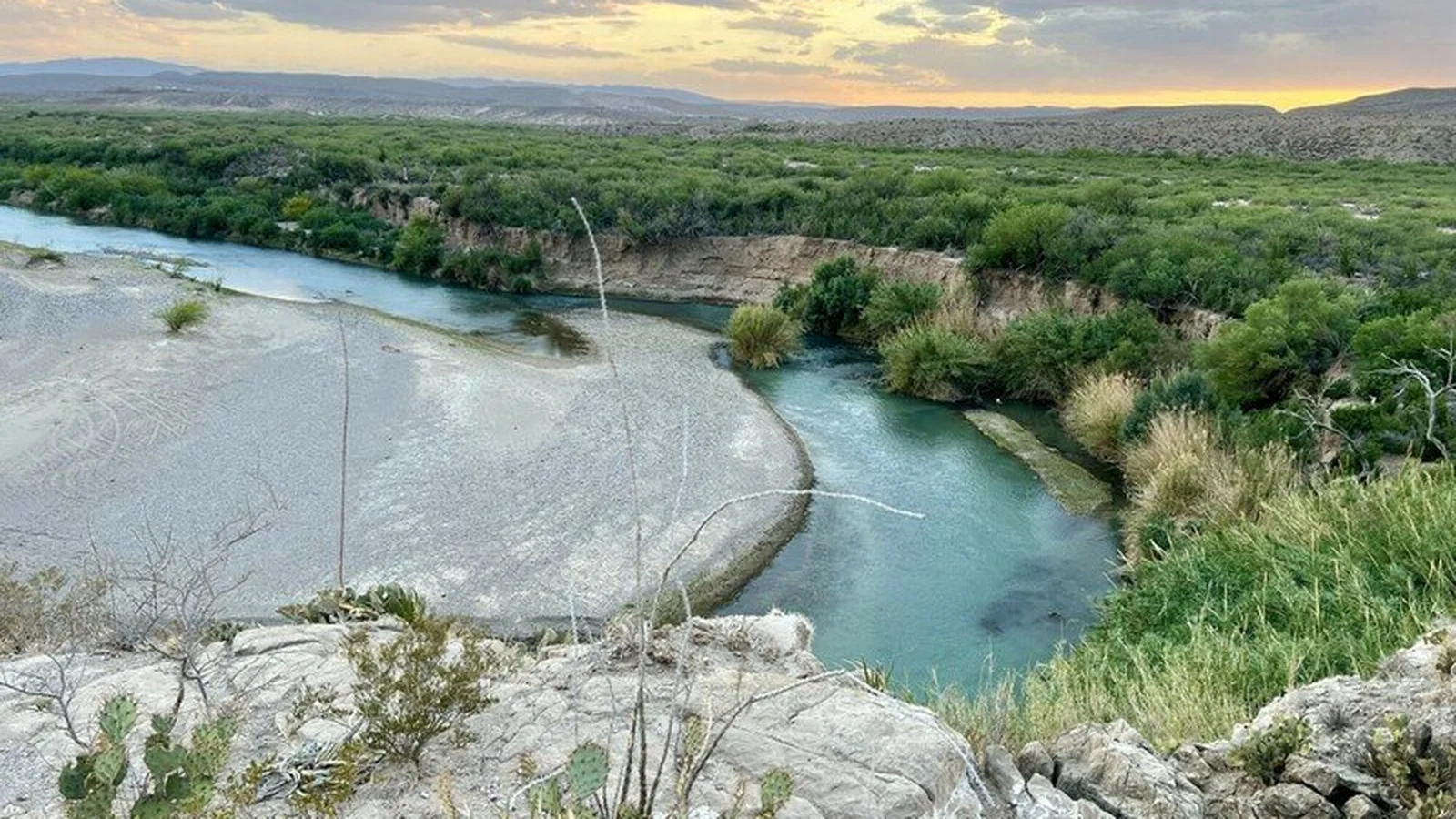
The Supreme Court gave President Donald Trump's administration the green light on Monday to proceed with construction of barriers along the US-Mexico border in a remote region of West Texas that includes Big Bend National Park. The court granted the administration's emergency request to lift a federal judge's order that had halted the work while a lawsuit against the project plays out.
What the Supreme Court decided
The court decided the case in an unsigned opinion. It paused the lower court ruling that had temporarily blocked the work, so construction can resume while the challenge is litigated. Justice Ketanji Brown Jackson, one of the court's three liberals, was the only justice to publicly dissent, and she did not explain her reasoning. The court said Congress had expressed a "clear preference for expeditious border construction", which outweighs "any aesthetic, recreational, and environmental harm", according to USA Today. The challengers had argued that construction in the Big Bend sector would diminish their ability to use and enjoy the area.
In October, US District Judge Kathleen Cardone in El Paso blocked the administration's project. She found that the waivers used to speed up construction lacked clear congressional authorisation and violated the major questions doctrine, which requires explicit congressional approval for actions with vast economic and political consequences. Cardone also said a temporary halt was needed while the legal battle continues, because construction could result in the permanent loss of protected wilderness that benefits tourism, recreation, farming, ranching, spirituality, aesthetic sensibilities and education. The Supreme Court's order suspends that injunction while the lawsuit proceeds. It is not a final ruling on the legality of the waivers.
Who brought the lawsuit
The lawsuit was brought by the Center for Biological Diversity, a Big Bend-area river guide and a group seeking to preserve a historic church in Ruidosa, Texas. The group, Friends of the Ruidosa Church, says the church's fragile adobe structure is threatened by the border construction. The plaintiffs challenged a series of waivers issued by the US Department of Homeland Security to expedite construction of roads and barriers in the Big Bend region, avoiding the application of a variety of environmental and conservation laws. The Center for Biological Diversity said the waivers marked the first time in US history that the federal government swept aside a broad slate of environmental laws, including the Endangered Species Act, the National Wild and Scenic Rivers Act and the National Park Service Organic Act, inside a national park.
The waivers were issued under a 1996 federal law aimed at facilitating barrier construction in areas of high illegal crossings at the southern border. Homeland Security Secretary Markwayne Mullin and his predecessor Kristi Noem, both Trump appointees, issued the waivers between February and July. Noem waived environmental and other laws for about 164 miles in February. Mullin issued a second waiver in May covering roads and about 17 miles of noncontiguous vehicle barrier inside Big Bend National Park, and a third in July covering about 160 miles in the Big Bend and Del Rio sectors. The administration is attempting to speed construction of more than 300 miles of border barrier and roads in the region. Five construction contracts have been awarded, and the government says the work stoppage is costing more than 460,000 dollars a day in suspension costs.
What will be built in the park
The administration said most of the construction in the Big Bend sector, spanning more than 300 miles, will take place on privately owned land. Big Bend National Park would get a 17-mile noncontiguous vehicle barrier system, but not the kind of 30-foot pedestrian barrier planned for other areas. The Big Bend region spans 517 miles, more than a quarter of the entire US-Mexico border, but the rugged area has the lowest number of apprehensions of any Southwest border sector, according to Judge Cardone. The government says more than 89,000 people were apprehended trying to cross illegally in the Big Bend sector between fiscal 2021 and 2025. In August, the administration paused construction in Big Bend after the project drew bipartisan criticism over its potential impact on the park's landscape and wildlife.
Trump has long touted building or reinforcing barriers along the US-Mexico border as a signature part of his sweeping restrictions on immigration, according to Reuters. The Big Bend decision is a win for that agenda, letting the administration move ahead on one of its longstanding priorities while the courts weigh the underlying challenge. The Supreme Court has used the major questions doctrine to stymie some of former President Joe Biden's key executive actions, but in this case the court sided with the administration's reading of the 1996 statute.
What happens next in court
The lawsuit will continue in the lower courts, and the final question, whether the waivers were lawful, is still open. The Supreme Court's order only decides that construction can proceed in the meantime. Environmental groups and the church preservation group will keep pressing their case, and the administration will keep building while they do. The outcome will shape how far the government can go in waiving environmental laws for border construction, not just in Texas but along the whole southern border.