In an opinion piece published in The Hindu on Tuesday, H.E. Abdulla Balalaa, the UAE Assistant Minister of Foreign Affairs for Energy and Sustainability, argues that the road to a disease-free world goes through water. Vaccines alone, he writes, will not finish the job on polio. What follows is his argument, as set out in the piece.
The global effort to eradicate polio has been one of the greatest success stories of public health, Balalaa writes. Since 1988, cases of wild poliovirus have fallen by more than 99 per cent, through vaccination, surveillance and community outreach. But as a marathon runner might know, the last mile is often the hardest, requiring tenacity and unwavering self-belief.
Polio can spread through contaminated water, which makes safe water crucial to preventing transmission. To make progress permanent, Balalaa argues, we must understand that health and water are integral to the equation, and think beyond vaccines about the systems that may inadvertently enable transmission. One of those critical systems is water.
The scale of the water gap
According to the World Health Organization and UNICEF, in 2024, 2.1 billion people lacked safely managed drinking water and 3.4 billion lacked safely managed sanitation. More alarmingly, Balalaa writes, no access to safe drinking water, sanitation and hygiene contributed to at least 1.4 million preventable deaths in 2019.
This is where water presents one of the greatest opportunities to bolster global health, in his argument. The gap is largest among the poorest communities, and 354 million people still practise open defecation while 106 million drink surface water, according to the WHO and UNICEF Joint Monitoring Programme.
Water systems as health systems
We need to regard water infrastructure as preventive health infrastructure, Balalaa argues. Clean water can prevent disease. Safe sanitation can break the chain of transmission. Wastewater systems can help us identify pathogen circulation. By studying the presence of pathogens in wastewater, the spread of disease can be more closely tracked, and these mechanisms enable states to evolve from responding to outbreaks to anticipating them.
Wastewater surveillance has become an important tool in the fight against polio, because the virus can be detected in wastewater even when no case of paralysis is reported. In Abu Dhabi, AI-enabled wastewater surveillance serves as an early detection system, able to identify potential public health risks and inform early intervention. In 2025, the European Commission unveiled the European Wastewater Surveillance Dashboard, a tool designed to track movements of diseases through wastewater monitoring and analysis.
The last mile, and the UN Water Conference
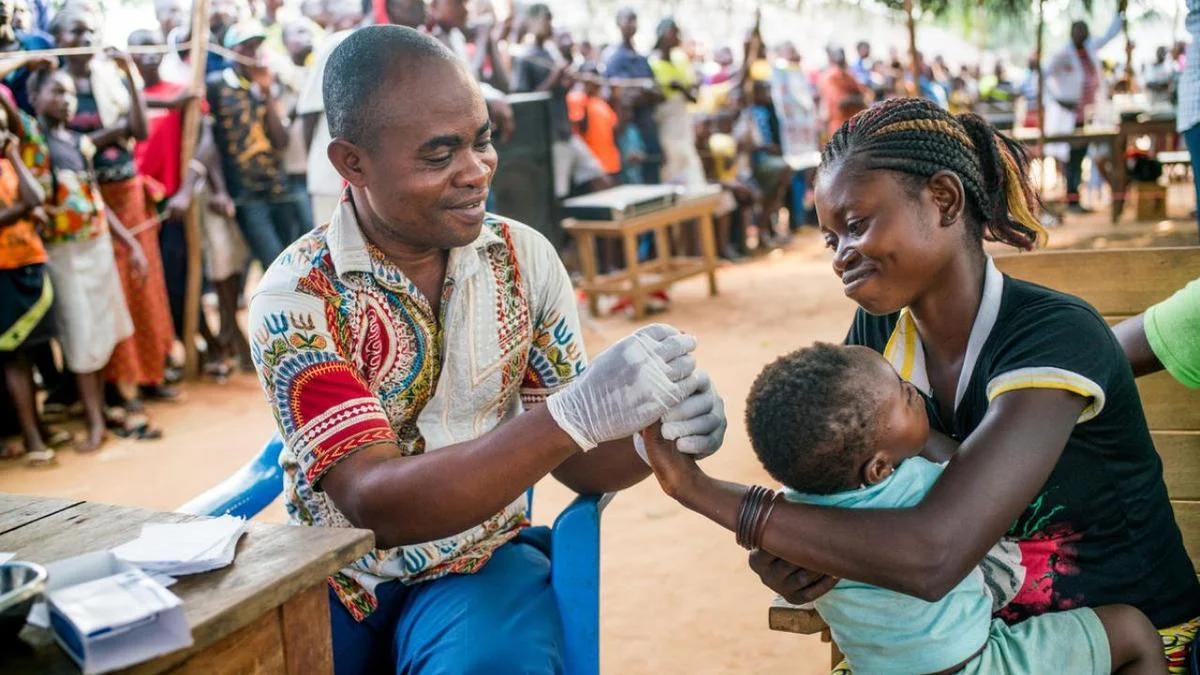
The UAE has seen the power of this approach, Balalaa writes. For many years, the UAE and Sheikh Mohamed bin Zayed Al Nahyan have worked with the Gates Foundation and global partners to accelerate the eradication of polio and neglected tropical diseases. The Reaching the Last Mile Fund, established by the UAE and the Gates Foundation, works in dozens of countries to accelerate the elimination of diseases that disproportionately affect people living in poverty, with a focus on reaching the world's most underserved communities, particularly children living in areas where access to healthcare is extraordinarily difficult.
Marginalised communities who are at most risk cannot be left behind at the last mile, he argues. Though the last mile is where the work is hardest, it is also where investment can change most lives, and that same thinking should equally be applied to water. The infrastructure that protects communities from poliovirus can help address other diseases too, and the investments in sanitation that improve public health can support sustainable development and improve quality of life.
This is the ethos underpinning the upcoming 2026 UN Water Conference, taking place in Abu Dhabi, which will bring the world together to accelerate action on Sustainable Development Goal 6: ensuring the availability and sustainable management of water and sanitation for all. Governments, development institutions and the private sector must work together to bring solutions to the communities that need them most, Balalaa concludes, because the future of water is not only about securing a resource, it is about protecting people.