The 1996 Treaty on Sharing of the Ganga/Ganges Waters at Farakka between India and Bangladesh is set to expire on December 12, 2026, unless it is renewed on the basis of mutual consent. In Hindustan Times today, Uttam Kumar Sinha, senior fellow at the Manohar Parrikar Institute for Defence Studies and Analyses (IDSA), argues that the expiry is an opportunity to look beyond the old volumetric allocation of water toward a more informed, adaptive and sustainable framework for managing the shared river system.
For India, as the upper riparian, that also means safeguarding its legitimate water needs, the author writes. The successor arrangement, in his argument, must rest on a single organising principle: reciprocity. India should share timely, reliable upstream-flow data, while Bangladesh should provide corresponding downstream information on the Padma and related hydrological conditions. Transparency, he writes, cannot be a one-sided obligation.
The immediate priority, Sinha argues, must be to prevent December 12 from becoming a cliff edge. India and Bangladesh should consider an interim arrangement that preserves existing operational practices without prejudicing either side's position on a future treaty. Bangladesh's water resources minister, Shahid Uddin Chowdhury Anee, has said, "We must conclude a new Ganges Treaty before December 12." The deadline underscores the urgency of negotiations, Sinha writes, but it must not come at the expense of detailed technical assessment and mutual understanding.
A cooperation that began in 1972
The foundations for water cooperation were established soon after Bangladesh gained independence in 1971. In February 1972, Indira Gandhi and Sheikh Mujibur Rahman met in Calcutta, and the following month the two leaders met in Dacca and signed the Treaty of Peace and Friendship. Article VI called upon the two countries to make joint studies and take joint action in flood control, river basin development and hydro-electric power.
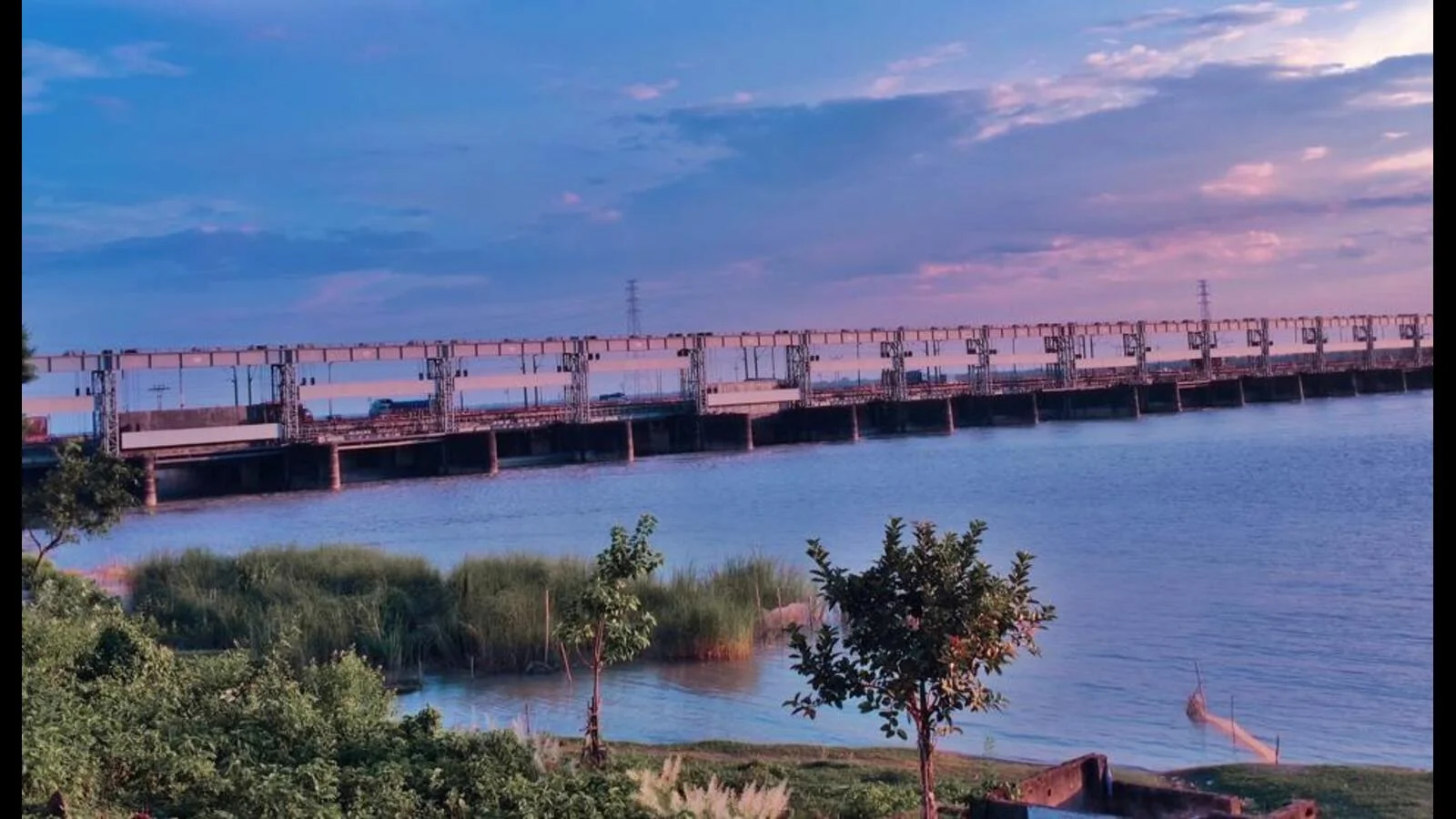
The Farakka barrage was commissioned in 1975 by Jagjivan Ram, then minister of agriculture and irrigation. BM Abbas, the Bangladesh co-chairman of the Joint Rivers Commission, attended the ceremony and described it as a "prelude to further understanding between the two countries". Just days earlier, the two countries had signed a short-term agreement on the utilisation of the Ganga waters, known as the Dacca Agreement.
Indian engineers largely viewed Farakka as a purposeful hydraulic structure designed to divert Ganga waters through a feeder canal of 38.38 km into the Bhagirathi-Hooghly river system. The additional flow was expected to flush out accumulated silt and sediment from the riverbed, helping maintain navigability of the Hooghly and keep the Calcutta port operational without continuous and costly mechanical dredging. It was not uncommon at the time to see a hundred or so sunken ships lying in the Hooghly near the port, a grim reminder of the navigational hazards caused by silting.
For Bangladesh, the lower riparian, the stakes were even higher. According to its estimates, the diversion of water at Farakka during the dry season threatened serious economic and ecological consequences. Water-sharing acquired a political and emotive significance, prompting Bangladesh to internationalise the issue. Following Mujibur Rahman's assassination on August 15, 1975, and a military takeover, Bangladesh demanded that India halt water withdrawals at Farakka. YB Chavan, the foreign minister, made India's position explicit: "Investment of 1,500 million rupees is made not to abandon the project." As a measure of friendship, India announced a unilateral decision to reduce withdrawals, but the underlying dispute was not resolved.
The 1996 treaty and its critics
Against this background, the December 1996 signing of the Ganga Treaty by Prime Ministers HD Deve Gowda and Sheikh Hasina was a significant diplomatic achievement, Sinha writes. Interestingly, Sheikh Hasina, while signing the treaty in 1996, carefully referred to it as the Ganga Treaty, rather than the anglicised Ganges, or Padma, the river's name in Bangladesh.
Yet it drew criticism on both sides. In Bangladesh, the opposition Bangladesh Nationalist Party accused Hasina's Awami League of kowtowing to India and selling the country's sovereignty. In India, several parliamentarians were cautiously optimistic over Gowda's assertion in the Lok Sabha that the treaty would end "what has been a constant irritant". But Uma Bharati of the BJP, unamused, retorted that more water was being given to Bangladesh, while Atal Bihari Vajpayee called for a wider discussion. Congress leader PR Dasmunshi hailed the treaty as a milestone but cautioned that West Bengal's water utilisation was in the "hands of UP and Bihar". It was a striking observation, Sinha writes: India's bilateral water relations are also influenced by domestic upstream-downstream dynamics.
That legacy of cooperation now faces a new test. Growing disquiet in Bihar over Farakka's consequences demands fresh examination, the author argues. Equally important is whether the barrage has delivered the navigational and economic benefits originally envisaged for the Calcutta port. However sensitive the question, he writes, it is worth asking whether Farakka has outlived its economic life and functional utility.
What the successor must do
The successor arrangement must also address climate resilience, Sinha argues. Joint flood forecasting, early-warning systems, drought planning and procedures for extreme events are essential. The treaty's existing commitment to examine augmentation of dry-season flows offers a starting point for renewed technical work, and both countries should assess feasible options through rigorous hydrological, environmental and economic studies.
Upstream storage and wider basin possibilities, including proposals involving the Brahmaputra, require particular caution, he writes. They cannot be treated as ready-made solutions without examining engineering feasibility, ecological consequences, costs and the interests of other riparian countries. The rational course, in his telling, is to preserve negotiated sharing while building a framework for shared water security.