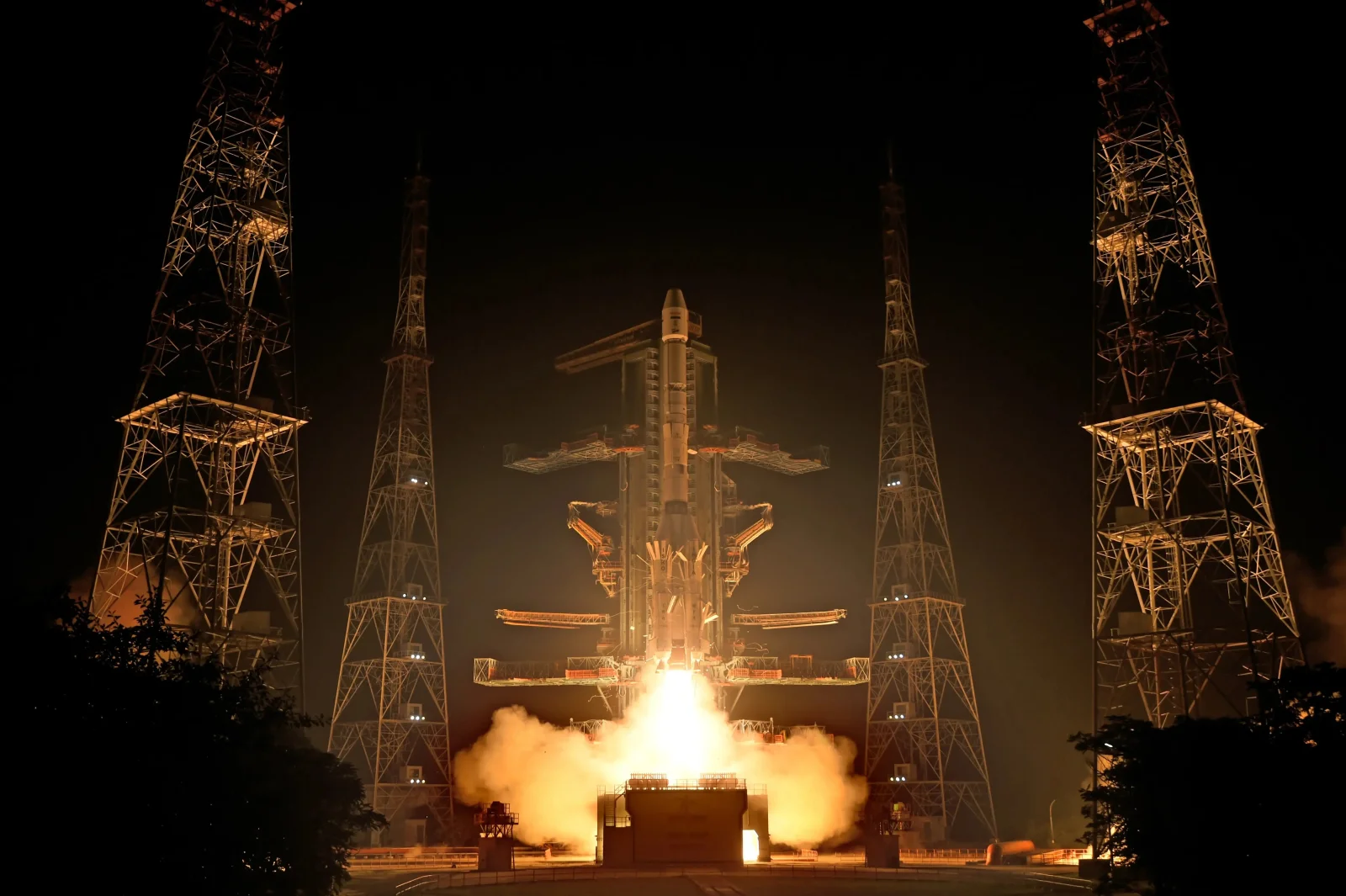
Space is no longer a distant frontier for scientists and soldiers alone. It is critical infrastructure, and India needs a comprehensive national doctrine to protect it. That is the argument Brigadier (retd.) Advitya Madan, a retired Army officer and defence analyst, makes in The Hindu today, and his case rests on a simple observation: the threat to India's space systems has changed, and the country's defences have not kept up.
Satellites support communication, navigation, weather forecasting, disaster management, agriculture, banking and logistics. They carry the signals behind phone calls and payments, guide farmers and fishermen, warn of cyclones and floods, and support the armed forces. As India's dependence on space expands, protecting satellite infrastructure and ensuring uninterrupted services have become strategic priorities.
From destruction to disruption
The concern, Madan argues, has shifted from destroying satellites to disrupting services. The modern threats are jamming, spoofing, cyber interference and electronic warfare: attacks that degrade or deny a service without ever touching the satellite itself.
Non-kinetic attacks are cheaper, deniable and harder to attribute, which is why doctrine must define thresholds and responses in advance. When a navigation signal is spoofed or a communication link is jammed, is that an attack, and what response does it merit? Unclear thresholds could cause misjudged responses in a crisis, and the time to settle those questions is before a crisis, not during one.
The shift matters because disruption is hard to handle. Attribution is difficult, intent is ambiguous, and the line between interference and attack is blurred. A doctrine gives decision-makers agreed answers in advance, instead of improvisation under pressure.
What India has, and what is missing
India is not starting from nothing. The Indian Space Policy 2023 sets the framework for the sector, and ISRO's Indian Space Situational Awareness Report for 2025, ISSAR-2025, covers space situational awareness, collision avoidance and debris mitigation. The 2025 Joint Military Space Doctrine covers the armed forces, and India demonstrated an anti-satellite capability with Mission Shakti in March 2019.
But a military doctrine is not a national one. What is missing, Madan argues, is a whole-of-nation framework covering civil and commercial systems, which carry most of the services people actually use. Private companies increasingly participate in satellite manufacturing, communications and other space-related activities, and protecting commercial systems is vital for national security.
India also lacks a statutory space activities law to fix responsibilities, licensing and liability for private operators. And internationally, there are no agreed rules on non-kinetic interference such as jamming and spoofing, which makes national doctrine and declared thresholds more important. The Outer Space Treaty of 1967 calls space the province of all mankind, bans national appropriation, and prohibits nuclear weapons and weapons of mass destruction in orbit and military bases on celestial bodies, but it does not cover conventional weapons or ground-based anti-satellite weapons.
Four pillars of a doctrine
Madan's doctrine rests on four interconnected pillars. Resilience and redundancy come first: multiple systems and alternative capabilities must ensure the continuity of essential services even when individual satellites or networks are disrupted. Space-domain awareness comes next: India must strengthen its ability to monitor activities around its space assets, identify unusual behaviour and detect potential threats, to improve attribution and decision-making.
The third pillar is attribution and response: the ability to identify who interfered, and agreed principles for how to respond. The fourth is reconstitution and recovery: mechanisms to restore disrupted capabilities rapidly through backup systems, replacement satellites and alternative communication arrangements. Running across all four is the need for government-industry partnerships, with government agencies, armed forces, ISRO and private operators sharing information, identifying vulnerabilities and coordinating responses.
Crucially, a doctrine does not mean weaponisation. The aim, Madan writes, is to deter, withstand, attribute and recover, while preserving the peaceful use of outer space. The objective should not be to transform outer space into another battlefield, but to ensure that disruptions beyond Earth do not create vulnerabilities within the country.
The measure of space power, in his telling, is not the accumulation of capabilities alone. It is the capacity to preserve functions, withstand shocks and recover quickly. On that measure, India needs its doctrine now, before the next disruption tests it.