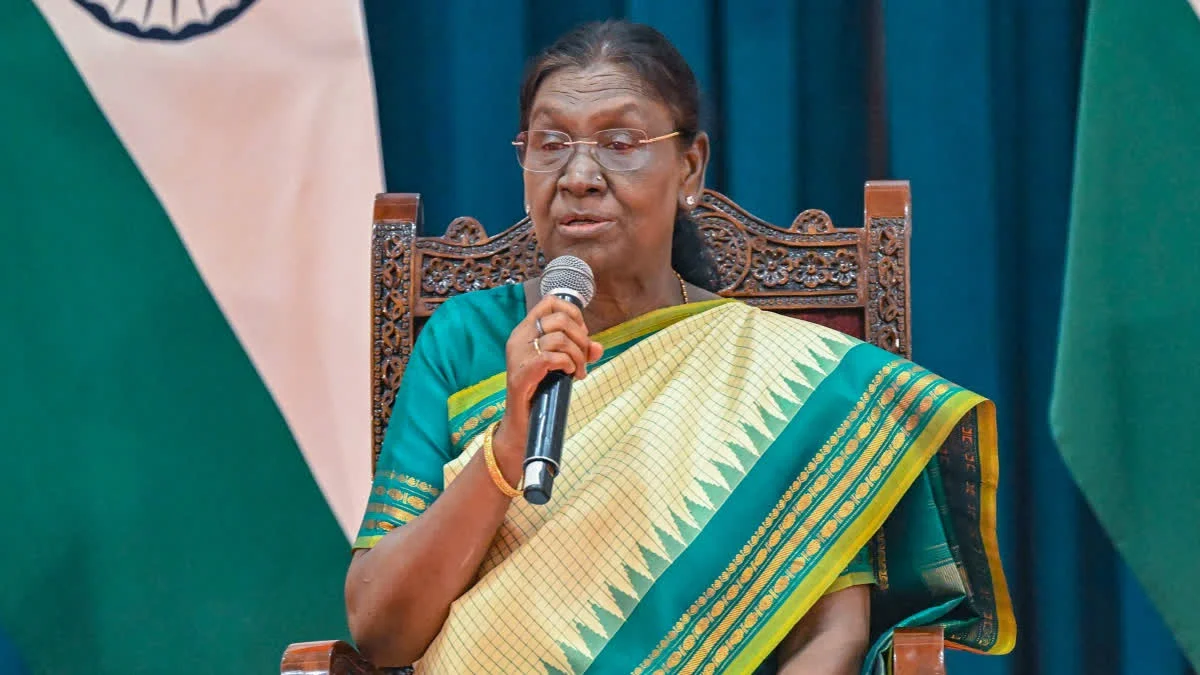
Malaria cases and deaths in India have declined by nearly 80 per cent between 2015 and 2025, President Droupadi Murmu said on Tuesday, while the number of high-burden districts in the country has fallen from 155 to 33.
Inaugurating the year-long golden jubilee celebrations of the Indian Council of Medical Research-National Institute of Malaria Research (ICMR-NIMR) in New Delhi, the President said as many as 160 districts have reported zero indigenous malaria cases during 2022-2025.
She flagged India's exit from the World Health Organization's High Burden to High Impact group in 2024 as a mark of the country's progress in malaria control. "This achievement has been made possible through the collective efforts of our public health programs, scientists, healthcare workers, and citizens," she said.
India, which accounts for about 16 per cent of the global population, contributes around 0.7 per cent of global malaria cases and 0.6 per cent of malaria deaths. India aims to reach zero indigenous malaria cases by 2027 and malaria elimination by 2030.
Climate change could pose fresh obstacles
The President, however, warned that new challenges such as climate change, unplanned urbanization and the growing resistance of mosquitoes to insecticides could pose fresh obstacles to the eradication of malaria.
"These challenges cannot be prevented just by the efforts of healthcare workers alone. It is also necessary to focus on preventing water stagnation, eliminating mosquito breeding sources, and managing the environment," she said.
She called for strengthened malaria diagnosis, treatment and surveillance, mosquito control, the development of new medicines and vaccines, and greater public awareness and community participation.
The President also noted that dengue has emerged as a major challenge in the country in recent years. "This challenge is likely to become even more formidable due to global warming and shifts in monsoon patterns," she said.
Research must reach villages
Recalling that malaria had historically been one of India's most serious public health challenges, particularly affecting rural and tribal communities, the President shared her personal experiences of witnessing the impact of malaria in villages and how the disease affected people's livelihoods, education and future.
She stressed that scientific research and its outcomes should reach villages and communities where they are most needed.
Praising the ICMR, she said its research had provided direction to the fight against diseases such as tuberculosis, leprosy and kala-azar, and had played a significant role in shaping national health programmes. During the COVID-19 pandemic, it set up a nationwide testing network in record time and partnered in the development of India's first indigenous COVID-19 vaccine.
"We are moving forward with the objective of building Viksit Bharat by 2047. Strong collaboration among research institutions, centres of technical and higher education, and the industrial sector is crucial for building a healthy and empowered India," she said.
Nadda: we will eliminate malaria by 2030
Addressing the gathering, Union Health and Family Welfare Minister JP Nadda said India's progress in malaria control over the past decade was the result of a comprehensive approach involving research on mosquito behaviour and malaria parasites, community participation, effective prevention, early diagnosis and appropriate treatment.
"We will eliminate malaria by 2030 by bringing about the necessary changes in our strategies and policies," he said, calling on ICMR-NIMR to work with renewed commitment to achieve the target.