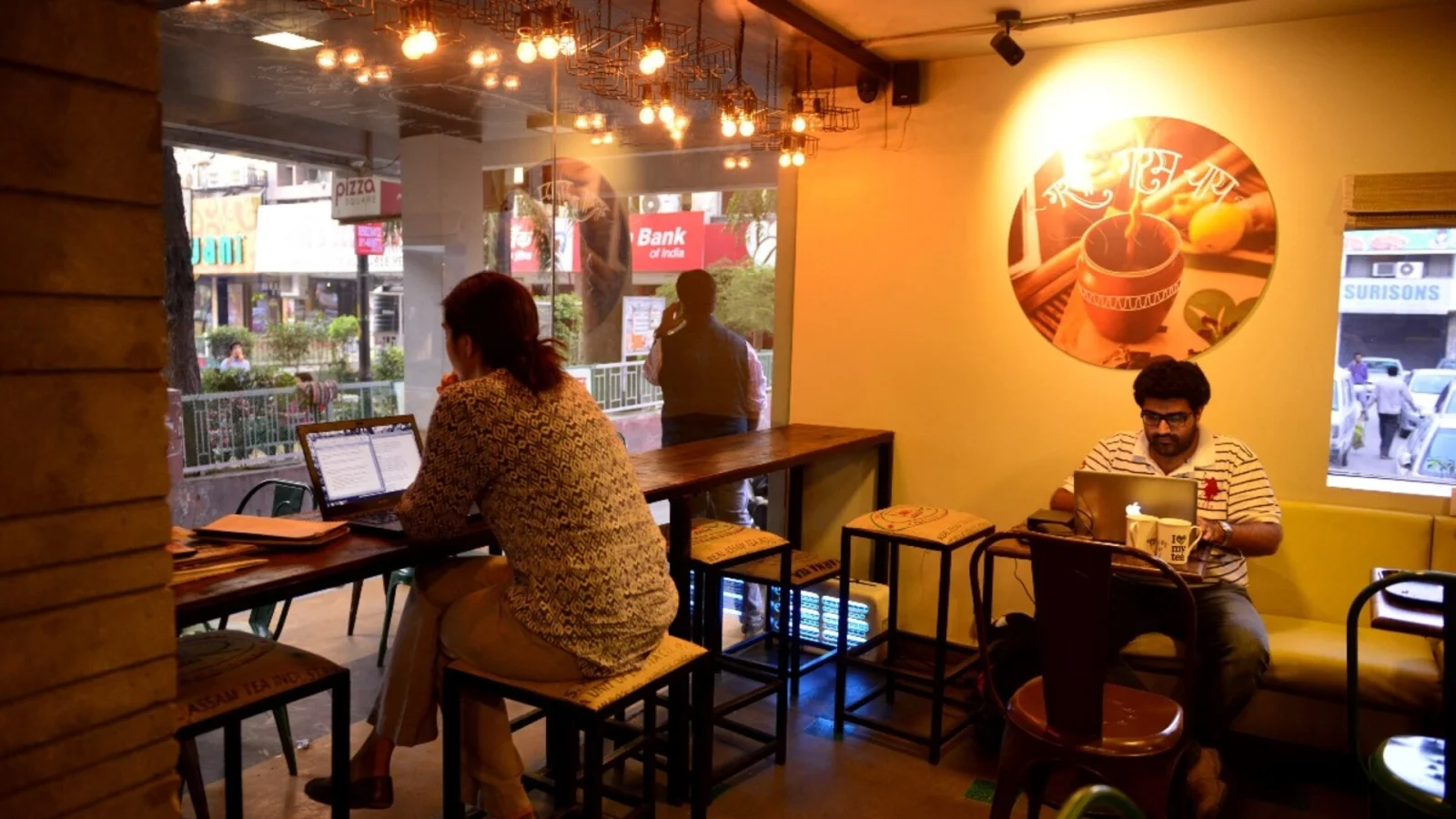
Work from cafe culture has become a part of urban life in India, more so after the Covid pandemic. Whether it is escaping working from home, meeting a client or simply finding a change of scenery, cafes have become convenient workspaces. Now that culture is at the centre of a debate. A recent post on X has gone viral and sparked a conversation: is it fair to order just one cup of coffee and occupy a table for hours?
The internet had plenty to say. Some sided with cafe owners, while others argued that customers pay for the ambience and experience, not just the coffee. Suggestions ranged from a one coffee per hour rule to charging customers for the time they spent.
Sanvi Sharma, a marketing professional based in Pune, admits she never really gave it much thought. "I have occupied a table for four hours straight with one cup of cappuccino once. But honestly, I have never been asked to leave or asked to order, so it never really occurred to me," she said. For many, nobody walks into a cafe planning to spend four hours nursing one cappuccino. Sometimes, the deadlines simply outlast the coffee.
What cafe owners say
Cafe owners see it differently. Earlier, a Bengaluru cafe reportedly made headlines for putting up a sign saying "No meetings allowed" and charging people who worked on an hourly basis. Altry Coffee Roastery in Gurugram has a no laptop policy, and its founder Sahil Bhambri has a blunt question. "Who decided that every cafe has to be a workspace in the first place? Just because a few cafes started allowing people to work after Covid, does that mean every cafe automatically becomes a workspace?" Bhambri said some customers at his previous cafe would occupy tables for hours, take office calls and refuse to share space.
Communication, say industry experts, is where the answer lies. "It is very important for a brand to define its culture and communicate what kind of experience it wants to offer," Bintesh Kumar, senior marketing manager at Pass Code Hospitality, told India Today. He pointed out that chains like Blue Tokai and Starbucks have built a culture where customers can work for hours without any minimum spending requirement, but for standalone cafes that have not positioned themselves as work friendly spaces, long stays can affect business. At The Drop in Delhi, a cafe by day and a bar by night, small cards on every table communicate that laptops are allowed only until 5 pm.
The work friendly side
Not every cafe owner sees a four hour laptop session as a problem. "Sometimes, you have to absorb a loss for the sake of the customer. Otherwise, you risk losing them altogether," said Dhruv Singh, founder and CEO of Chelvies Coffee. Singh said the business thrives on repeat customers, and he would rather have someone return regularly for years than worry about the revenue lost from one seat for a few extra hours.
Suresh Sharma of Kathe Cafe in Bengaluru agrees. "For me, the customer is God, and I would never ask anyone to leave or pressure them into ordering more. Everyone has their own budget," he said. Singh added that loyal customers understand the need to vacate or reorder when a cafe gets busy. The middle ground, experts say, is mutual respect: Bhambri suggests a maximum stay of two to three hours at work friendly cafes, while Kumar says a little respect from both sides is what will keep cafe culture thriving.