
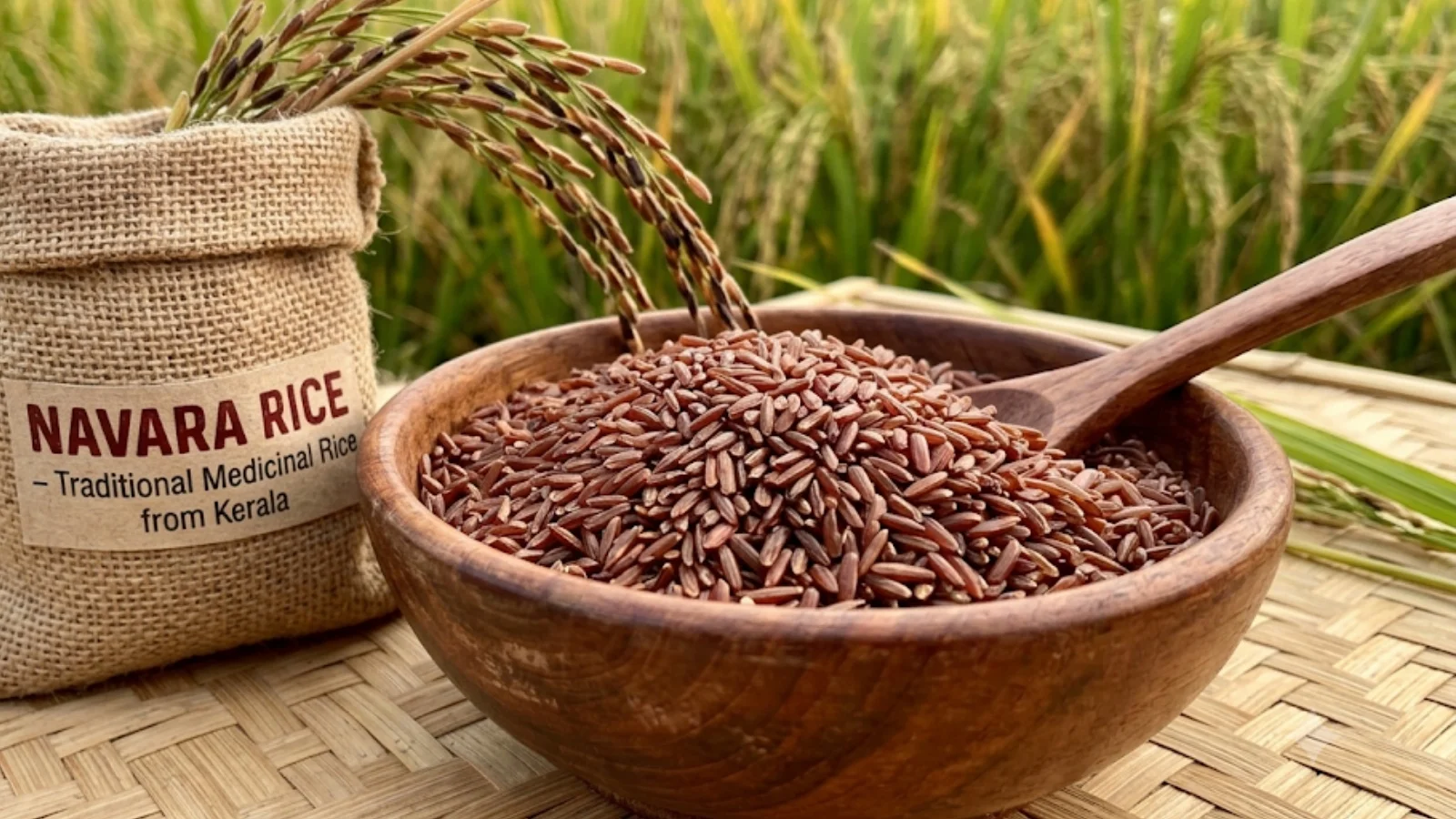
Navara rice, the centuries-old heirloom red rice from Kerala, has a strong nutritional profile on paper, but its wider health claims still lack proof from human trials, according to consultant dietician Kanikka Malhotra. The traditional variety is used in Ayurvedic preparations such as porridge and Navarakizhi, a traditional massage therapy, and it has long been linked with recovery and rejuvenation.
Malhotra, a consultant dietician and certified diabetes educator, said the rice has an interesting nutritional profile, but some of its widely discussed therapeutic benefits still need stronger scientific evidence. Reported figures suggest that 100 grams of raw Navara rice contains about 8.5 grams of protein and 3.2 grams of fibre, compared with 6.8 grams of protein and 0.2 grams of fibre in polished white rice.
The grain is minimally polished, and its red-brown bran retains phytochemicals, including oryzanol, phenolic acids, flavonoids and proanthocyanidins. Malhotra said extracts of Navara have shown higher levels of these compounds than staple varieties, with stronger antioxidant and anti-inflammatory activity in laboratory studies. She cautioned, however, that these findings largely come from laboratory studies of rice extracts and should not be read as proven health benefits in people who eat the rice.
Blood sugar: what the evidence says
With growing interest in traditional grains, Navara rice is sometimes presented as a healthier option for people watching their blood sugar. Malhotra said there is currently not enough human research to support specific benefits. Studies on pigmented South Indian rice varieties have reported intermediate glycaemic index values of around 55 to 60, while another study reported a glycaemic index of 72 for Navara, so it should not automatically be treated as a low glycaemic index food.
"Honestly, we cannot claim measurable benefits yet. There are no proper human trials on Navara rice specifically, so claims about blood sugar, immunity or strength are ahead of the evidence," she said.
How to use it, and who should be careful
Malhotra said the practical takeaway is that unpolished rice matters, since a more polished Navara loses much of its nutritional benefit. She recommends filling half the plate with vegetables, adding a protein source such as dal, curd, eggs or fish, and keeping the rice portion to about half to three-quarters of a cup when cooked. Navara is often served as kanji after illness, but it is still mostly carbohydrate, so how the plate is built matters more than which rice is picked, she said.
Navarakizhi therapy is traditionally linked with nourishment, relaxation and relief from stiffness, but Malhotra said its benefits should be understood in the context of heat and massage rather than assumed to be a direct medicinal effect of the rice. The studies on it so far are very small, she added, so it is best seen as a comfort and symptom relief therapy, not a cure.
Some people should take care. Malhotra advised people with diabetes or prediabetes to watch portions and see how their blood sugar responds, and people with kidney disease on a restricted diet to consult their dietitian first, since whole grains contain more potassium and phosphorus than polished rice. She also recommended soaking the rice before cooking, as the bran contains compounds that can slightly reduce mineral absorption. People with open wounds, skin infections, fever or milk allergies should avoid Navarakizhi, and those with reduced skin sensation, particularly people with diabetic neuropathy, should be especially careful, as hot rice bundles can cause burns without being noticed at once. Pregnant women should consult their doctors before the therapy, and buyers should choose a trusted source to avoid substitution with other varieties.
**Q:** What is Navara rice? A: Navara is a centuries-old heirloom red rice from Kerala, traditionally used in Ayurvedic preparations, including porridge and the Navarakizhi massage therapy. **Q:** Is Navara rice healthier than white rice? A: Reported figures show it has more protein and fibre than polished white rice, but there are no proper human trials on Navara specifically, so wider health claims remain unproven. **Q:** Who should be cautious about Navara rice? A: People with diabetes should watch portions, people with kidney disease on restricted diets should consult a dietitian, and pregnant women should consult a doctor before Navarakizhi therapy.