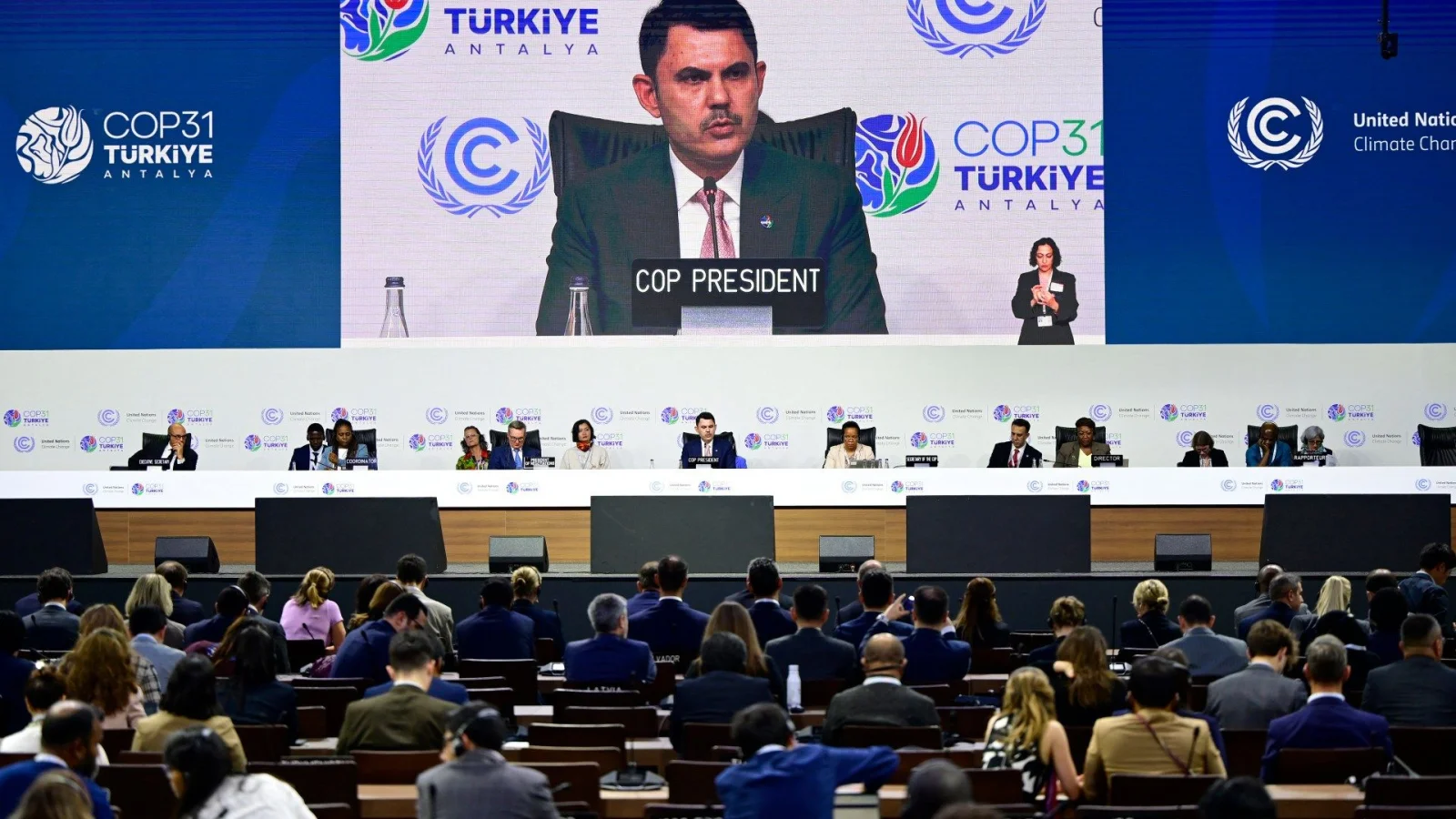
The COP31 climate summit in Antalya, Turkiye, has gone into overtime as nearly 200 countries remain deadlocked over a draft deal that no longer mentions fossil fuels. The two week talks were due to end on Friday, when a late closing session approved some technical matters but not the wider political deal. A third draft is expected on Saturday, according to reports from the summit.
"We are close to the finish line, but we are not there yet," COP31 President Murat Kurum, who is also Turkiye's environment minister, told delegates as the talks stretched past their deadline. Environmental groups tracking the conference said the meeting lacked ambition to address the worsening climate crisis and was on track to be the worst COP ever.
The fight over fossil fuels sits at the centre of the deadlock. An opening draft from cohost and lead negotiator Australia on Monday called for a faster phase-out of fossil fuels. A slimmer version released on Thursday removed every mention of them after Saudi Arabia and other major oil and gas producers objected. Oil producers have also resisted similar language at past talks, including at COP28 in 2023.
The European Union said the draft "risks turning this climate COP into a fossil summit". Panama, which signed a letter with a dozen other countries demanding a clear transition away from fossil fuels, threatened to walk away from the talks. "It is not acceptable to have a COP or a cover document that does not even mention fossil fuels, and we simply will not put up with it," Panama's environment minister, Juan Carlos Navarro, told a news conference.
Other contested points
The revised text also dropped a 120 billion dollar target for money to help poorer countries adapt to climate change. Developing countries are angry that rich nations are falling short on climate finance. "We didn't come here to beg," said Ghana's environment minister, Zanetor Agyeman-Rawlings.
The draft proposes raising the share of the world's final energy consumption that comes from electricity to 35 percent by 2035. It does not say the power must come from renewables, and some countries want the target to say "clean". Some countries also reject a push to expand carbon capture, a technology that traps emissions from power plants and factories. They say it is costly and unproven, and could let polluters keep burning oil and gas. "We want to see the references to false solutions removed," said Vanuatu's climate minister, Ralph Regenvanu.
The talks are taking place against a tough backdrop. A UN report last month found the world is set to pass the 1.5 degree Celsius warming limit set under the 2015 Paris Agreement. The United States, the largest historical emitter, is absent for a second year after President Donald Trump ended climate cooperation. The US Israel war on Iran and higher living costs have also drawn attention away from the talks. "This has been the worst COP ever," said Mohamed Adow, director of the think tank Power Shift Africa.