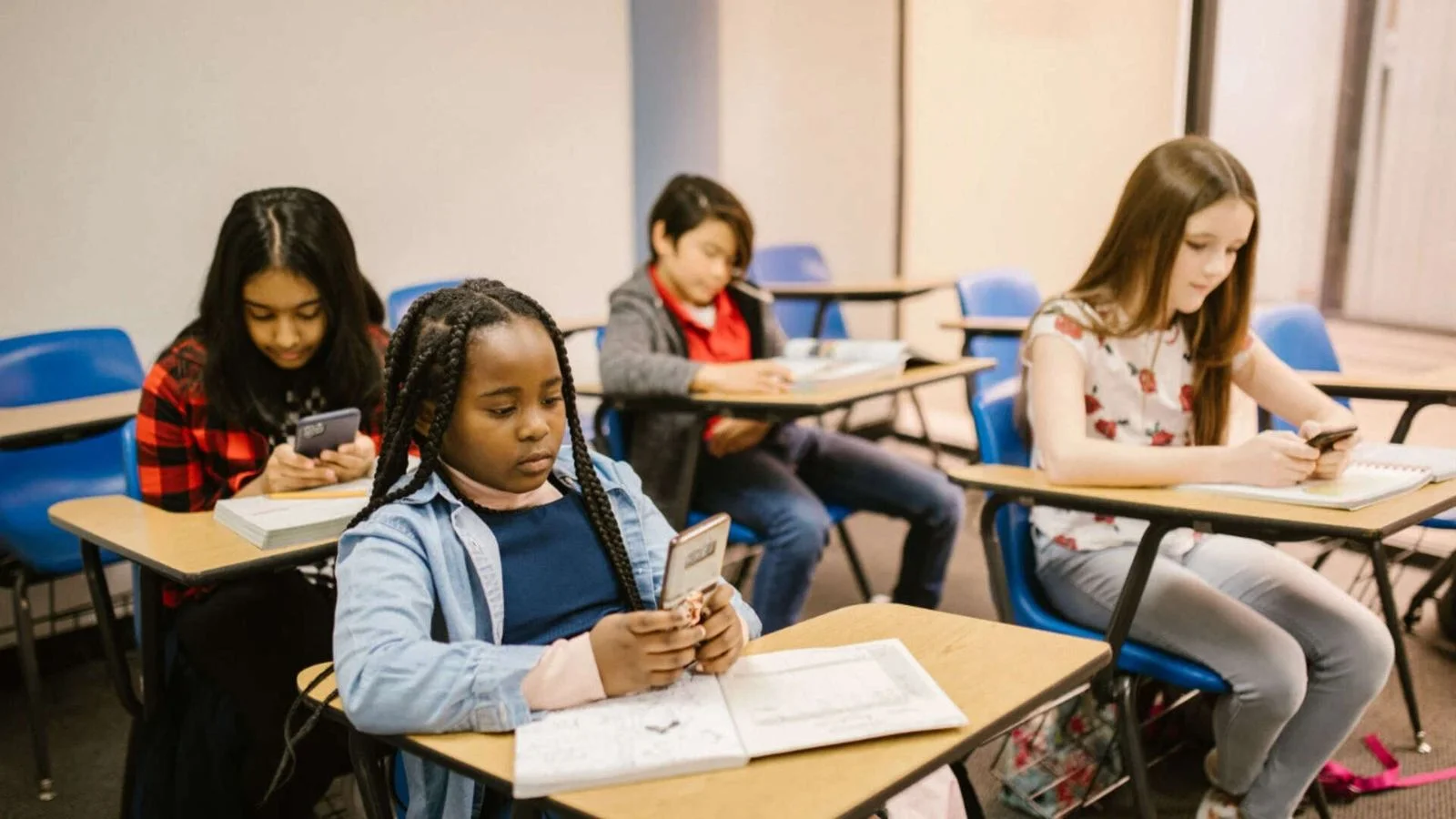
Strict bans on mobile phones in schools can help students recover the equivalent of one to two weeks of learning every academic year, according to a new study led by researchers at Harvard University. The research, carried out with NWEA and Dartmouth College and released on November 17, 2026, analysed academic growth among 3.3 million students across 4,600 schools in the United States.
The study was led by Dr Tom Kane, faculty director of Harvard University's Center for Education Policy Research, with researchers from NWEA and Dartmouth College. It examined student level NWEA MAP Growth data from the 2021-22 to 2025-26 academic years across 49 US states and the District of Columbia, comparing academic growth before and after schools introduced strict restrictions that required students to keep phones in lockable storage pouches, including Yondr pouches, through the school day.
Schools that introduced the restrictions recorded an annual improvement of about 0.01 standard deviations in student achievement growth. That translates into one to two additional weeks of learning each year, or about two minutes of restored instructional time per hour. The gains appeared from the first year and continued for up to three years after the restrictions began.
A wider slide in learning
The findings sit against a broader decline. Between 2013 and 2024, mathematics and reading achievement among US eighth grade students fell by about one grade equivalent, a slide researchers said coincided with the rapid spread of broadband smartphones. Students have been losing the equivalent of two to three weeks of learning each year since around 2013. Commenting on the findings, Harvard professor Tom Kane said, "Around 2013, U.S. students started losing 2-3 weeks of learning each year. It's been a slow leak that, over time, has put U.S. 8th graders almost a year behind. Strict cell phone bans seem to plug about half of that leak."
The improvement was broadly consistent across elementary, middle and high schools, and did not differ significantly by school poverty levels or students' previous academic performance. Storing phones in lockable pouches also appeared to reduce the share of students suffering substantial declines in reading, suggesting the restrictions may protect students who are more easily distracted from falling behind.
State bans show early gains
The research also examined statewide restrictions introduced in the 2025-26 academic year across 22 states. Students in states with bell-to-bell bans, which prohibit phone use through the school day, recorded a reading achievement gain of 0.016 standard deviations, while states with instructional-time bans recorded a mathematics gain of 0.019 standard deviations. The researchers cautioned that these results were preliminary and could reflect achievement trends already present in states that adopted the restrictions.
Douglas Staiger, professor of economics at Dartmouth College and a co-author of the study, said schools should not expect an immediate large improvement, but noted that storing phones could add one to two weeks of instruction a year, with the gains building over time.
The researchers said evidence remains limited on how smartphone and social media use outside school hours affects academic performance and wellbeing. They suggested states work with social media companies, including YouTube, TikTok and Snapchat, to track changes in young people's platform use, and to collect anonymised data on engagement, extracurricular participation, reading habits, homework completion, in-person socialising and mental health. The research was supported by philanthropic funding from the Walton Family Foundation and the Overdeck Family Foundation, according to Harvard University's Center for Education Policy Research.