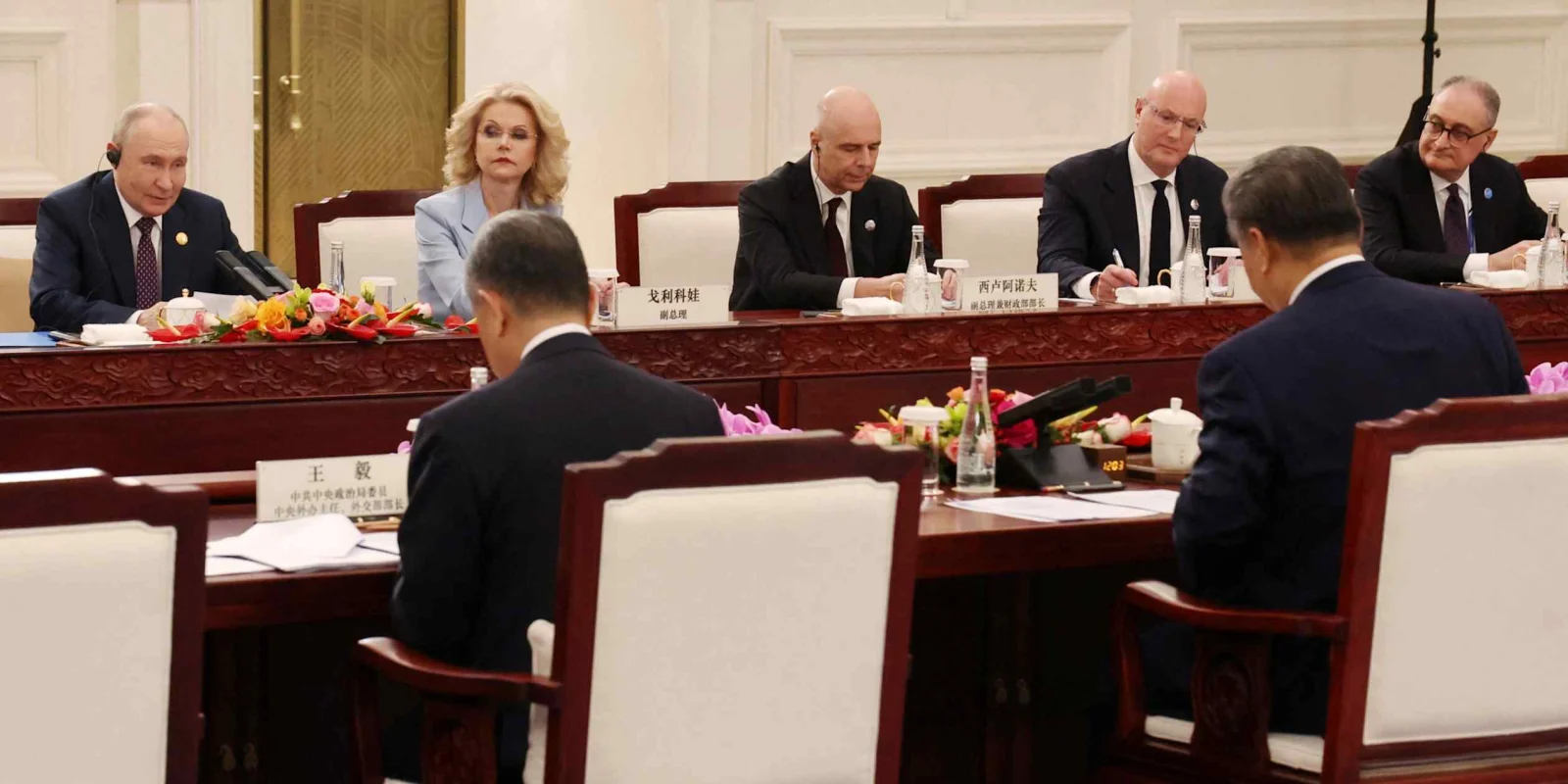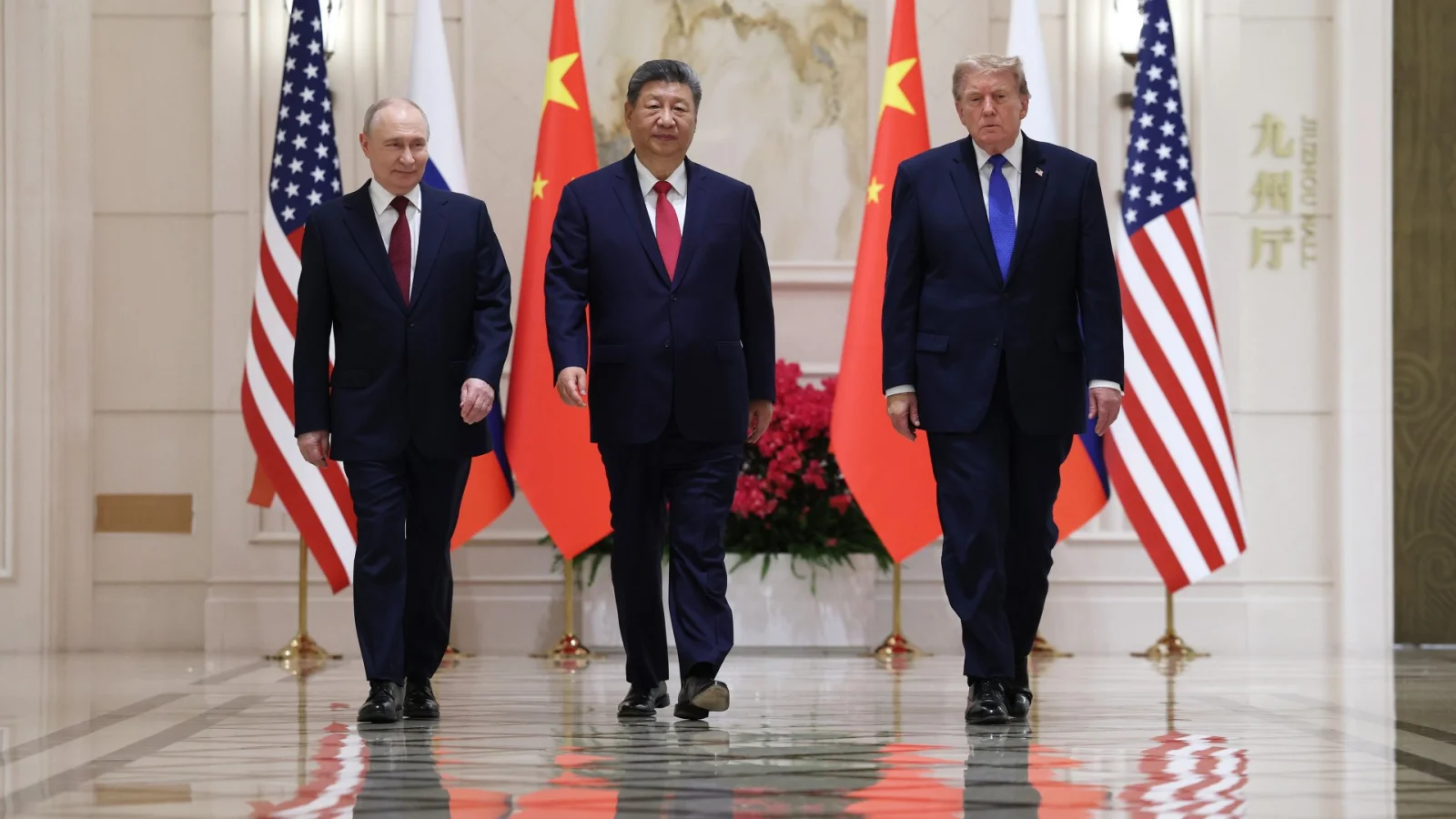
US President Donald Trump, Chinese President Xi Jinping and Russian President Vladimir Putin held their first-ever trilateral meeting in Shenzhen, China, on Thursday, November 19, and issued a joint peace declaration. The meeting, held on the sidelines of the Asia-Pacific Economic Cooperation (APEC) summit at Kylin Villa, lasted more than an hour.
The three leaders, who hold the world's three biggest nuclear arsenals, released what they called the "U.S.-Russia-China Heads of State Declaration toward Peace". Trump described the meeting as historic, saying the three were the world's largest nations and were "making history". He added that no peace was ever forged by declining opportunities to talk.
The declaration sets out four commitments: reforming the United Nations, boosting the production and supply of refined petroleum products, upholding state consent and respect for the immunities of state officials, and conducting a dialogue on reducing nuclear risks and preventing the proliferation of nuclear weapons.
On nuclear weapons, the declaration states that "a nuclear war cannot be won and must never be fought". Before the meeting, Xi said nuclear weapons should be comprehensively banned and thoroughly destroyed to build a nuclear-free world, and repeated that a nuclear war cannot be won and must not be fought.
What the declaration leaves out
The declaration does not mention the war in Ukraine or the conflict involving Iran, and it sets no dates, targets or format for any of its four commitments. Putin acknowledged after the meeting that it did not set ambitious goals and added that nobody would be forced to comply with its decisions.
New START, the last arms control pact between the United States and Russia, expired in February. No agreement was announced on a new trilateral nuclear arms reduction treaty, something Trump has pushed for and China has consistently resisted, arguing that its arsenal is much smaller than those of the other two powers. According to estimates reported by AP, the United States and Russia each hold more than 5,000 warheads, while China holds more than 600.
Trump said Xi agreed with him that the Strait of Hormuz needs to stay open and that Iran must not be allowed to have nuclear weapons. A Kremlin spokesperson said Ukraine was not the central topic at the trilateral meeting, though it was a central part of Putin's bilateral talks with Trump earlier in the day.
A first step, not a breakthrough
Analysts described the summit as symbolic rather than substantive, with one meeting unlikely to produce dramatic breakthroughs on the wars, trade or arms control. The leaders agreed to maintain coordination at working level after the summit, China's Foreign Minister Wang Yi said.
Trump left China after about 90 minutes of talks with Putin and Xi. Next month, Trump is hosting the G20 Summit in Miami, Florida, and has invited Putin to attend. Whether the Shenzhen declaration leads to real negotiations will become clear in the coming weeks.