The Indian AI Research Organisation, a public-private partnership based in GIFT City, Gujarat, will launch Samvit, an enterprise-focused artificial intelligence platform, in three to four months. The platform is currently in its beta stage, The Hindu BusinessLine reported on November 19.
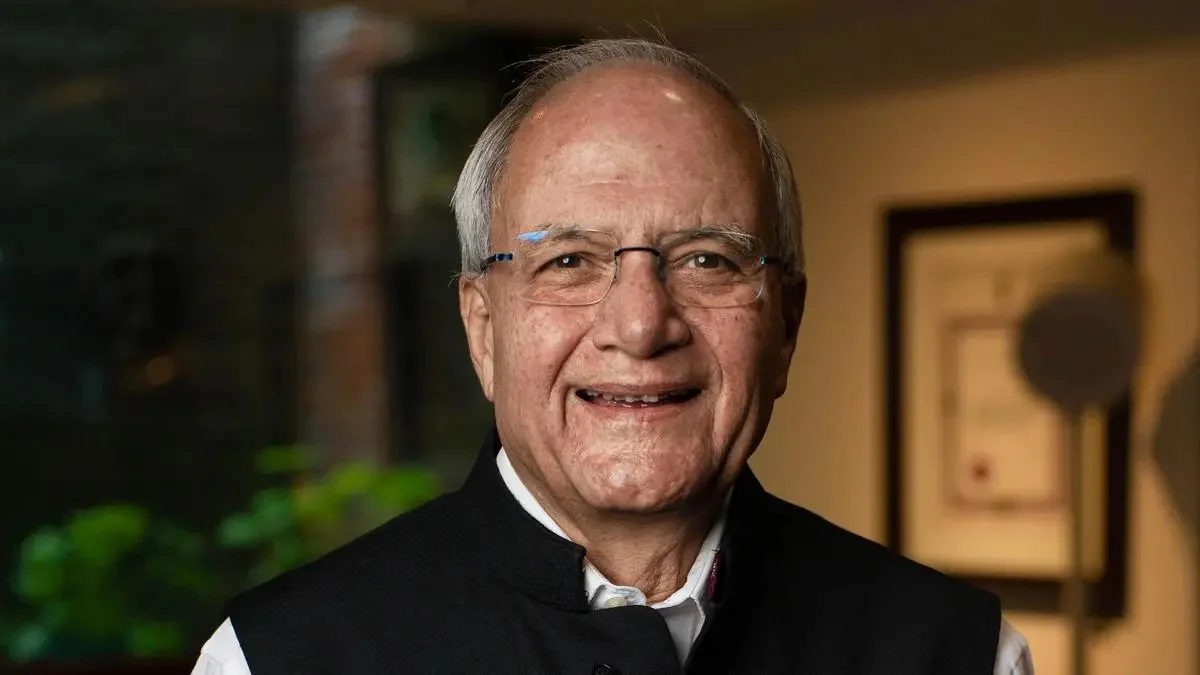
Samvit is built on neuro-symbolic AI and uses a knowledge graph to deliver accurate responses without hallucinations, according to Ajai Chowdhry, founder of HCL and chairman of the organisation.
"There is no sense in us trying to ape the West. The work that they are doing is mainly for consumers," Chowdhry told BusinessLine. Instead of consumer tools like ChatGPT, the institute chose to focus on large and medium-sized enterprises, which he said are largely lost on how to adopt AI. According to research done in India, 99 per cent of corporates are not using AI, creating a clear opening to build enterprise products.
Startups across the country can use the Samvit platform to implement enterprise solutions in three to four months, using corporate-specific data rather than generic datasets. Enterprises can host the system on their own premises using a specialised compute box from NVIDIA and AMD costing Rs 6 lakh to Rs 9 lakh, paired with a Rs 1 lakh laptop.
"Data does not leave your enterprise; it is secure with you, and at a much lower cost," Chowdhry said. He added that Samvit is completely independent of regular large language models and external Big Tech APIs. "We do not need to use them, because any day they can say you cannot use this," he said.
Quantum mission turns to products
Chowdhry, who also chairs the National Quantum Mission, said the quantum ecosystem in the country has four hubs: computing at IISc Bangalore, sensing at IIT Bombay, materials at IIT Delhi, and networking at IIT Madras. About 150 researchers across these centres have been directed to move beyond academic papers and build commercial products.
In quantum security, the mission invested Rs 25 crore in Bengaluru startup QNu, founded by Sunil Gupta. The startup has demonstrated 1,000-kilometre quantum-secure communication and is now working on 2,000 kilometres. Backed by venture capitalists and the Research and Development Fund, QNu now has Rs 200 crore to scale and already serves 20 to 30 customers across banks, electricity boards and security locations.
In computing, Bengaluru-based QpiAI has developed a 48-qubit machine this year, moving the country up from the 7-qubit system earlier built at TIFR and IISc. "Their plan is to have 300 qubits next year, and three years later, 1,000 qubits. They are on target to achieve what NQM was targeted to do by the government," Chowdhry said. Sensing researchers have also built GPS-free communication for submarines and scanners to detect damaged chips.
To build talent, the mission has tied up with AICTE to introduce an undergraduate Quantum Minor and an MS in Quantum across selected universities, aiming to train 2,000 to 3,000 specialists over the next five years.
Tapping the diaspora
At the Indian AI Research Organisation, which currently has around 30 people, the central government mandated bringing back six diaspora researchers from the US. Two have already returned, including founding director Professor Amit Sheth, who brings 44 years of experience in AI and technology. Another eight to ten US-based professors are guiding young researchers pro bono.
Over the next three years, the institute will expand its research into health, drug discovery, education, agriculture and climate. Chowdhry also advocated upgrading university computer science curricula to include Forward Deployed Engineers, so graduates remain employable as AI changes software jobs.