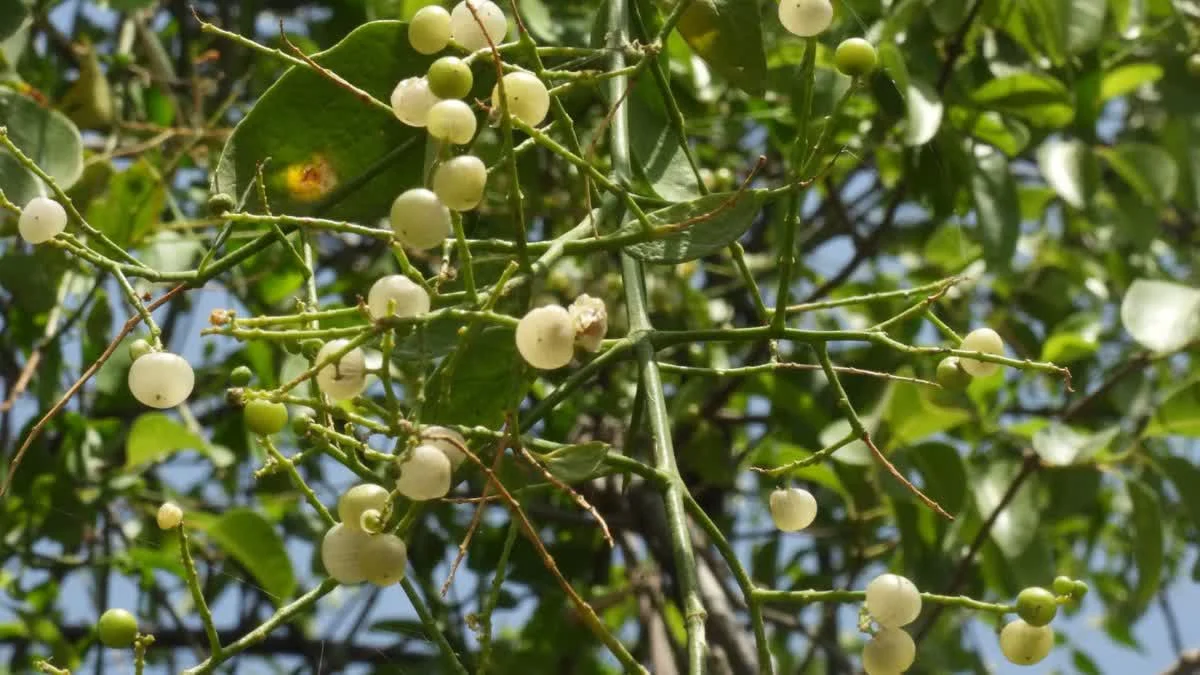
Forest scientists in Rajasthan have recorded a third species of Peelu in the state for the first time, a white-fruited tree called Salvadora Alii, after nearly 16 years of exploration and research.
Until now, only two species of Peelu (Salvadora) were documented in Rajasthan, known locally as Meetha Jaal and Khari Jaal. The newly recorded species is distinguished by its white, juicy, ripe fruits, whereas the two previously known species in the state bear pinkish-red fruits.
The discovery was made by Rajasthan-based forest scientists Satish Kumar Sharma, Anil Sarsawan and Dilip Singh Solanki, who found the species in the districts of Jodhpur, Jalore, Bhilwara and Bharatpur during their research and surveys.
The research detailing the discovery of Salvadora Alii in Rajasthan has been published in Volume 15 (1) of the Journal of New Biological Reports.
A 16-year search that began in Sindh
Sharma explained that the species was first recorded globally in the Sindh province of Pakistan in 2010. Given the similarities in climate and natural conditions between Sindh and Rajasthan, the forest scientists began studying and surveying to investigate whether it could also be present in Rajasthan.
After nearly 16 years of exploration and research, the species has finally been discovered in the state.
Elsewhere in India, Salvadora Alii has previously been documented in Gujarat, Madhya Pradesh, Maharashtra and Uttar Pradesh. The Rajasthan record extends its known range into the arid districts of the state.
Why the record matters
Peelu is an evergreen, highly versatile tree, prized for its delicious, juicy fruits. The discovery adds a new species of Salvadora to Rajasthan's botanical wealth.
The first-ever record of the species in Rajasthan is considered significant for the study of the state's botanical diversity, and is regarded as a major achievement for the scientific documentation and conservation of the state's biodiversity.
First records like this one give researchers a baseline. Knowing which species grow where is the first step in protecting them, especially in arid landscapes where plant life faces pressure from changing land use and a changing climate.