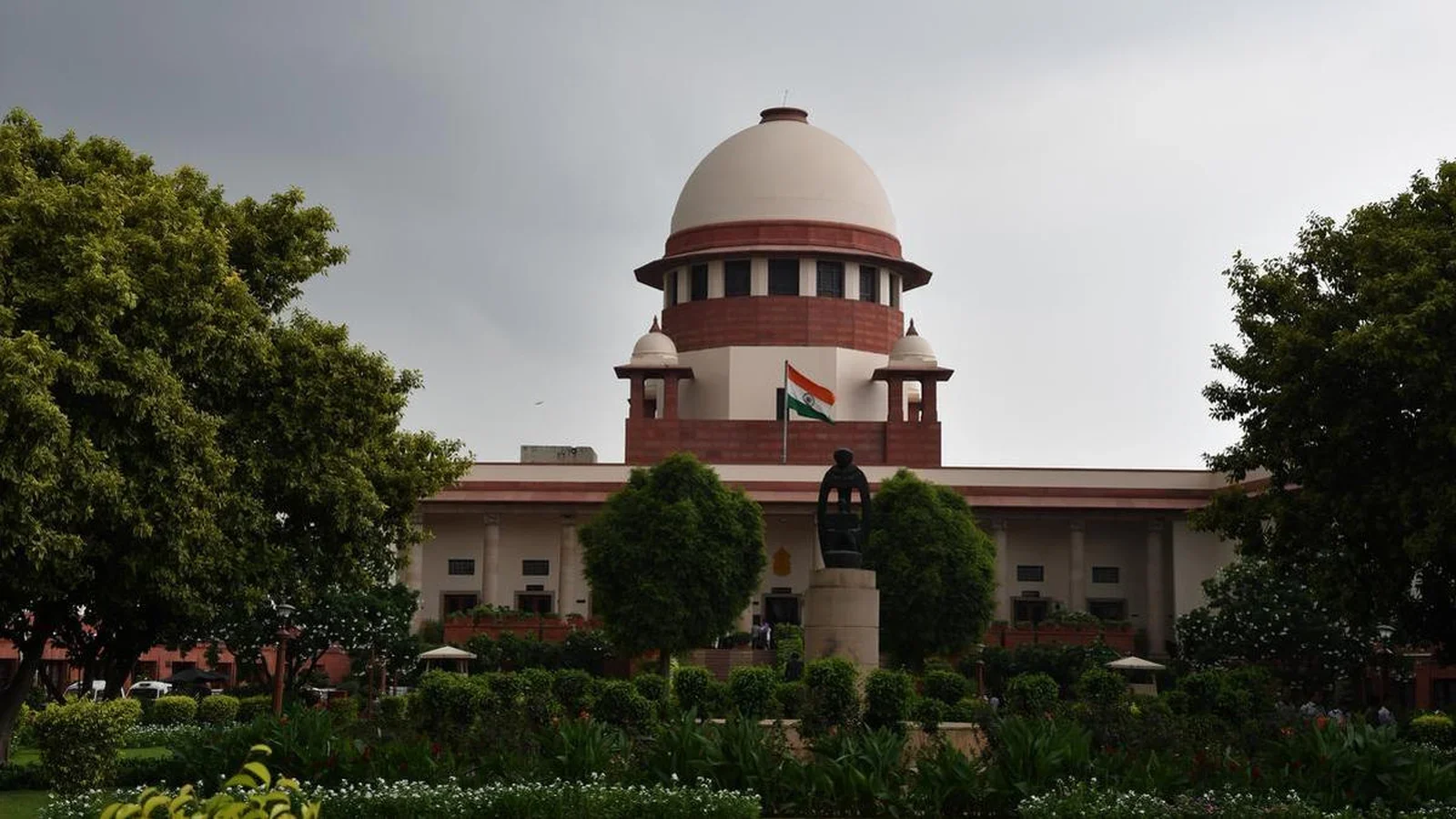
The writers' starting point is the court's mounting pendency. By the end of 2025, the Supreme Court had approximately 92,318 pending cases, its highest recorded backlog, an increase of nearly 10,000 cases over the previous year. The problem, they argue, extends beyond insufficient judicial strength to the institutional structure itself.
The court's constitutional role has shrunk as its appellate workload has grown, they write. During the first half of the 1960s, Constitution Benches decided an average of 134 cases annually. Over the last decade, that figure declined to fewer than 10 cases annually. Meanwhile, Special Leave Petitions under Article 136 have increasingly dominated the court's workload, accounting for approximately 84.6 percent of its admission docket in 2011. Originally intended as an extraordinary remedy, Article 136 has contributed to transforming the Supreme Court into a general appellate court.
The writers cite the 1986 Bihar Legal Support Society case, in which a Constitution Bench led by Chief Justice P.N. Bhagwati clarified that the Supreme Court was never intended to function as an ordinary court of appeal. They also note that in 2016, three Supreme Court judges raised 11 questions about the institution's functioning and referred them to a larger Bench, and that a decade later the reference remains unheard.
Adding judges has not worked
Expanding judicial strength has not resolved the problem, the writers argue. When the sanctioned strength increased to 34 judges in 2019, pendency stood at approximately 60,000 cases. By the end of 2025, it had reached nearly 93,000. During 2025, the court disposed of 65,615 cases, while 75,410 fresh matters arrived. In 2026, Parliament increased the sanctioned strength to 38 judges. These figures demonstrate, they write, that appointing additional judges without restructuring judicial responsibilities cannot provide a lasting solution.
The proposal has institutional backing, according to the writers. The 229th Law Commission Report of 2009 recommended a Constitution Bench in Delhi alongside four regional Cassation Benches. A Parliamentary Standing Committee in 2023 recommended regional Benches, subsequently accepted by the Union Law Ministry. The 229th Law Commission Report also suggested that Article 130 could permit regional Benches without necessarily requiring a constitutional amendment.
Several democracies separate constitutional adjudication from ordinary appellate functions, the writers note. The United States Supreme Court operates above 13 federal Courts of Appeals and considers only a small proportion of cases. South Africa has a separate Constitutional Court and Supreme Court of Appeal. Germany's Federal Constitutional Court exclusively handles constitutional matters, while specialised federal courts address other disputes. Brazil's 1988 Constitution established a separate Superior Tribunal of Justice to handle ordinary federal appeals.
Filtering matters as much as structure
Structural separation alone cannot eliminate congestion, the writers caution, pointing to Brazil's experience. Effective case-selection mechanisms are equally necessary. The US Supreme Court accepts roughly 1 percent of the 7,000 petitions it receives annually through its discretionary review system. Brazil introduced a general repercussion requirement in 2004, allowing constitutional appeals only when questions have significance beyond the immediate parties. India could adopt comparable mechanisms to prevent the proposed Constitutional Court from becoming another overburdened institution, they argue.
The writers also present the case against splitting the court. Successive Chief Justices have opposed the proposal on grounds of institutional unity. They argue that regional Courts of Appeal might be perceived as inferior institutions, encouraging litigants to approach the Constitutional Court in Delhi, and that such a development could create another appellate hierarchy and weaken the authority of a single final court.
The writers' response is that institutional unity is increasingly theoretical. The existing Supreme Court already functions through numerous small Benches, sometimes delivering contradictory judgments, and its constitutional responsibilities receive inadequate attention because of excessive appellate litigation. A separate Constitutional Court could restore coherence by concentrating on questions affecting the entire Republic, they argue, and restructuring would not diminish the Supreme Court's authority but restore its constitutional purpose while ensuring accessible and timely justice for ordinary citizens.