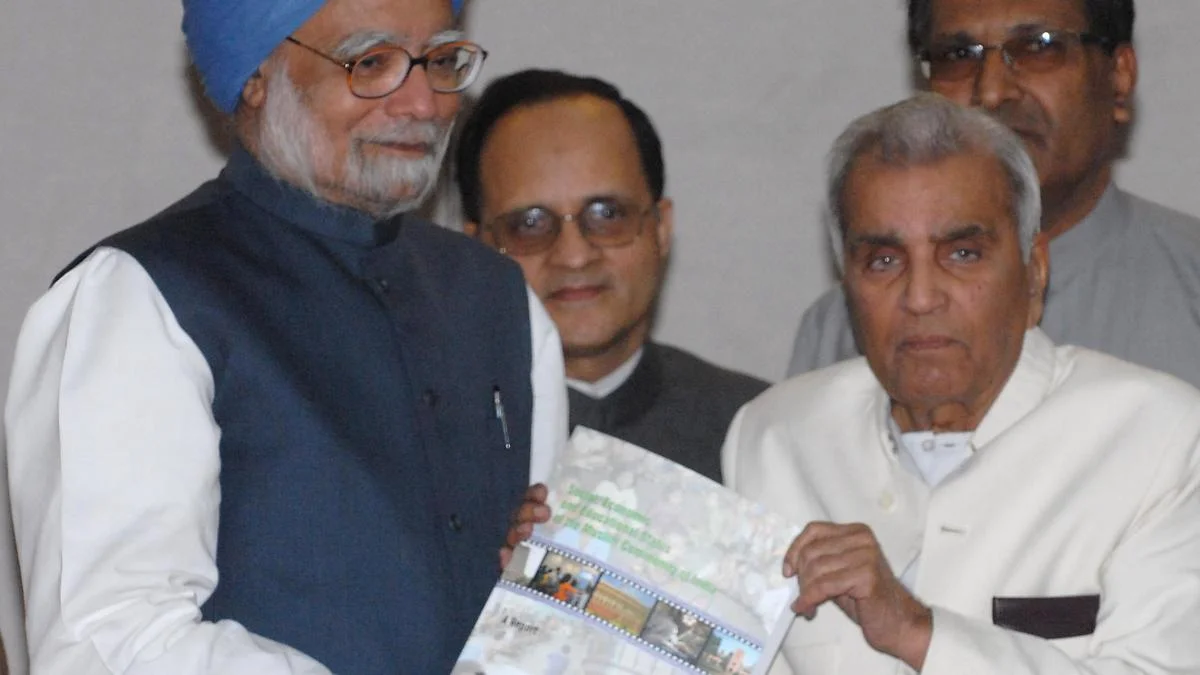
Twenty years ago this week, on 17 November 2006, the Prime Minister's High-Level Committee chaired by Justice (Retd.) Rajinder Sachar submitted its report to Prime Minister Manmohan Singh. It was made public in Parliament on 30 November 2006. In an op-ed in The Hindu marking the anniversary, Abdur Rahman, an IPS officer and the author of Denial and Deprivation: Indian Muslims after the Sachar Committee and Rangnath Mishra Commission Reports, argues that the report still awaits its due.
The committee's findings were stark. It found Indian Muslims educationally backward, economically weak and socially disadvantaged, and warned that without corrective steps the community would become, in its words, "neo-Dalits". Rahman writes that the report shattered the myth of "Muslim appeasement", showing with data that the community lagged on education, employment, credit and public representation.
Some of the committee's recommendations were acted on. Pre-matric and post-matric scholarships and the Multi-Sectoral Development Programme were implemented by the UPA government. But Rahman argues that the report's general recommendations, the institutional reforms meant to change how the state measures and corrects disadvantage, were ignored.
The recommendations that were ignored
The three general recommendations Rahman singles out are the National Data Bank, the Equal Opportunity Commission and the Diversity Index. The National Data Bank was meant to collect reliable data on the socio-economic condition of communities. The Equal Opportunity Commission was meant to look into complaints of discrimination. The Diversity Index was meant to measure how far institutions reflect the diversity of the population they serve.
None of the three was set up, Rahman writes. He argues that without them, the state has no reliable way of knowing who is being left behind, no independent body to hear complaints of exclusion, and no measure of whether public institutions are becoming more representative or less.
Rahman also argues that after the regime change in 2014, many of the UPA-era schemes meant for minorities were stopped or rendered meaningless. That is his characterisation of the record, and it is contested: the government of the day has argued that its welfare schemes reach all communities without distinction, and that targeted schemes were subsumed into broader programmes.
What the author calls for now
Rahman's call is for the report to be revived, presented back to Parliament and implemented in full. He lists the Equal Opportunity Commission, the Diversity Index and the National Data Bank among the measures he wants, along with the caste census and the long-pending follow-up to the Rangnath Mishra Commission, which had recommended reservations for religious minorities.
The argument, as he frames it, is that twenty years of data have vindicated the committee's warning rather than softened it. The report's central finding, that a large community was falling behind on every measure of development, was a diagnosis, and a diagnosis ignored does not go away on its own.
Whether Parliament revisits the report is a political question, and there is no sign of it on the current agenda. But the anniversary has put the document back in public discussion, and Rahman's piece is a reminder of how much of it remains on paper. The report's own words still frame the debate: a community that is educationally backward, economically weak and socially disadvantaged cannot be carried along by growth alone.