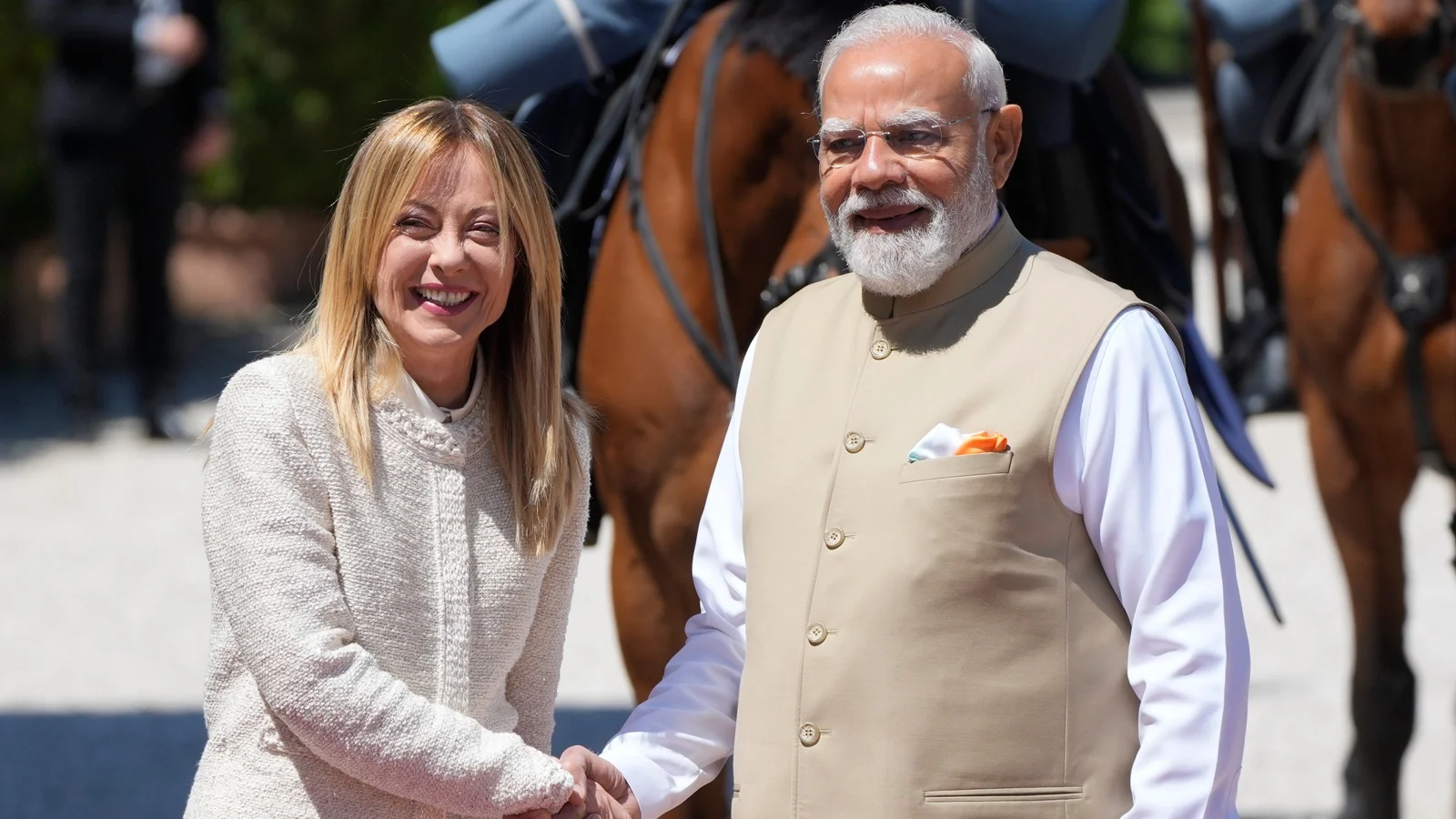
In an opinion piece published in The Indian Express on Wednesday, Antonio Tajani, Italy's Deputy Prime Minister and Minister of Foreign Affairs, writes that Italy and India are determined to enhance their economic and trade partnership. What follows is his argument, as set out in the piece.
Tajani says he is delighted to welcome back to Italy his friend Piyush Goyal, India's Minister of Commerce and Industry. Together, they will chair the 23rd edition of the Italy-India Joint Commission for Economic Cooperation and the fourth Italy-India Business Forum in only two years. The message is clear, he writes: Italy and India are determined to enhance their economic and trade partnership.
Bilateral trade exchange has doubled in 10 years, Tajani writes. The two prime ministers have set the target of 20 billion euros by 2029. India is already among the priority countries of Italy's Export Promotion Plan. But for Italy, he says, India is much more than a destination market. It is also a crucial partner for industrial cooperation, investment and joint projects. More trade can be a driver for more investments, in both directions, and the right conditions are all in place.
Complementary economies
The partnership builds on objective structural complementarities, in Tajani's argument. India is strengthening its domestic industrial base, while Italy is Europe's second-largest manufacturing powerhouse. India has scale and talent. Italian companies, especially small and medium enterprises, offer cutting-edge technologies and top-quality solutions.
The free trade agreement between India and the European Union will be a game changer for business, he writes. The expected reduction of tariffs will benefit sectors that are key in the two countries' economic ties: advanced manufacturing, industrial and agricultural machinery, packaging, automotive components, chemicals and pharmaceuticals. These will be the focus areas of the Business Forum.
Innovation and finance
Innovation will also be high on the agenda, Tajani writes. Soon, Italy will open an Italian Innovation Centre in India. It will foster a more structured dialogue between the two ecosystems, with start-up acceleration programmes, exchanges and joint projects between research centres and universities, and targeted initiatives for innovative companies and small and medium enterprises. A new edition of the Science and Innovation Dialogue took place in Rome recently. Around 1,000 Italian companies are already operating in India, many with manufacturing facilities in the country, and Italy aims to build on this presence.
Italy has introduced a series of dedicated measures to support its companies in India, he writes: a financing line worth 500 million euros for market-access activities and joint ventures; an increasing commitment by its export credit agency, which already provides guarantees for contracts worth more than 2 billion euros; a stronger presence at trade fairs across the country; B2B digital platforms; and targeted sectoral business missions. Finance will play a central role, and Italy wants to foster more regular dialogue among banks, venture capital firms, investment funds and stock exchanges.
A shared Indo-Mediterranean region
India is an indispensable partner for Italy on major global issues, Tajani writes: growth, security and stability. The two countries are pillars of a shared Indo-Mediterranean region. Over 2,000 years ago, their peninsulas were trading spices, coins and textiles. Today, they jointly support the vision of the India-Middle East-Europe Economic Corridor, known as IMEC. Over the same routes that connected India and the Roman Empire, they are now working on corridors of goods, investment, infrastructure, data, ideas and talents. They are starting with concrete initiatives, such as a fast-track customs corridor to facilitate container traffic control and digital-based transport.
The friendship between Italy and India spans a wide range of shared interests, he writes: from defence to space, counter-terrorism to critical raw materials, energy to science, cooperation continues to expand. It is a true special strategic partnership, as the two prime ministers defined it. A central dimension will remain people-to-people dialogue. As heirs to millennia-old civilisations, Italy and India have decided to celebrate 2027 as the Year of Culture and Tourism, with an extensive calendar of initiatives, exhibitions, events and performances in India, and a business forum dedicated to the cultural and creative industries.
Italy is increasingly looking to the future, Tajani concludes, committed to innovating, creating and anticipating change, and intends to continue doing so by building on its most trusted friendships.