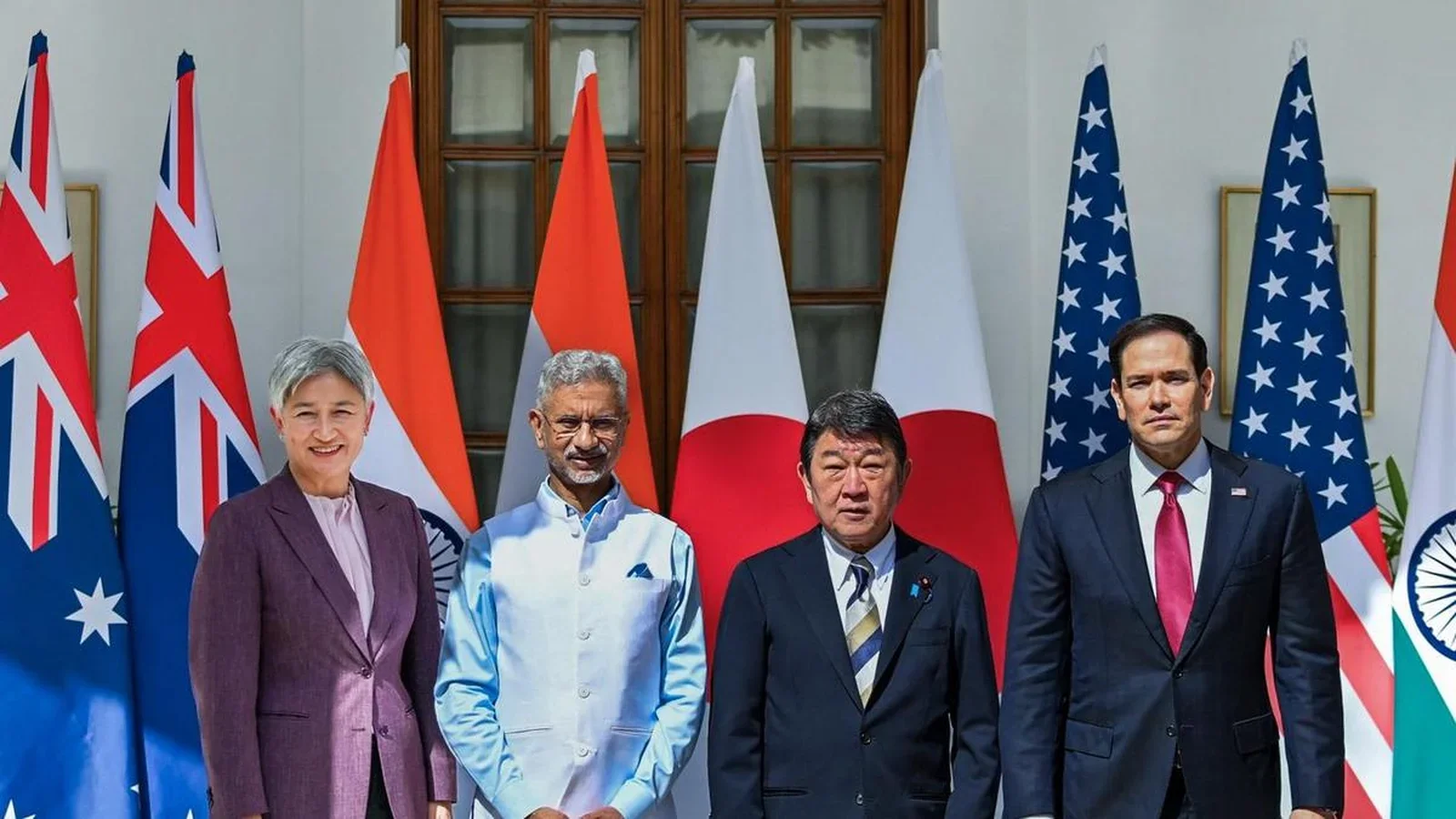
The meeting would be the first Quad Leaders' Summit since Donald Trump began his second term, and the first attended by Japanese Prime Minister Sanae Takaichi. The last such summit was held in Wilmington in 2024, under former US President Joe Biden and former Japanese Prime Minister Fumio Kishida. The writers describe the Manila summit as a crucial test of the Quad's resilience amid Trump-era uncertainty.
The grouping went through a turbulent 2025, the writers note, as shifting US geopolitical priorities and changing bilateral dynamics, especially with India, raised questions about its future cohesion. Though India was expected to host the next summit, the year saw intense strategic turbulence. Despite this, the writers argue, the grouping did not collapse, and operational cooperation continued.
A key achievement, they write, was the elevation of the Quad's Indo-Pacific Maritime Domain Awareness initiative into the Indo-Pacific Maritime Surveillance Collaboration framework, launched in New Delhi in May 2026 following a Quad Foreign Ministers' Meeting. Foreign Ministers met multiple times despite the political low point: twice in Washington in 2025, the first meeting marking Marco Rubio's debut as Secretary of State, and three times in 2026, in New Delhi, Manila and Atlanta.
The core question: Trump's Indo-Pacific vision
The summit will be the first real indication of Trump's Indo-Pacific vision for his second term, the writers argue. The Quad was revived during Trump's first term in 2017, which also saw the US Pacific Command renamed US Indo-Pacific Command. But in his second term, Trump's priorities have been dominated by the Russia-Ukraine war, transatlantic and NATO relations and the West Asia conflict, causing regional partners to worry about a potential shift away from the Indo-Pacific.
Trump's push for greater burden-sharing among partners, and the White House's review of AUKUS, the security partnership between Australia, the UK and the US, have heightened uncertainty among Indo-Pacific players, the writers say. Since the Quad lacks a permanent bureaucracy or institutional framework, leader-level summits serve as vital platforms to reaffirm shared purpose and set the agenda.
Facing this uncertainty, the writers note, Quad partners have pursued diversification of their security approaches. Japan launched the OCEAN framework, short for One Cooperative Effort Among Nations, reshaping its post-war security posture through deeper strategic alignment with partners. Australia has strengthened defence partnerships with India, Japan, Southeast Asian nations and Pacific Island countries. India continues its policy of multi-alignment, diversifying defence and strategic ties across the Indian Ocean and wider Indo-Pacific.
The Japan-Australia-India grouping has also deepened trilateral cooperation, with defence ministers meeting recently in Cebu, signalling deeper cooperation independent of Washington's role. France is emerging as a new Indo-Pacific player, strengthening ties with regional countries for a balanced security environment, the writers add.
Why Manila matters
Despite this diversification, Washington's role remains critical, the writers argue, particularly in safeguarding the Taiwan Strait, a key flashpoint amid China's growing maritime assertiveness. Though India was expected to host the summit, the Philippines hosting it reinforces a foundational Quad pillar: ASEAN centrality.
The Philippines is at the frontline of Chinese assertiveness in the Indo-Pacific, with ongoing South China Sea sovereignty disputes with Beijing. Following precedent, Quad leaders are expected to reiterate the importance of respecting sovereignty in the South and East China Seas and condemn violations of international law.
For Trump, the writers argue, the visit carries two key priorities: resetting American posture in the region and reaffirming the Quad's commitment against Chinese belligerence, delivered symbolically from Manila itself. The Manila summit, they conclude, represents a crucial test of the Quad's resilience. While regional partners diversify their strategic options, sustained American engagement remains indispensable for countering China's assertiveness and preserving a stable, rules-based Indo-Pacific order.