The Supreme Court has ordered that any state, Union Territory or district through which the Yamuna flows will be held accountable and fined if the river's water quality worsens within its jurisdiction.
A bench of Justices Manoj Misra and Manmohan passed the order on Tuesday, directing that fines be deposited with the Supreme Court Registry and that the Central Pollution Control Board (CPCB) work out the compensation formula.
"If the water quality deteriorates on any parameter while flowing through, or exiting a State/Union Territory or a District therein, then that State/Union Territory or District... shall be held accountable and penalised," the court said, according to Oneindia.
States and Union Territories may recover the penalties from the actual polluters and responsible officials after an inquiry, the court said.
Real-time monitoring ordered
The court directed real-time monitoring of all sewage treatment plants (STPs) and common effluent treatment plants (CETPs) on the river, with tamper-proof smart energy meters to be installed within one month.
Live sensor readings must be published on the websites of the CPCB and the state pollution control boards. If a data feed is interrupted for more than 24 hours, it will be presumed that the plant was not operating.
The court also ordered surprise quarterly sampling of every STP of 5 MLD capacity or more and every CETP, to be carried out through IITs, NITs or accredited laboratories.
Zone O to stay a green zone
The court directed that Zone O under the Delhi Master Plan 2047 be protected as a green zone, and ordered GPS tracking on all septage tankers carrying sewage.
Nodal officers of at least Special Secretary rank must be appointed within two weeks, and monthly compliance affidavits must be filed by the authorities concerned.
Additional Solicitors General S V Raju, Anil Kaushik and Aishwarya Bhati appeared in the matter.
Contradictions in the Yamuna Action Plan
The court examined the Yamuna Action Plan, presented on 7 October 2026 by a committee headed by the Union Home Secretary. The plan proposes 125 new STPs, 20 upgrades, interception of 520 drains carrying about 9,666.81 MLD of wastewater, 12 new CETPs, 23 biogas plants and the restoration of 270 water bodies.
But the bench flagged contradictions in the plan. While it says there are no encroachments in Zone O, Delhi's own annexure lists all 35 water bodies and wetlands there as encroached.
The plan also says 28 of Delhi's 37 STPs meet CPCB standards, while the CPCB says none of them meets all the standards.
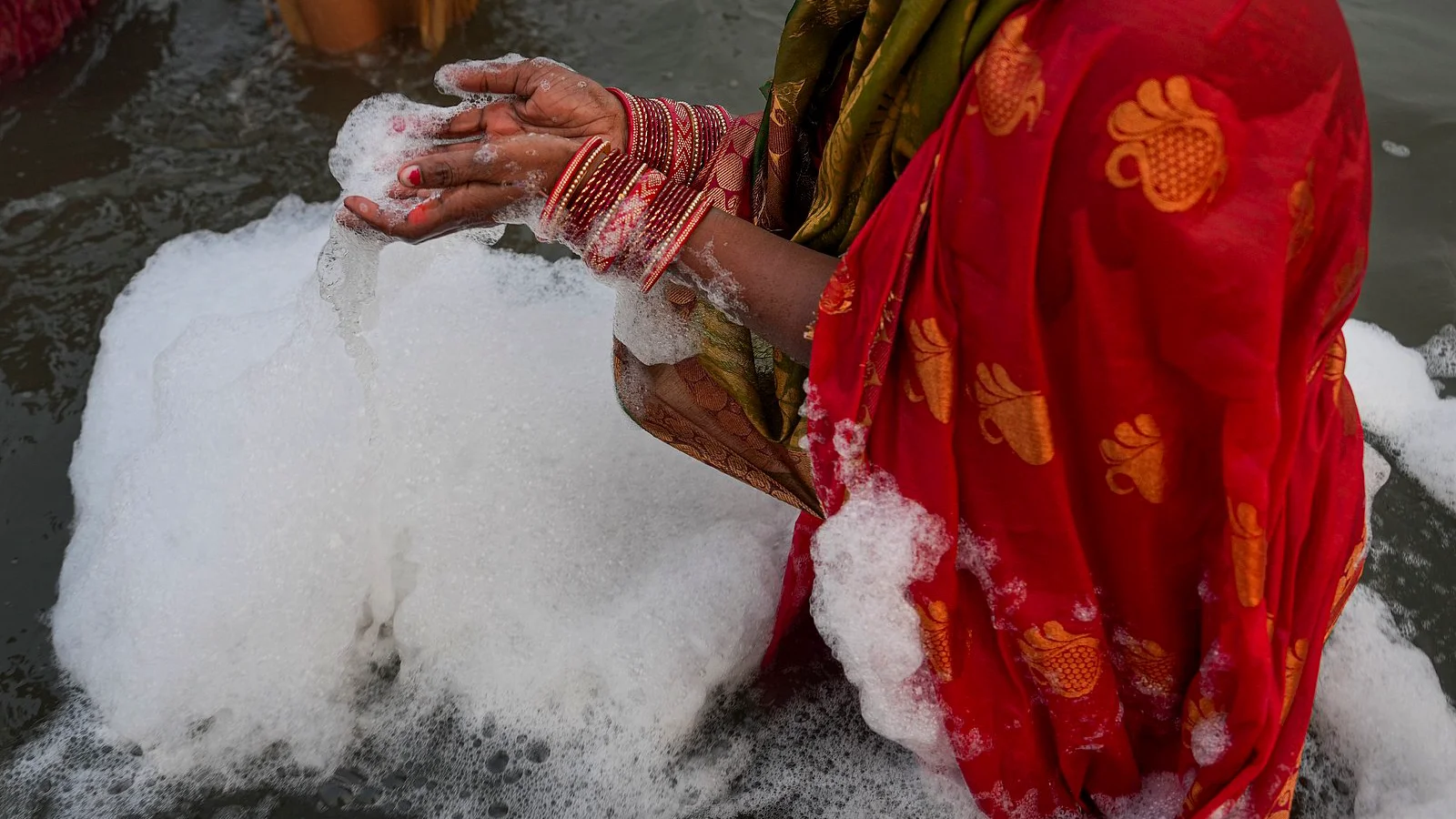
The order is the latest in a long series of judicial interventions to clean the Yamuna, whose stretches through Delhi are among the most polluted river waters in the country, regularly covered in thick toxic foam.