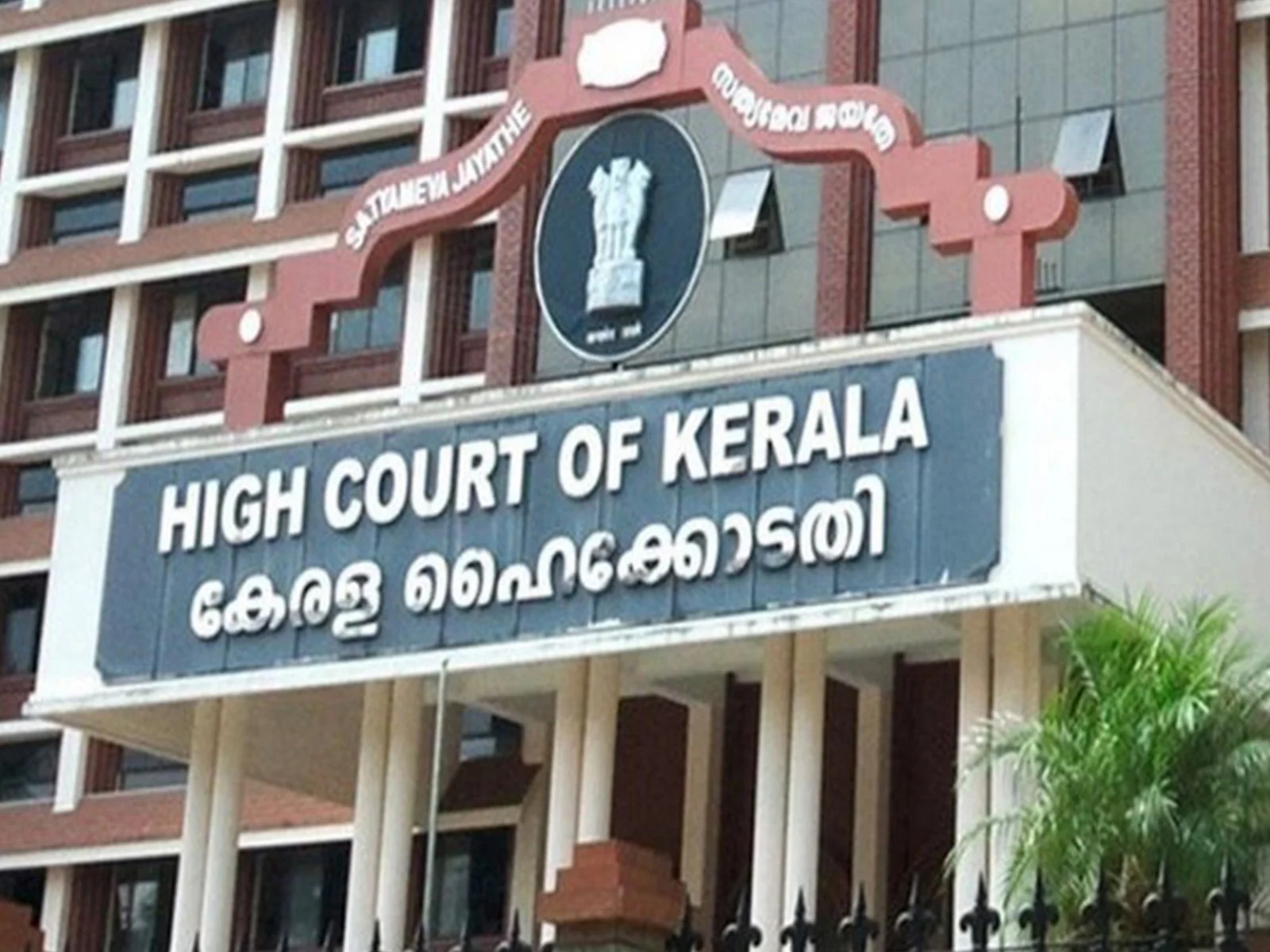
The Kerala High Court has held that there is no need to give the prefix 'adopted' to children of adoption in official documents, including legal heirship certificates.
Justice P.V. Kunhikrishnan observed: "When society treats the child as the son or daughter of the adoptive parents, there is no need to describe the child as an 'adopted girl' or 'adopted boy' in official documents. The law recognises adoption, and no one will treat an adopted child in a different category. There is no insult in describing a child as an adopted son or adopted daughter, which is statutorily recognised, but the same should be avoided while recording in official documents."
The court set aside the legal heirship certificate already issued in the case and directed the Tahsildar to issue a new one showing the petitioner's relationship with her deceased father as "daughter" instead of "adopted daughter".
It also directed the State government to make changes in its guidelines and in the e-District portal so that there is no mandate to describe an heir's relationship with the parents as "adopted" where the heir is adopted. The changes must be made within one month of receipt of a certified copy of the judgment.
"Such children should be shown as 'son' or 'daughter'. No prefix is necessary," the court said, directing the State to delete the option in the e-District portal which says that if the legal heir is an adopted child, it should be separately mentioned.
The case before the court
The petitioner before the court was adopted by her parents when she was a one-month-old baby. In 2023, her mother died, and she was issued a legal heirship certificate certifying her as the sole legal heir and describing her as "daughter".
A year later, her father also died. The Village Officer issued her a family member certificate showing her as his "daughter", but the legal heirship certificate issued by the Tahsildar described her as her deceased father's "adopted daughter".
She approached the High Court seeking removal of the prefix "adopted" from the certificate. Though she admitted that she was an adopted daughter, she felt that the description was unnecessary and adversely affected her legal status and dignity.
The government pleader, appearing for the Tahsildar, told the court that the government had issued guidelines requiring the authority issuing a legal heirship certificate to give the tag "adopted daughter" or "adopted son", and that such an option was provided in the e-District portal. It was submitted that the Tahsildar was bound by the guidelines and that there was no illegality or arbitrariness in the certificate.
What the law says
The court referred to Section 12 of the Hindu Adoptions and Maintenance Act, 1956, which deals with the effects of adoption. It noted that the law provides that an adopted child shall be deemed to be the child of the adoptive parents for all purposes from the date of adoption, and that an adopted child is given all the benefits of the former parents as well as the adoptive parents.
"Some relationships begin at birth, and some others are formed through adoption. The paths may differ, but the word 'daughter' need not carry that difference wherever it appears," the court observed.
Citing the decision in Vysakh K.G. v. Union of India, the court said the petitioner's name should be masked, but it decided to refer to her as "Anmol" instead of using an alphabet like "A" or "B". "Anmol means 'priceless', 'invaluable' or 'precious beyond measure'; in other words, it means 'something which cannot be measured'," the court said.
The petitioner was represented by advocates Arun Ashok, Neena James, Celia Isaac, Antony M. George and Joel C. Jexon. Government Pleader Rukhiyabi Mohammed Kunhi appeared for the respondents.