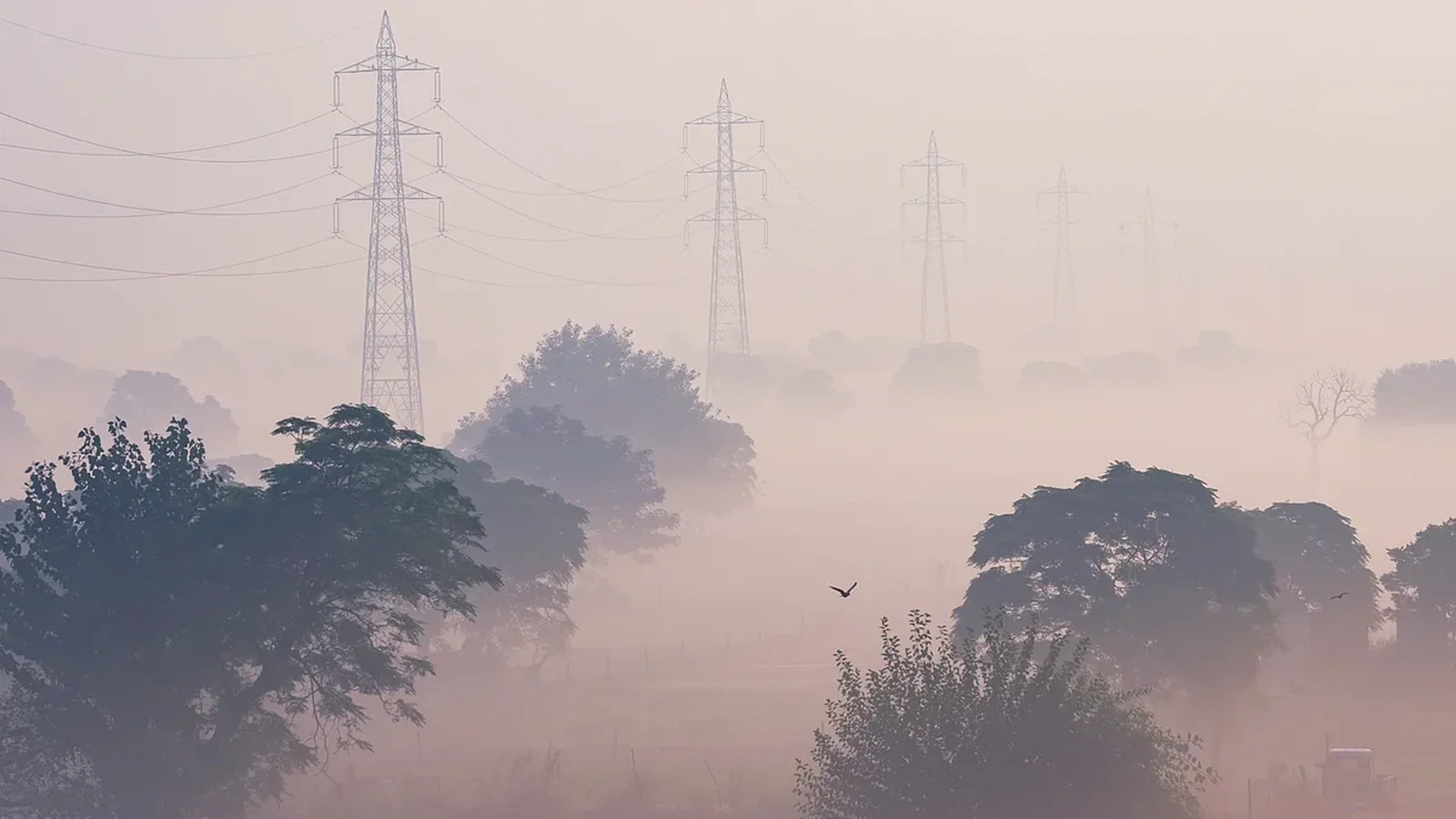
Visibility dropped sharply as the smog settled over the city, with cars and motorcycles emerging from dense haze on the main roads. By 11 am on Friday, Delhi's IQAir reading had eased to 208, while Lahore had fallen to seventh among the world's most polluted major cities with an AQI of 155. Lahore had held the top spot for several days before Delhi overtook it, and later on Friday light rain and shifting winds brought Lahore's reading down to about 111.
The air stayed bad through the weekend. The Central Pollution Control Board recorded a Delhi AQI of 348 at 9 am on Saturday, 14 November, against a 24-hour average of 373 at 4 pm on Friday, and seven of the city's 59 monitoring stations were in the severe category on Saturday morning. On Sunday, 15 November, the citywide AQI stood at 359 at 2 am, while individual stations were far worse, with readings of 415 at ITO, 426 at IIT Delhi, 407 at NSIT Dwarka and 404 at the Commonwealth Sports Complex at 6 am.
Why the air turns toxic every winter
Pollution is a seasonal problem across northern India and neighbouring Pakistan. Cold, heavy winter air traps vehicle emissions, construction dust, industrial pollutants and smoke from agricultural burning close to the ground. The Air Quality Early Warning System for Delhi has forecast a further deterioration in the coming days as temperatures fall and the air grows more stagnant. The Safdarjung weather station recorded a minimum temperature of 16.4 degrees Celsius on Saturday, 2.9 degrees above normal.
Under the Graded Response Action Plan, Stage III restrictions are in force in Delhi-NCR, in effect since 6 November. The measures include curbs on dust-generating construction and demolition, road dust control, restrictions on the entry of BS-III petrol and BS-IV diesel light motor vehicles, and hybrid classes for students up to Class V. Delhi's environment minister Manjinder Singh Sirsa and health minister Pankaj Kumar Singh have also ordered 50 percent work from home in their departments. Delhi schools are closed on Monday, 16 November, for Chhath Puja, a public holiday that is separate from the pollution measures.
Questions over the official readings
The pollution spike has also raised questions about official data. An investigation by the Indian Express found that 45 of Delhi's 59 monitoring stations had missing hourly readings for at least one pollutant on Diwali night, 8 November, when the city recorded its worst festival-day air in five years. Only 14 stations reported complete data. The pollution board said its analysers are designed to measure particulate matter only up to 1,000 micrograms per cubic metre, so higher readings fell outside the instruments' range. Data from the Delhi Pollution Control Committee recorded PM2.5 levels of 3,744 at Mundka, 3,425 at Ashok Vihar, 4,697 at Punjabi Bagh and 4,985 at Jahangirpuri during the same hours.
Health advisories ask residents to limit outdoor exertion, especially children, older adults and people with heart or lung conditions, and to use a properly fitted N95 mask outdoors. People with worsening breathing problems or chest discomfort are advised to seek medical attention.