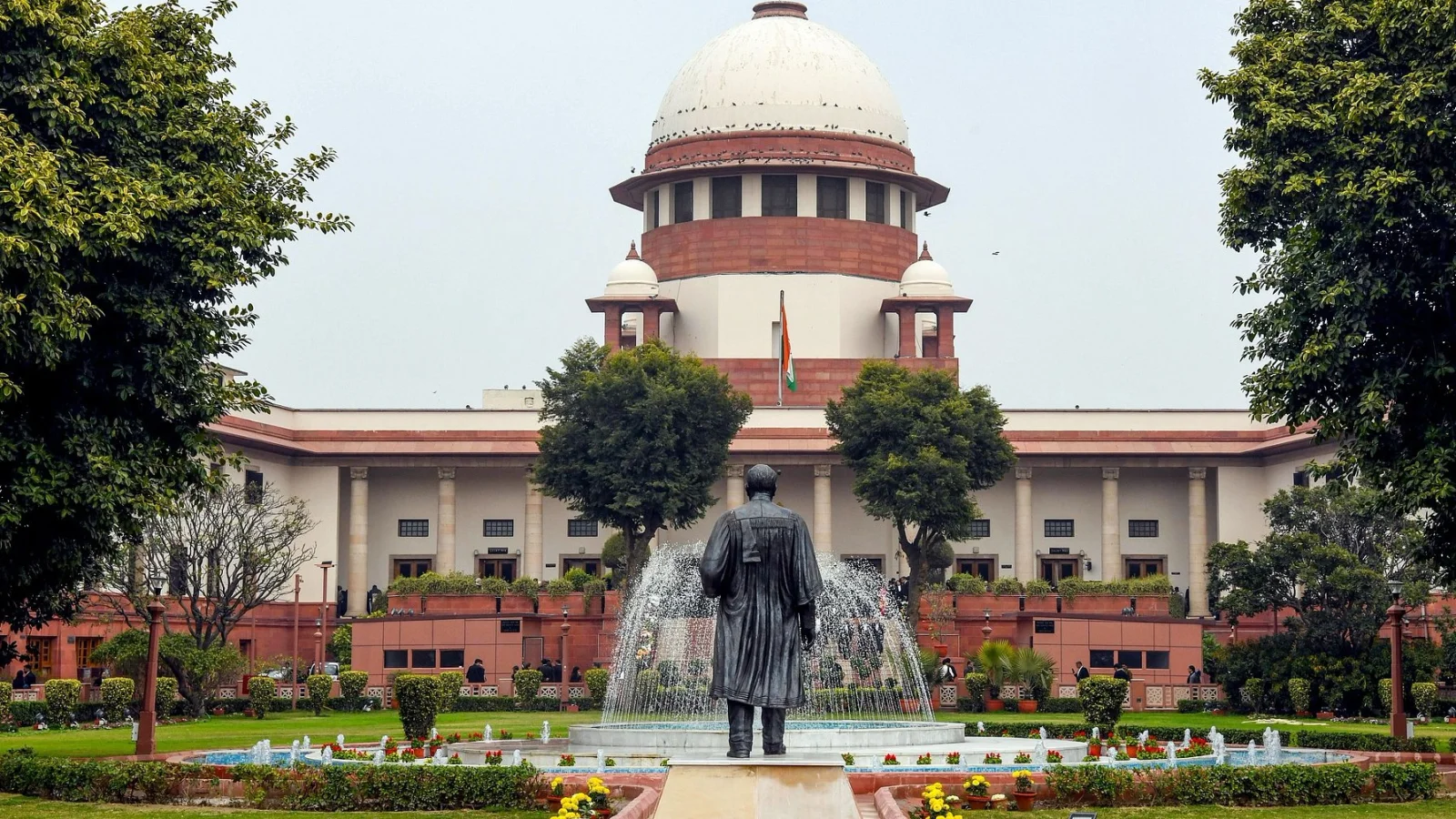
The Supreme Court has awarded Rs 30 lakh in compensation to a Chhattisgarh man who remained in prison for seven years, three months and 21 days after his acquittal, calling it a case of institutional dysfunction and apathy.
A bench of Justices Augustine George Masih and Sanjeev Sachdeva passed the order on Monday, in a judgment reported on Tuesday, ETV Bharat reported.
The man, identified in the case only by the surname Gond, was arrested in December 2012 in a murder case when he was about 21 years old. A sessions court convicted him in August 2013 under Section 302 of the Indian Penal Code and sentenced him to life imprisonment.
Freed on paper, forgotten in prison
The Chhattisgarh High Court set aside his conviction on 20 January 2018, when he was about 28. The state did not appeal against the acquittal, so it attained finality.
But the man remained in prison for more than seven more years and was released only on 19 May 2025, when he was about 35.
The state blamed a communication gap between jail and legal aid officials. Letters written by the jail superintendent in 2018 seeking the status of the appeal went unanswered.
"There appears to be a lack of coordination and institutional dysfunction and appellant lost his prime youth on account of the apathy," the bench said.
"His prime period of life cannot be restored, however only solace to him can be to recompense him in monetary terms," the court added.
Compensation is the bare minimum
The bench said that helping the man rebuild his life was not charity. "Ensuring that the Appellant is placed in a position to regain his self-sufficiency and rebuild his life is not an act of charity or benevolence on the part of the State; it is the bare minimum required to meaningfully redress the wrong inflicted upon him," it said.
The court noted that India lacks a legislative mechanism for compensating wrongful incarceration, citing the Delhi High Court's 2017 ruling in Babloo Chauhan and the Law Commission's 277th Report on the subject.
Guidelines for high courts
The Supreme Court asked all high courts to consider framing guidelines like those framed by the Madhya Pradesh High Court after the Supreme Court's September 2025 decision in Sohan Singh @ Bablu, in which Rs 25 lakh was awarded.
The court also asked high courts to consider an Online Criminal Justice Ecosystem on the Madhya Pradesh model, so that acquittals and releases are tracked and no prisoner is left behind by a communication failure again.
The judgment is a rare instance of the Supreme Court putting a price on years lost to a system that freed a man on paper and forgot him in prison.