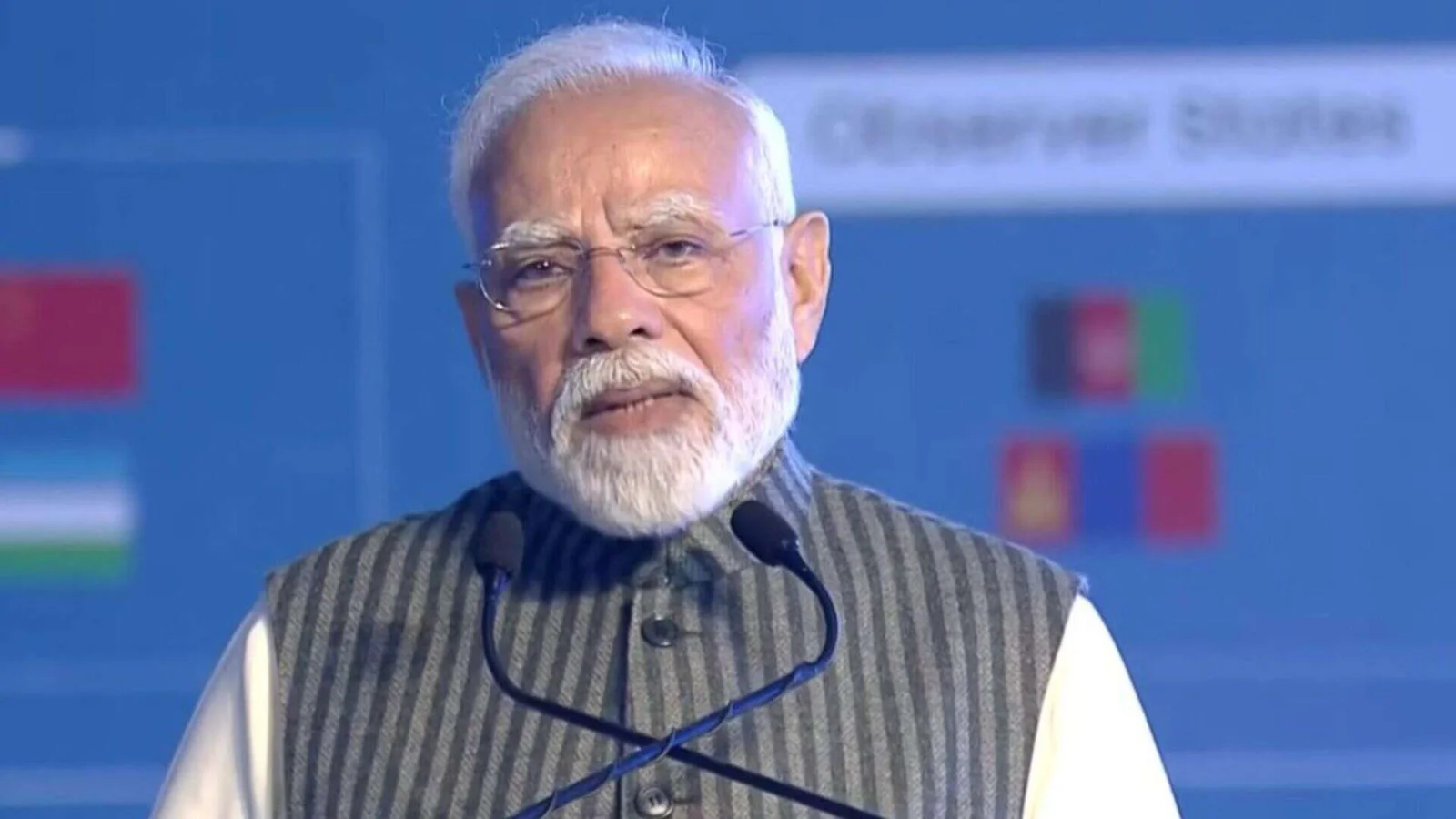
Prime Minister Narendra Modi on Saturday inaugurated the first SCO Civilisational Dialogue Forum at the Purana Qila in New Delhi, saying that empires may have changed maps, but civilisational dialogues changed the way the world thinks and enriched its ideas. India is hosting the forum, the first of its kind under the Shanghai Cooperation Organisation, and ministers from member countries attended the opening ceremony.
Addressing the gathering, PM Modi said the world today is dominated by talk of war and unrest, yet in India the conversation is about civilisational dialogue and cultural engagement. He said cultural engagement is the strongest guarantee of global peace, which makes the forum even more significant. He welcomed all the guests who had come to India for the event and said the forum is not merely a formal platform, but one that can show the world a way forward.
Among the ministers present was Pakistan's Minister for Climate Change and Environmental Coordination, Musadik Malik. His presence drew attention because he had recently made sharp statements against India over the Indus Waters Treaty, warning New Delhi over river waters shared between the two countries. India has maintained that its stand on the treaty has not changed, even as it invited Pakistan to the SCO programme.
A forum built on shared history
PM Modi said the Shanghai Cooperation Organisation marked its 25th anniversary a few months ago. Over the years, he said, the organisation has expanded cooperation in security, the economy and connectivity, and cultural and civilisational cooperation between member countries can strengthen these ties further. He expressed confidence that the forum will encourage new ideas and open fresh possibilities for cultural cooperation.
The Prime Minister reached back into history to make his case. He said that about 5,000 years ago, trade links existed between the Indus Valley Civilisation and Mesopotamia, and later trade routes extended those contacts further. India, China, Central Asia and many regions of Eurasia were connected through these ancient networks, he said. Along these routes, traders travelled with scholars and Buddhist monks, and their journeys carried ideas, languages and traditions from one land to another.
He said 21st century technology has opened new possibilities for cultural engagement. Countries that once took months to reach can now connect in seconds, and digital platforms have made it easier than ever to share information, exchange culture and cooperate internationally. He urged SCO countries to make full use of these possibilities, saying that when knowledge travels from one place to another, its form of expression may change, but its effect and importance do not. Knowledge, in whatever form, always spreads light, he said.
Heritage for the next generation
PM Modi said the museums, libraries and archives of SCO countries hold thousands of years of priceless heritage. Ancient manuscripts, rare texts, historical documents and artefacts reveal many aspects of their shared connections, he said. Technology now offers the best opportunity to carry this heritage to the next generation, and member countries can cooperate on digitising and translating ancient texts.
Joint research projects, he said, can bring new aspects of shared history to light, so that a young person sitting anywhere in the world can better understand another country's cultural heritage. The forum, he said, is an opportunity to turn that shared past into a common future.
**Q:** What is the SCO Civilisational Dialogue Forum? A: It is a new forum under the Shanghai Cooperation Organisation focused on civilisational dialogue and cultural engagement between member countries. India hosted its first edition at the Purana Qila in New Delhi. **Q:** What did PM Modi say at the inauguration? A: He said empires changed maps, but civilisational dialogues changed the world's thinking and enriched its ideas, and that cultural engagement is the strongest guarantee of global peace. **Q:** Which Pakistani minister attended the forum? A: Musadik Malik, Pakistan's Minister for Climate Change and Environmental Coordination, attended the opening ceremony in New Delhi.