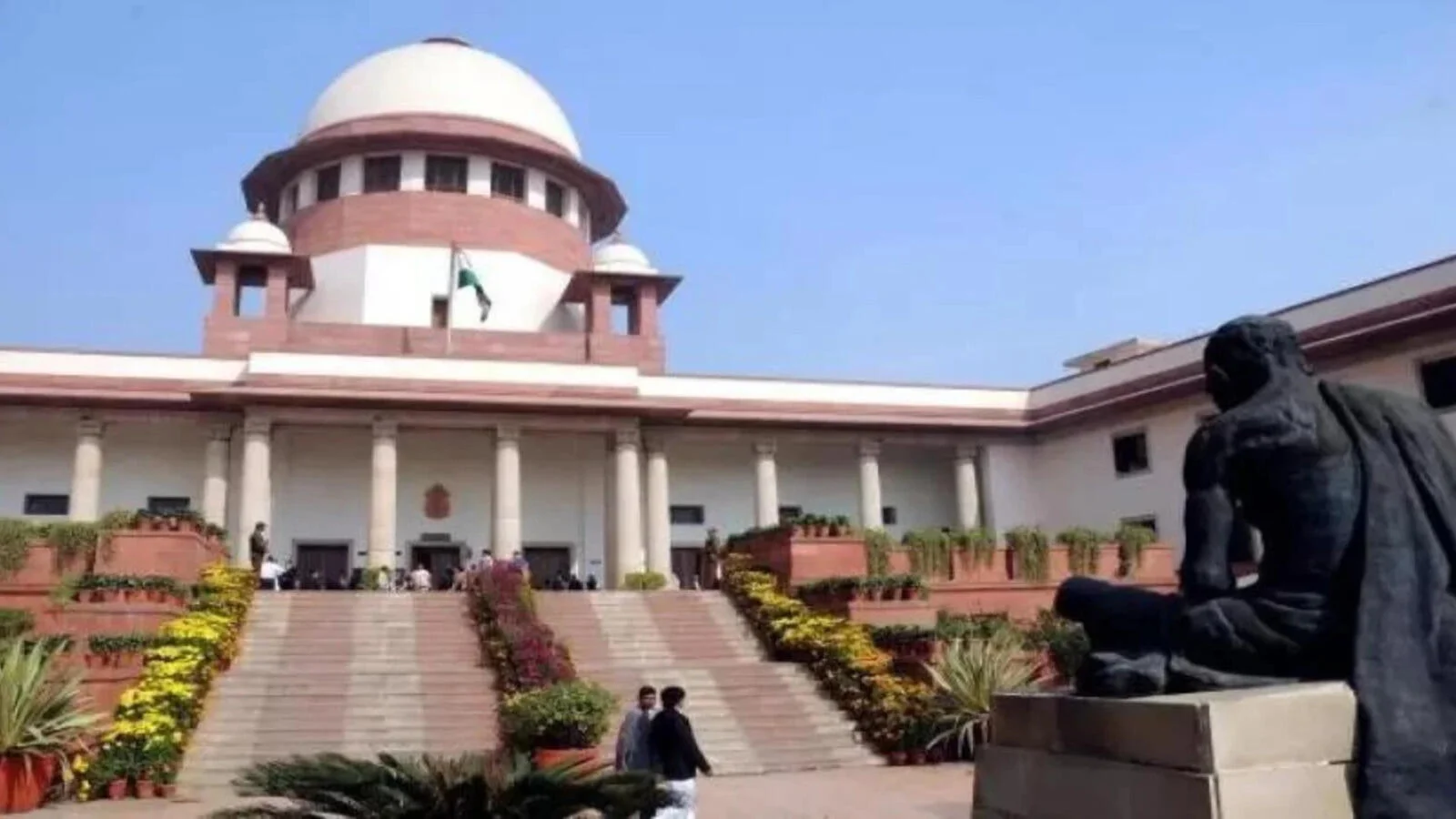
The Supreme Court on Friday asked the Union government to consider bringing a law to curb marriages between close blood relatives, and to run a public awareness campaign on the genetic risks such unions carry for children. A bench headed by Chief Justice Surya Kant said the issue was best addressed through legislation rather than court directions, and sought the Centre's response on the desirability of a law and on awareness measures, including in school and college curricula.
The case was brought by Charvi S, a 20-year-old law student at the National Law School of India University in Bengaluru. Born to parents who are first cousins, she lives with photophobia and cone dystrophy, inherited eye disorders that have left her with 40 per cent visual impairment. Her public interest petition, filed through advocate Anjuman Tripathy, challenged the exceptions in the Hindu Marriage Act, 1955, and the Special Marriage Act, 1954, that permit marriages within prohibited degrees of relationship where custom allows them.
"Should the law continue to retain statutory and customary exceptions that permit marriages between close blood relatives, notwithstanding established medical evidence that such unions significantly increase risk of autosomal recessive disorders, congenital anomalies, disabilities, infant morbidity and other lifelong health issues in children?" she asked in her petition. Medical evidence cited in the plea says children of such unions face a higher risk of inheriting two copies of an altered recessive gene from their parents.
A matter for Parliament, not the court
The bench, which also included Justices Joymalya Bagchi and V Mohana, made it clear that it did not intend to issue directions. "We are issuing notice for the limited purpose of impressing upon the Union of India to consider the desirability of bringing a suitable legislation, or to ensure wide publicity through different channels, including a proper curriculum," the bench said. The judges observed that bringing in social reform legislation fell within the legislature's domain, and said they wanted only to sensitise the government on the issue.
The petition drew on National Family Health Survey data to show how widespread the practice remains. According to the survey figures cited, about 11 per cent of marriages in India are between blood relatives, and 13 per cent of married women were related to their husbands before marriage. First cousin marriages account for 8 per cent of all marriages. The rates cited were 15.8 per cent among Muslims, 14.5 per cent among Buddhists and neo-Buddhists, 11.9 per cent among Christians and 10.1 per cent among Hindus. In Tamil Nadu, Andhra Pradesh and Karnataka, more than a quarter of women reported being in such marriages, and in Telangana and Puducherry the figure was about a fifth, with Kerala the exception among southern states.
No move against existing marriages
The petition also made clear that its immediate objective was not to criminalise existing marriages or to unsettle their legal status retrospectively. Instead, it sought safeguards such as counselling, risk disclosure, medically advised screening and certification, and asked the court to read public health safeguards into the provisions that permit such unions. The hearing also brought the wider debate on a uniform civil code back into focus, with reports of the proceedings noting that the case has revived the court's push towards common personal laws.
The Centre has been asked to respond on both the question of legislation and the awareness campaign. The court will take up the matter again after the government's reply is filed.
**Q:** What did the Supreme Court ask the Centre to do? A: The court asked the Centre to consider the desirability of a law to curb marriages between close blood relatives and to run an awareness campaign on the genetic risks for children, including through school and college curricula. **Q:** Who filed the petition? A: Charvi S, a 20-year-old law student at the National Law School of India University in Bengaluru, who has 40 per cent visual impairment from inherited eye disorders. Her parents are first cousins. **Q:** How common are marriages between blood relatives in India? A: National Family Health Survey data cited in the petition says about 11 per cent of marriages in India are between blood relatives, with first cousin marriages accounting for 8 per cent.