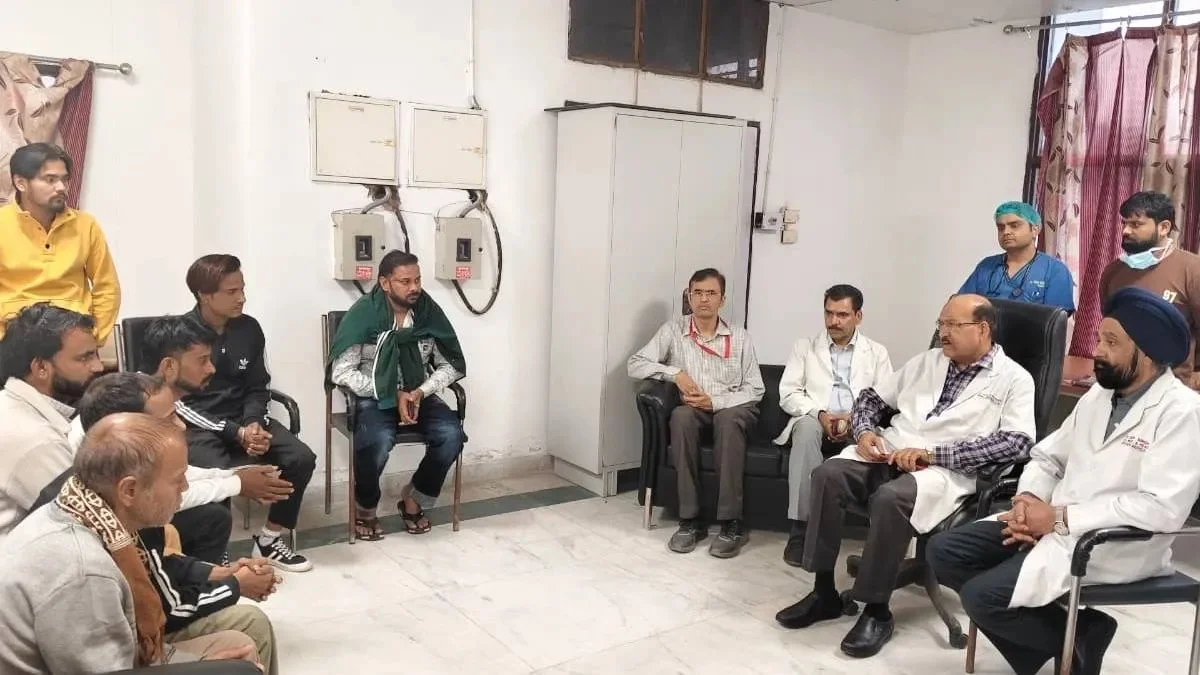
A 23-year-old gymnast from Bhiwani in Haryana, who dreamed of winning a medal for the country, died after a road accident, but his family turned their grief into hope for eight other people by donating his organs.
The young man was seriously injured in the accident and was admitted to the trauma centre at the Post Graduate Institute of Medical Sciences (PGIMS) in Rohtak, where he fought for his life. On Monday, a specialist committee of doctors declared him brain stem dead after carrying out the prescribed tests.
In the middle of their grief, the family showed rare courage and agreed to organ donation. The young man's corneas, heart, lungs, liver and both kidneys were donated, and eight people are expected to get a new life because of the decision.
Dr H K Agarwal, Vice-Chancellor of the University of Health Sciences, said the young man had been brought to the trauma centre in a serious condition after the accident. Dr Tarun Yadav, in charge of the trauma centre, and his team made every possible effort to save his life.
A family decision in the darkest hour
The family was in shock and confusion when the doctors spoke to them about organ donation. Dr Agarwal counselled the relatives and explained that although the young man was gone, his organs could give life to others and bring new light into the lives of eight people.
The family then gathered courage and gave their consent for the donation. The decision meant that the gymnast's unfulfilled dream of winning a medal would now be remembered in a different way, through the lives he saved after his death.
Brain stem death is declared only after a series of prescribed clinical tests confirm that the brain stem has stopped functioning irreversibly. A specialist committee carries out the examination, and organ donation can be considered only after the declaration is made and the family gives consent.
The committee that made the declaration
The committee that declared the young man brain stem dead included Professor Dr Varun Agarwal, unit head of the neurosurgery department, Professor Dr Tarun Yadav of the anaesthesiology and critical care department, and Assistant Professor Dr Ruchika of the surgery department.
The case is a reminder of how one family's decision at the hardest possible moment can change several lives. Donated organs go to patients waiting for transplants, many of whom have no other treatment option left.
Organ donation after brain stem death can save or transform the lives of several recipients at once, since the heart, lungs, liver, kidneys and corneas can each go to a different patient in need.