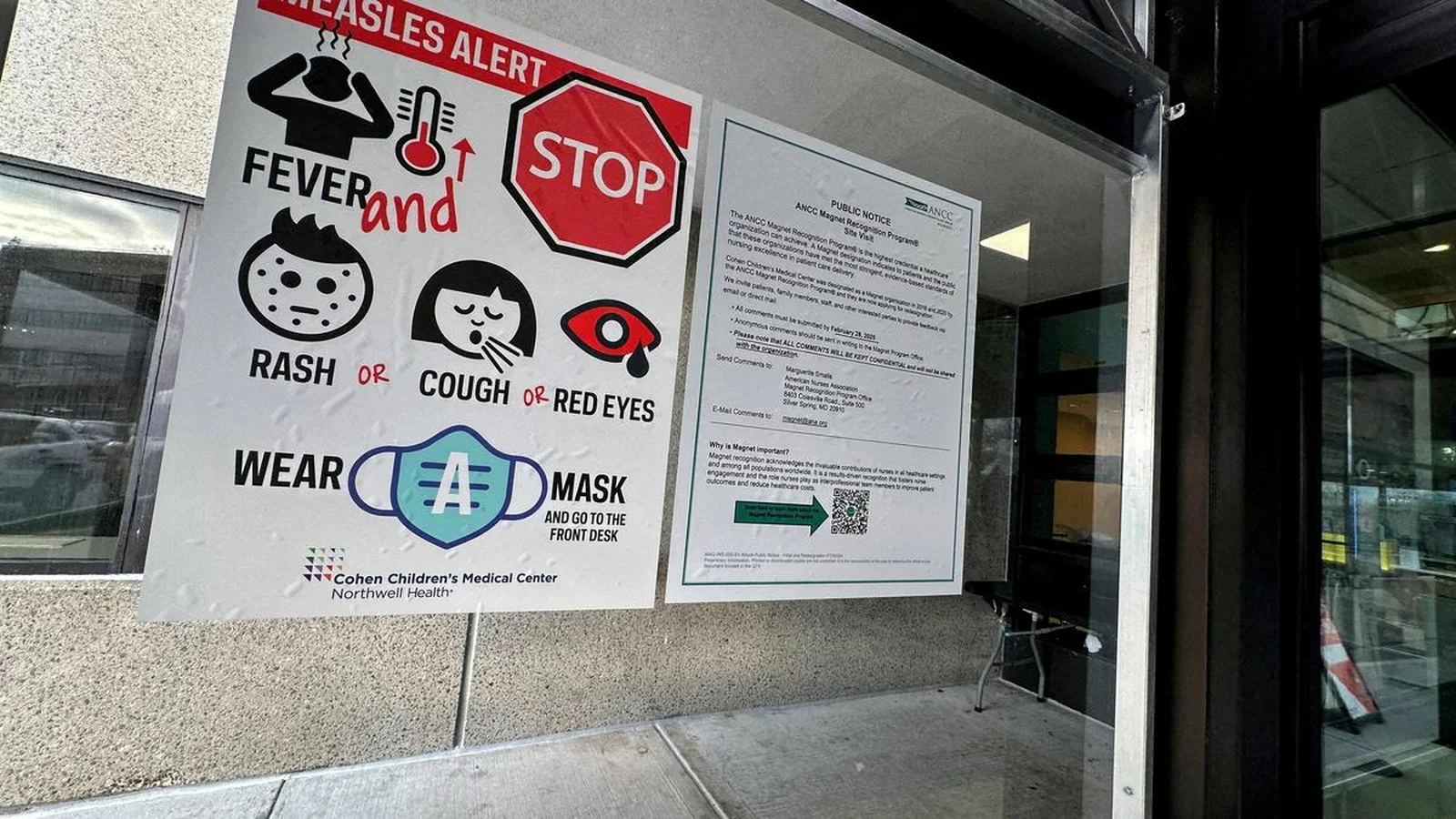
The decision comes as the US battles the highest number of measles cases it has seen in more than three decades. Some 7,500 people in the US have been infected with measles and 13 have died since 2025, according to the reports. As of Thursday, 12 November, 5,182 confirmed cases of measles had been reported in 2026 to the US Centers for Disease Control and Prevention from 45 states, New York City and the District of Columbia, surpassing last year's total of 2,289.
The year has also been the country's deadliest for measles since 1991. Ten measles-associated deaths have been reported in the US so far in 2026, half of them in the past two weeks, with Pennsylvania and Wisconsin each announcing one additional death on Friday, according to reports. The health body did not immediately respond to a request for comment on the report, which cited people familiar with the matter.
Elimination status is a formal designation, not a claim that a country has zero cases. A country loses it when transmission is re-established and continues uninterrupted for at least 12 months. As part of its evaluation, the health body reviewed epidemiological and laboratory evidence submitted by the CDC to determine whether the same strain of measles had been circulating in the United States uninterrupted for 12 months or longer, a sign of local transmission rather than imported cases.
Why it happened
The loss of measles elimination status is largely due to years of falling vaccination rates, a well-established threat against which the US has lost ground in recent years. A country can halt transmission when 95 percent of its population is vaccinated, creating so-called herd immunity that also protects those unable to receive the vaccine.
Two doses of the measles vaccine, by far the best way to prevent infection and transmission, provide 97 percent protection against the virus, which can cause blindness, deafness, brain damage or death. The US achieved its measles elimination status in 2000, when the health body determined the country had interrupted endemic transmission of the virus.
The US is not alone in losing the status. Canada, Spain and the United Kingdom recently lost measles elimination status after review by WHO experts. The US has dropped out of the WHO but remains a member of the Pan American Health Organization, its Americas branch.
What happens next
A panel of eight independent experts has been reviewing the evidence in Washington for the health body, and its annual meeting ran through 13 November. The outcome emerged through the reports on Friday while the formal publication was still pending, and the organisation's decision is expected to be announced on Tuesday, 17 November, according to NBC News and CIDRAP.
The United States can re-establish its measles elimination status once it shows that outbreak transmission has been interrupted for at least 12 months. CDC Director Dr Erica Schwartz said in November that the agency would not fundamentally change its response to outbreaks even if the US loses its measles elimination status.
The episode is a reminder of how quickly a preventable disease can return when vaccination coverage slips. Measles was declared eliminated in the US in 2000 after decades of vaccination; a quarter of a century later, sustained local transmission has undone that status, and restoring it will require at least a year without an outbreak.