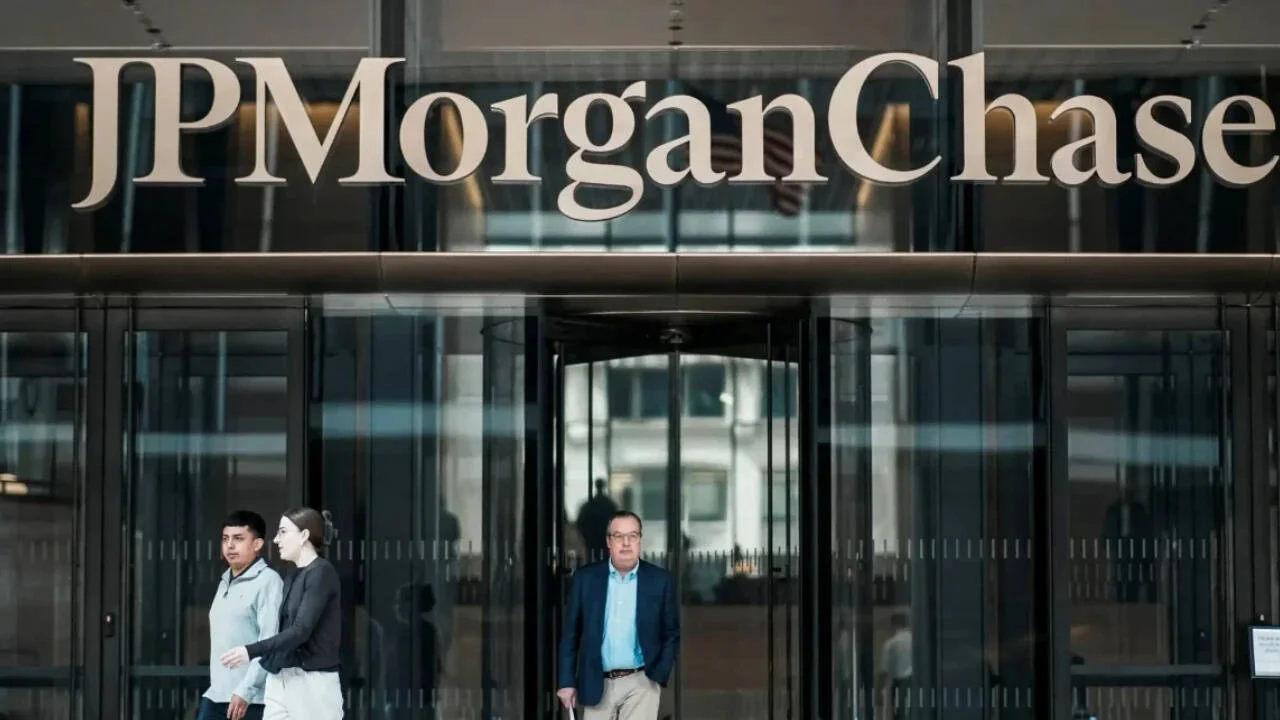
American users of several major banking apps and online portals reported outages on Monday, with the problems traced to a technical fault at JPMorgan Chase, the largest bank in the United States by total assets. Reports on the outage tracking site Downdetector began with Chase at 9:53 am Eastern Time and spread over the next few hours to Bank of America, Wells Fargo, US Bank, Capital One and the Zelle payment network.
Chase said in a statement posted on X that it had experienced a temporary issue related to a software bug in its on-premise hardware systems, adding that there is no evidence it is cyber-related. The bank said the problem was not systemic, that customers still had access to their accounts and funds, and that it was working to resolve the issue by the end of the day.
By about 6:30 pm Eastern Time, a Chase spokesperson told NBC News that transactions were posting normally again. Downdetector reports, which had peaked at close to 5,000 for Chase soon after 2 pm, had fallen to about a fifth of the peak by the evening. Bank of America and US Bank each told USA Today that their own systems were not directly impacted, and Zelle said its network was fully operational, with delays starting at Chase.
Homeland Security Secretary Markwayne Mullin said on Monday night that his department had found no proof that the outages were caused by a cyberattack. The episode followed a major Microsoft 365 outage the previous week and a communications failure that disrupted air traffic across the United States, which is why the banking problems set off alarm bells well beyond the customers who could not log in.
Why services go down together
The banking outage is a good illustration of why so many services seem to fail at once. Modern apps share the same underlying infrastructure: cloud platforms, payment networks, login and authentication services, and the connections between banks. When one large piece of that chain breaks, the effects ripple outward to apps that look unrelated to the user.
In this case the chain reaction ran through Chase itself. Customers at Bank of America and other banks trying to transact with a Chase customer saw their payments slow down, even though their own banks were working fine. Zelle payments between a Chase customer and a customer of another bank were delayed for the same reason. One bank's bug became several banks' problem because the payment system ties them together.
Faulty software updates and configuration errors are the usual suspects in these failures. A single bad update can take down a whole platform, and because so many services now run on a handful of cloud providers, one provider's bad day can darken apps across the world. The Microsoft outage the previous week was blamed on a hidden bug dating back to July.
Scammers move fast when services fail
Outages also create a second danger that has nothing to do with the technical fault. Scammers exploit the confusion, sending fake messages and links that claim to offer a fix, a refund or an official update. People locked out of their accounts are more likely to click something they would normally ignore.
The rule is simple: never click a random link about an outage, and never share a one-time password or login code with anyone, even someone claiming to be from your bank. Check the bank's official channels, its verified social media accounts or a trusted outage tracker, and wait for the official word rather than trusting a forwarded message.
An outage does not mean your money or your data is gone. In the Chase case, accounts and funds stayed accessible throughout, and only some transactions were delayed. A technical outage is also not a cyberattack, even when the timing looks suspicious. If a payment stalls during an outage, check your statement before retrying, so you do not pay twice.
How to prepare for the next outage
The practical steps are unglamorous but they work. Keep some cash at home and a second card from a different bank, so one bank's bad day does not leave you with no way to pay. Save backup login codes offline, and download or print the key documents you might need, such as account numbers and customer care numbers.
Back up your data regularly, use multi-factor authentication, and use a different password for every important account, so a breach at one service does not hand over the rest. If your bank's app is down, try its website, its phone banking line or an ATM before assuming everything is broken.
Outages are now a routine part of digital life, and the question is not whether the next one will come but whether you will be ready for it. Monday's banking failure was fixed within hours and nobody lost money. The people who had a second card and some cash barely noticed it.