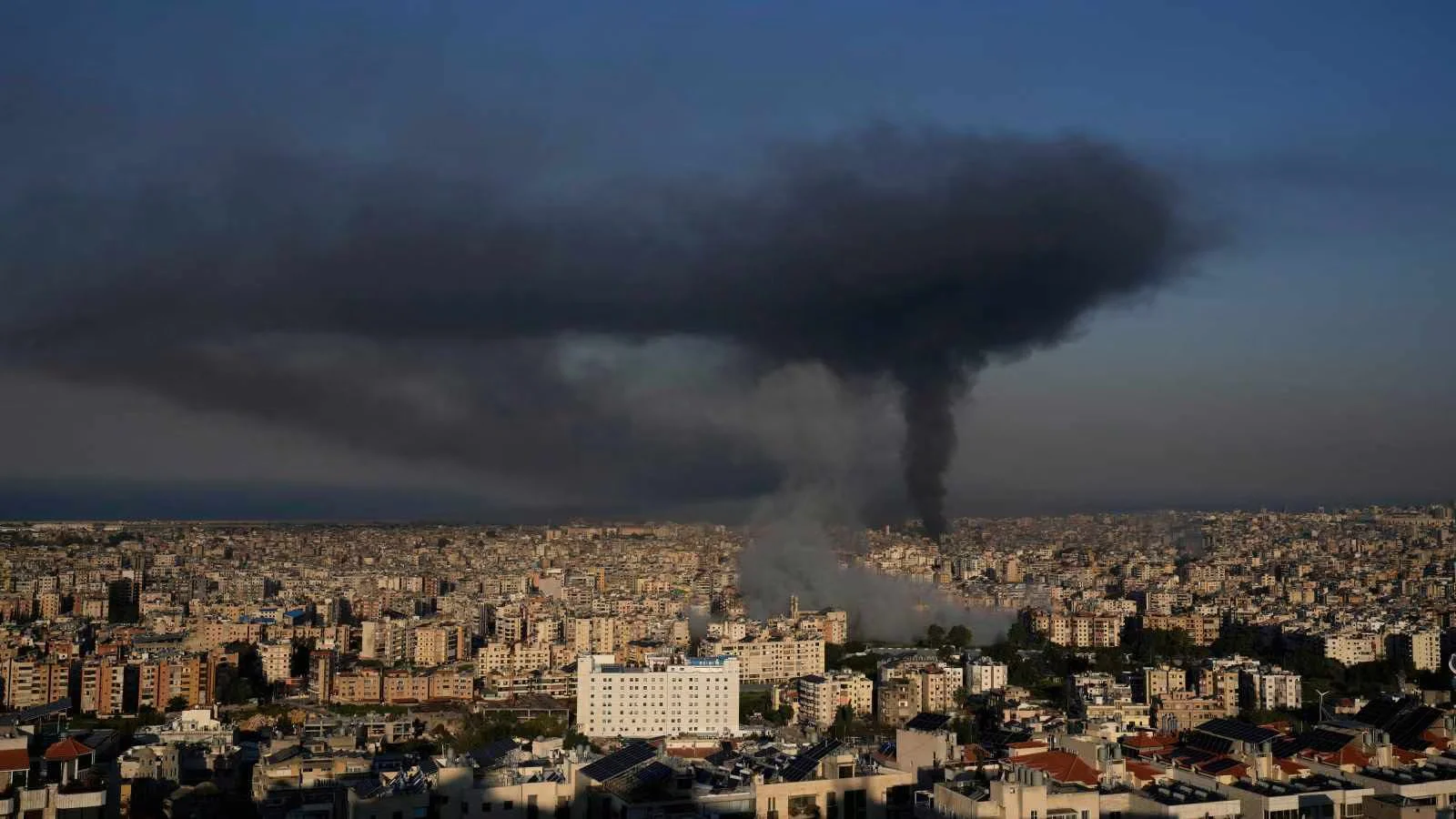
US intelligence indicates that Iran drew up plans to target senior officials in the Trump administration in Washington with a dirty bomb or a chemical weapon, CNN reported on Monday, citing seven US officials. The report has put the spotlight on a weapon that is widely feared but poorly understood.
Officials quoted in the report stressed that the plans give Iran options rather than signalling an imminent attack. The White House said there were "no credible threats to the homeland", according to spokesperson Lauren Bis. Iran's mission to the United Nations "categorically rejects and unequivocally refutes" the allegations. The claims have not been independently verified.
The reports come as tensions between the US and Iran have risen sharply. US strikes on an Iranian missile site on Qeshm Island were reported on Tuesday, and the region has already seen an attack on a tanker in the Strait of Hormuz and claims of drone strikes on a US radar base in Bahrain.
What is a dirty bomb?
A dirty bomb combines a conventional explosive, such as dynamite, with radioactive material, according to the US Nuclear Regulatory Commission (NRC). The explosion scatters the radioactive material over the surrounding area.
A dirty bomb is not a nuclear weapon. It produces no nuclear chain reaction, no mushroom cloud and no city-levelling blast. Its destructive power comes from the conventional explosive, while the radioactive material is meant to contaminate the area and spread fear.
How much damage can it cause?
The blast itself would be the biggest immediate danger. The NRC says that in most cases, radiation from a dirty bomb is unlikely to cause severe illness or deaths, and that more people would be hurt by the explosion than by the radiation.
The main aim of such a weapon is disruption. Contamination can force evacuations, shut down buildings and transport, and leave behind a long and costly clean-up. That is why the NRC calls a dirty bomb a "weapon of mass disruption" rather than a weapon of mass destruction.
No dirty bomb has ever been detonated in an attack. The best-known case came in 1995, when Chechen separatists planted a device containing radioactive material in Moscow's Izmailovsky Park. The device never went off.
What should people do if one goes off?
The US Centers for Disease Control and Prevention (CDC) advises people to get inside, stay inside and stay tuned for official guidance. Sheltering indoors reduces exposure to radioactive dust and debris.
Removing outer clothing can remove up to 90 per cent of radioactive material from the body, the CDC says. People should wash exposed skin, avoid touching contaminated surfaces, and follow instructions from emergency services rather than trying to leave the area on their own.
Why the reports matter now
The intelligence reports remain allegations, not confirmed facts. Iran has denied them, and the White House has said there is no credible threat to the homeland. What is certain is that the US-Iran confrontation has entered a dangerous phase, and that the dirty bomb has returned to public debate as a symbol of how far that confrontation could go.