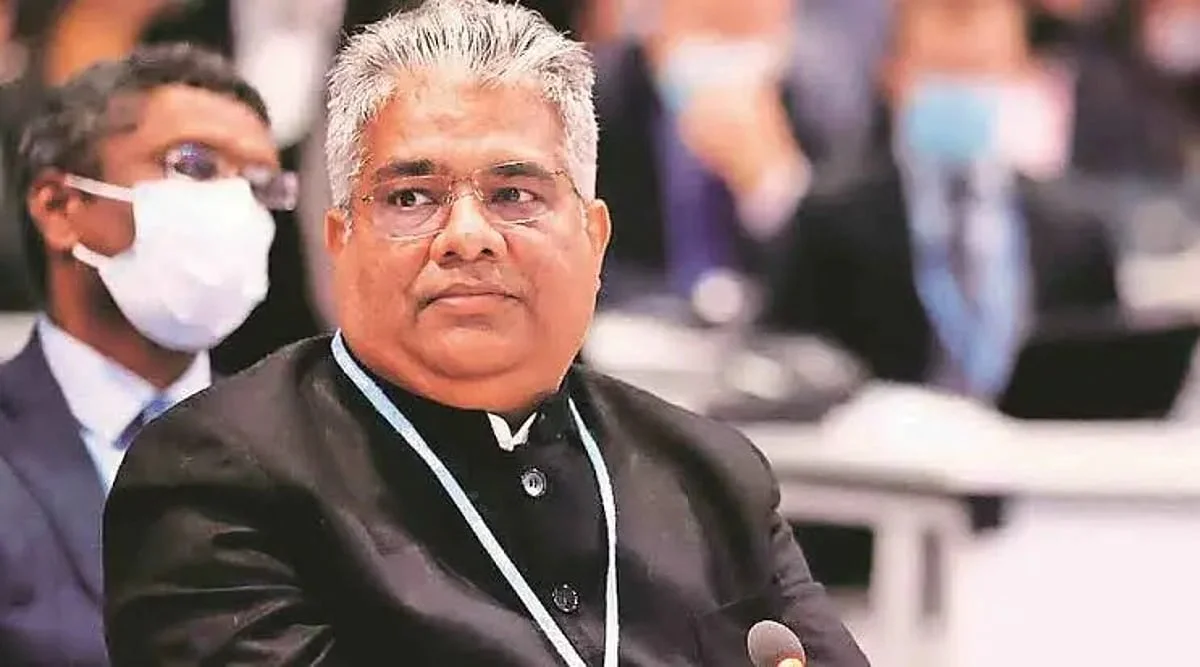
India has called for a country-driven, Party-guided, two-tier Just Transition Mechanism at the 31st United Nations Climate Change Conference, COP31, being held in Antalya, Turkiye, from November 9 to 20. At a high-level ministerial roundtable on November 16, Union Environment Minister Bhupender Yadav argued that a transition to a low-carbon economy must address employment, social protection, adaptation, poverty eradication and energy access, not only emissions reduction.
The call came at the Fourth Annual High-Level Ministerial Roundtable on Just Transition under the UAE Just Transition Work Programme. Reaffirming India's commitment to an inclusive and equitable global transition that leaves no one behind, Yadav said the focus must shift from dialogue and exchange of experiences towards practical implementation.
What is a just transition?
A just transition is the idea that the shift to cleaner energy should not leave workers and the most vulnerable behind. When coal mines close, power plants are retired, or industries change how they produce goods, the people whose jobs and livelihoods depend on those activities face the costs first. A just transition asks how those costs are shared, and what support, retraining, social protection and new opportunities are put in place.
Yadav stressed that just transition must follow a whole-of-economy and whole-of-society approach, covering employment, social protection, adaptation, poverty eradication, energy access and sustainable development. In other words, it is not a narrow energy question. It reaches into how people earn a living, how communities cope with climate impacts, and whether the poorest get access to energy at all.
What design did India propose?
India supports the operationalisation of a two-tier, Party-guided mechanism. The two tiers are the existing UAE Just Transition Work Programme and a proposed new Just Transition Mechanism, with clearly defined and complementary roles. Yadav said the Work Programme should continue providing a platform for dialogue and the exchange of experiences, while the proposed Mechanism should focus on delivering practical support through technical assistance, capacity-building and cooperation.
The mechanism, in India's view, must respond to the needs of developing countries while respecting national sovereignty and diverse national circumstances. It should build on existing efforts, avoid duplication and facilitate access to adequate means of implementation. Crucially, Yadav said it should neither prescribe uniform sectoral pathways nor create new obligations. Instead, it should enable countries to pursue their own transition strategies in line with national priorities, while ensuring that workers, communities and vulnerable groups are not left behind.
India's statement is a negotiating position on how the mechanism should be designed, not evidence that it is already functioning. At CMA 7, the Parties to the Paris Agreement decided to develop a Just Transition Mechanism to strengthen international cooperation, technical assistance, capacity-building and knowledge-sharing. At CMA 8 during COP31, Parties are considering the process for operationalising it.
Why India rejects one-size-fits-all pathways
Yadav said just transition could not follow a uniform model, as countries have different national circumstances, vulnerabilities and development priorities. A pathway that works for a wealthy country with a small industrial workforce may be impossible for a developing country where millions depend on carbon-intensive sectors and where energy access itself is still incomplete.
Citing India's experience, he referred to sub-national heat action and disaster management plans aimed at addressing the vulnerabilities of workers and communities. He also highlighted India's renewable energy expansion, which seeks to combine low-carbon development with affordable energy access. These initiatives, he said, demonstrated the importance of integrating just transition into climate adaptation, livelihood and development planning.
Developing countries, Yadav stressed, need adequate finance, technology transfer and capacity-building support to pursue their transition pathways while addressing their specific development needs. Without that support, he argued, the call for a transition becomes a demand that poorer countries bear costs they did not create.
What happens next
Yadav said COP31 offered an opportunity to take the global just transition agenda beyond discussions and towards practical, country-driven implementation. He reiterated India's readiness to work with other parties towards an inclusive outcome that advances just transition while safeguarding the development priorities of developing countries.
Whether the Parties agree on the design of the mechanism, and how quickly it can move from a negotiating text to practical support for workers and communities, will be one of the measures by which COP31 is judged. For India, the test is whether the final outcome respects national circumstances, delivers finance and technology, and keeps the promise that no one is left behind.