The water of the Yamuna in Delhi carries not just microplastics but also residues of medicines, pesticides and industrial chemicals, a new study by Delhi University researchers has found. The study identified 321 chemical compounds in the river water.
Of these, 36 fall in categories the Globally Harmonized System lists as hazardous to health or the environment, including cancer, harm to reproductive capacity, acute toxicity and danger to aquatic life.
The study has been published in the Journal of Hazardous Materials Advances. Samples were taken from eight locations along a 48.8 km stretch of the river, from Palla to Asgarpur.
Microplastics and medicines in the water
The researchers found 2,289 microplastic particles in the samples, at an average of 3.18 particles per litre. Polyethylene accounted for 44.1 per cent of the microplastics and polypropylene for 27.3 per cent.
Fifty chemical compounds were found in at least four of the eight locations, in fractions separate from microplastics. Seven chemicals, including 2-naphthylamine, lidocaine and monobutyl phthalate, were present at all eight sites.
Chemicals linked to medicines such as atomoxetine, domperidone and telmisartan were also found, along with agricultural chemicals such as diuron and thiamethoxam.
Co-author Radheshyam Sharma, head of the university's Department of Environmental Studies, said Yamuna pollution cannot be understood on the basis of microplastics alone. The combined effect of different chemicals, known as mixture toxicity, also needs to be studied, he said.
Twenty-two drains carry sewage, farm runoff and industrial waste into the river in Delhi. Sharma said strengthening greenery and the natural ecosystem along the riverbank was important.
Most microplastics found near barrages
Microplastics were found in the highest quantity near barrages, followed by the floodplain where several drains meet the river. The lowest quantity was at Palla, which has agricultural and forest land.
The researchers made it clear that the presence of hazardous chemicals does not by itself prove an actual health risk. Detailed testing is needed to establish the risk, they said.
IRI to study foam near Okhla barrage
Separately, the Delhi government has asked the Irrigation Research Institute at Roorkee to study why so much foam forms in the Yamuna near the Okhla barrage, and how it can be reduced. The government has paid Rs 91 lakh for the study.
Irrigation and Flood Control Minister Parvesh Sahib Singh said the foam problem is worst around the Okhla barrage. The study will examine the causes of foam formation in that stretch and the measures that can reduce it.
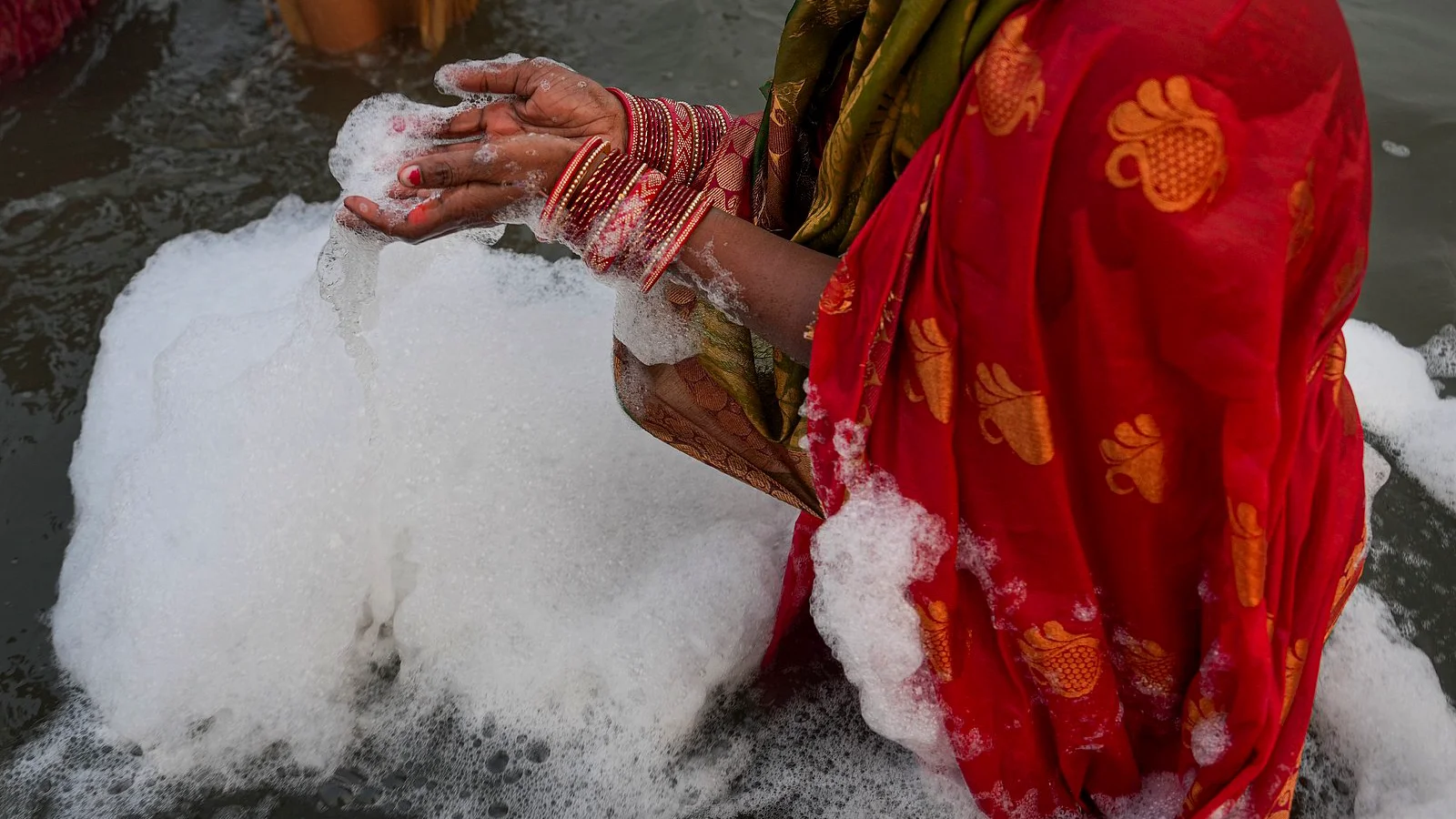
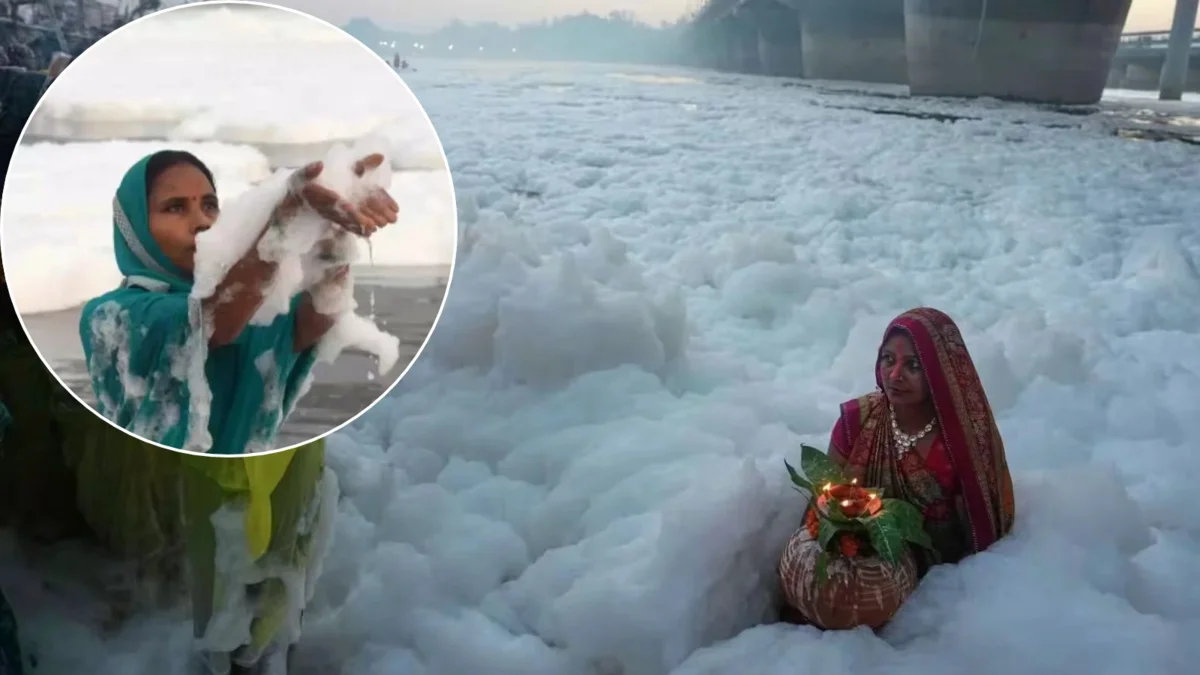
Officials said the Uttar Pradesh government built a barrage on the Yamuna near Okhla, from which water falls from a height into the river. The fall creates turbulence, which produces foam. Separate patches of foam then flow together, covering the surface of the water.
The institute has been asked to examine how much turbulence the falling water creates downstream of the barrage, and what can be done to reduce the foam. Its report is still awaited.
A Chhath ghat will also be built near the barrage at a cost of Rs 68 crore. Foam on the river during Chhath Puja has become a political issue every year.
The Supreme Court has already warned states and authorities of fines if Yamuna water quality worsens further, and has ordered the removal of encroachments from the river floodplain.