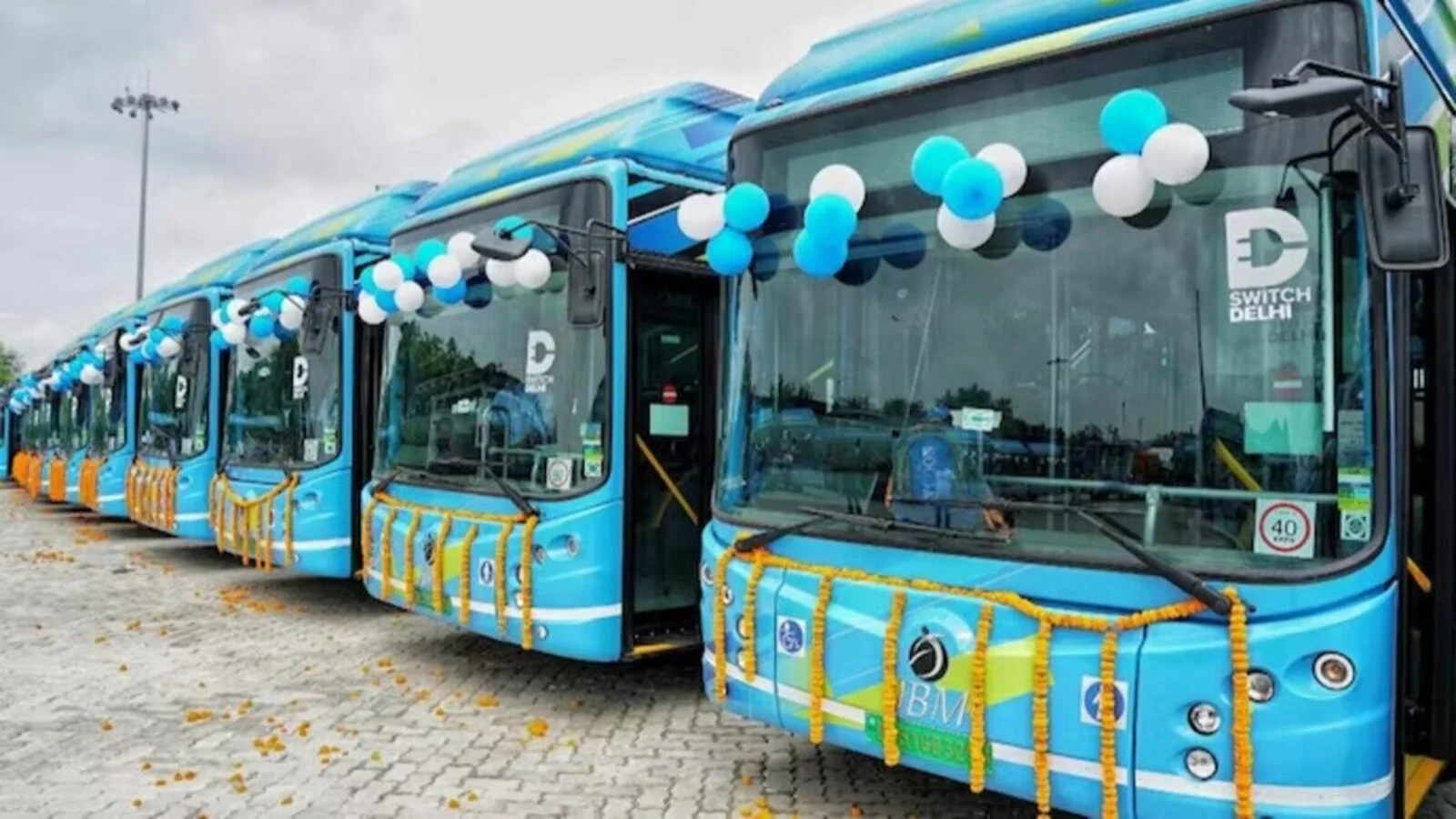
Delhi has added 100 electric buses to its public transport fleet, taking the total number of buses in the national capital to about 7,088. Chief Minister Rekha Gupta flagged off the new buses from the Interstate Bus Terminus at Kashmere Gate. The government said Delhi now has the largest electric bus fleet in the country.
The expanded fleet comprises 5,338 electric buses and 1,750 buses running on compressed natural gas. The new batch includes 50 nine-metre buses and 50 12-metre buses. The nine-metre buses will serve shorter routes and narrower roads, while the 12-metre buses will run on the busier corridors across the city.
Gupta said the government was taking responsibility for both transport and the environment at a time when pollution is widely discussed. "During this season, when pollution is discussed, our government is continuously taking responsibility and launching buses. These buses will not only provide transportation and safety to our commuters but also improve our environment," she told reporters at the launch.
Fleet now stands at 7,088 buses
The addition of 100 buses is the latest step in Delhi's shift to electric public transport. Electric buses now make up about three quarters of the city's total bus fleet, with CNG buses accounting for the rest. The government has been adding electric buses in batches through the year, and the new fleet is the largest of any city in the country, according to the government.
Transport Minister Pankaj Kumar Singh said the addition of the 100 electric buses reflected the Delhi government's commitment to transforming the city's public transport system through sustainable travel options. The minister said the focus was on cleaner buses that cut tailpipe emissions while carrying more passengers across the capital.
The buses were flagged off from Kashmere Gate, one of the busiest bus terminals in the city. The terminal handles interstate and city services, and the new buses will be deployed across routes from there.
EV policy and air quality
Gupta said the government had introduced an electric vehicle policy worth Rs 15,000 crore, which she described as the largest such policy in the country. She added that the government was providing purchase subsidies and incentives for scrapping old vehicles.
Under the Delhi electric vehicle policy, the government provides purchase subsidies for different categories of vehicles. Owners can also claim an incentive for scrapping Delhi-registered BS-IV or older vehicles at authorised facilities. The policy is aimed at pushing both public and private transport towards electric vehicles.
Speaking about air quality, Gupta said the air quality index had been improving through November. She described this as "the result of both the public and the government fulfilling their mutual responsibility towards the environment." The new buses, she said, would help keep that improvement going by cutting emissions from one of the largest sources of pollution in the city.
**Q:** How many electric buses does Delhi have now? A: Delhi's fleet now has 5,338 electric buses out of a total of about 7,088 buses, which the government says is the largest electric bus fleet in the country. **Q:** Where were the 100 new electric buses launched from? A: Chief Minister Rekha Gupta flagged off the new buses from the Interstate Bus Terminus at Kashmere Gate in Delhi. **Q:** What does the Delhi electric vehicle policy offer? A: The Rs 15,000 crore policy offers purchase subsidies for different categories of vehicles and an incentive for scrapping Delhi-registered BS-IV or older vehicles at authorised facilities.