
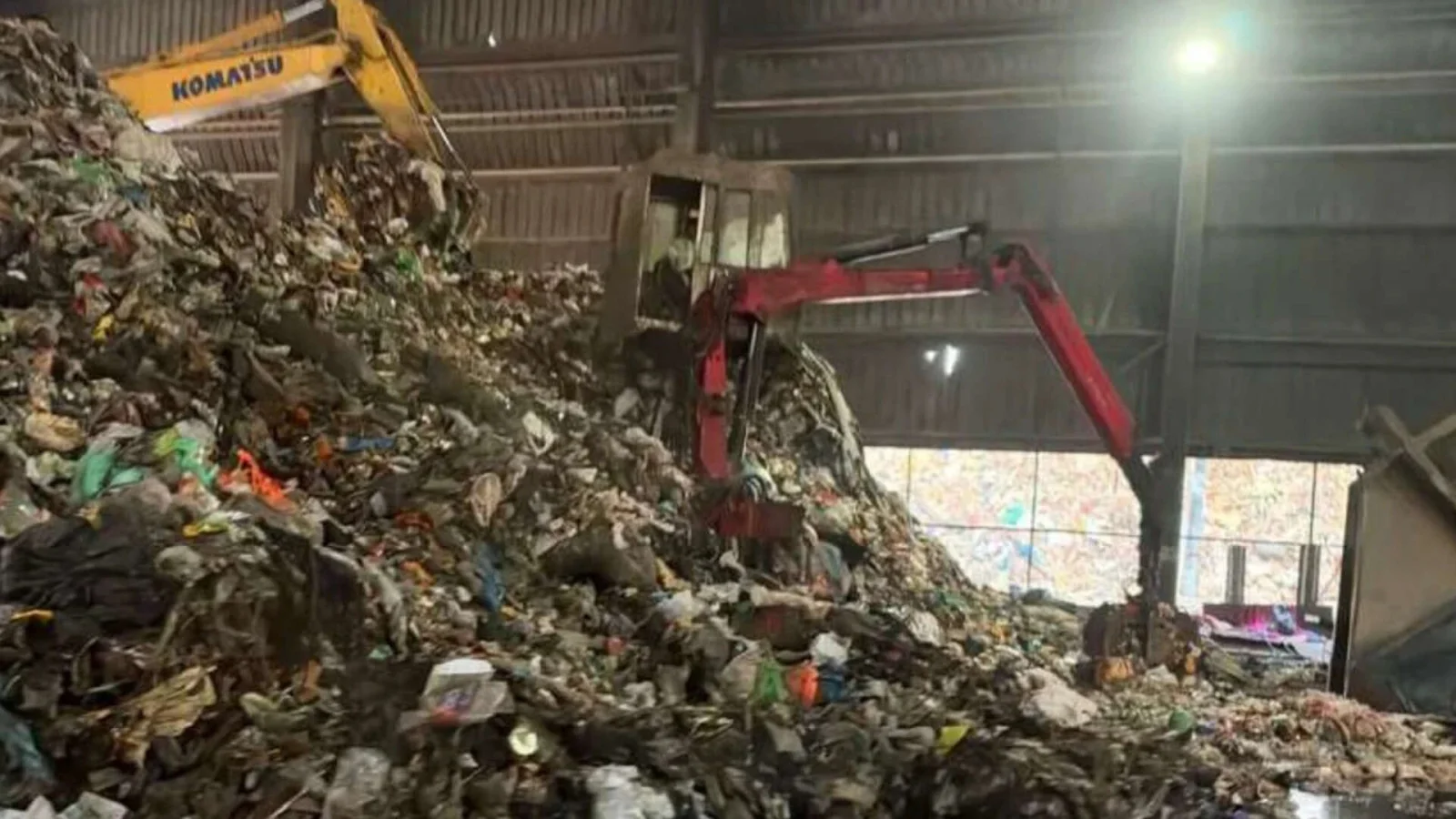
The Bombay High Court has directed a monitoring committee to carry out an internal audit of the Kanjurmarg dumping facility, after finding that the site keeps generating odour and pollution despite steps taken by the civic body. A division bench of Justices Girish Kulkarni and Neela Gokhale passed the order on November 18, and it was made public on Friday night, according to a Times of India report published on November 21.
The court said the audit should assess how the facility functions and suggest immediate improvements to deal with citizens' complaints about odour, public health risks and plastics, which the bench called the biggest challenge to ecology. With more than 7,000 metric tonnes of waste arriving every day, the court said it was imperative to convert it for beneficial use, including power generation.
The court appreciated the Brihanmumbai Municipal Corporation's appeal to citizens to segregate wet and dry waste, its compliance mechanism for bulk waste generators and the installation of AI enabled CCTV cameras at the site. But it added that what disturbed the court was that operations at the facility continued to generate odour and pollution, affecting lakhs of residents in Vikhroli, Bhandup, Mulund and nearby areas.
Slum waste and a high level panel
The court also directed the state to form a high level committee to deal scientifically with garbage management in slum areas, which generate about 50 percent of Mumbai's total waste, and to frame new norms for civic discipline in these zones. The bench said the existing legal provisions were inadequate to ensure health and hygiene in these areas.
The court asked the committee and the municipal corporation to consider advanced technologies such as converting waste to energy and possibly incineration, and to evaluate a ban on single-use plastics. It also sought health data from medical practitioners in the affected areas and pilot projects for segregation in difficult wards, along with wider public awareness efforts such as educational films and social media campaigns.
What the court heard
The court noted that the major source of odour is the process of segregating and removing dry waste from wet waste. The waste reaching the site includes household waste and waste from municipal markets, along with tonnes of plastic articles, cloth, cans, bottles and sanitary waste, the court observed.
The case came in petitions filed by the Kannamwar Co-op Housing Society Association and Sanjay Yelve, who raised health concerns about the site's proximity to homes. The court had flagged odour and poor segregation as the two fundamental issues on November 3. The matter will be heard next on December 7, when the internal audit will also come up for consideration.
**Q:** What has the Bombay High Court ordered at Kanjurmarg? A: An internal audit of the Kanjurmarg dumping facility by a monitoring committee, to assess its functioning and suggest immediate improvements. **Q:** How much waste does the facility handle daily? A: More than 7,000 metric tonnes of waste arrive at the facility every day, according to the court. **Q:** When is the matter listed next? A: The court posted the matter to December 7 for further hearing, including the internal audit.