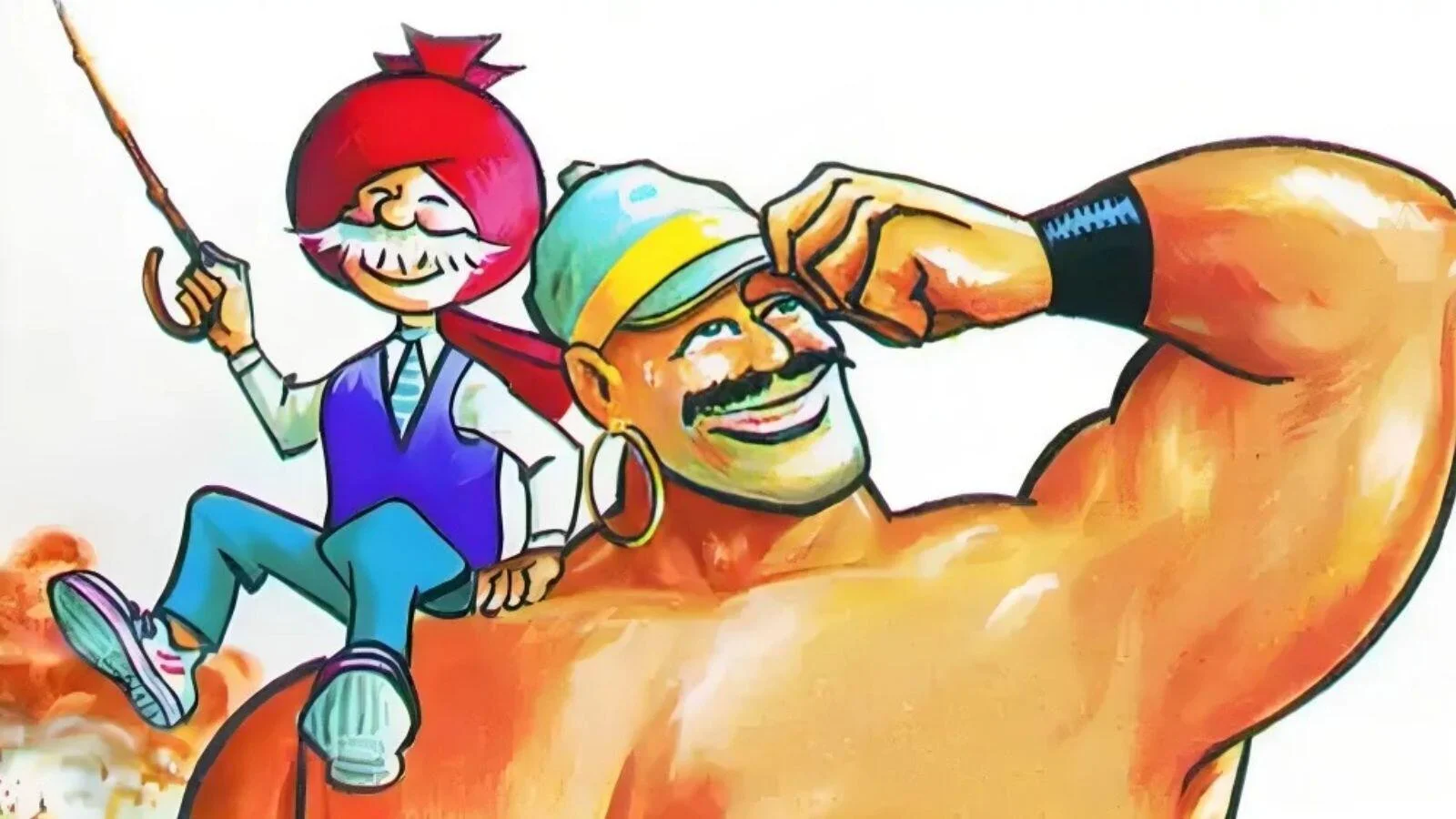
When people in India talk about superheroes, the picture that usually comes to mind is a powerful body, a special costume and a hero who saves the world. Chacha Chaudhary was nothing like that. He had no superpower and no special weapon. His greatest strength was his mind, and that is why he became known by the line that his mind works faster than a computer.
The pairing of Chacha Chaudhary with the giant Sabu made the character popular with children and adults alike. While Chacha Chaudhary solved difficult problems with his wisdom and common sense, Sabu stood by him with his physical strength. Slowly, this unusual pair turned a comic character into a big brand.
Famous cartoonist Pran Kumar Sharma created Chacha Chaudhary in 1969. The character first appeared in 1971 in the Hindi comic magazine Lotpot, and the first comic was called Chacha Chaudhary and the Pocket Thief. At that time, foreign characters such as Superman, Batman and the Phantom dominated the Indian comic market, and Pran introduced a hero who felt close to ordinary Indian families and their surroundings.
Chacha Chaudhary did not come from a rich family and had no magical power. He looked like an ordinary elderly Indian man, with a red turban on his head, a walking stick in his hand and a gentle smile on his face. His character is regarded as inspired by Chanakya, the wise strategist, and that intelligence became his identity.
His sharp mind was his biggest quality. He solved even the hardest problems with his understanding, logic and experience, and that is why people said his mind works faster than a computer. His stories dealt with theft, crime, scientific mysteries and sometimes supernatural powers, and he faced all these challenges with his wisdom alone. Children found adventure in his stories, while older readers saw practical thinking in his character.
Sabu's entry completed the pair
Sabu played a very important role in increasing Chacha Chaudhary's popularity. Sabu is a giant alien, about 15 feet tall, who came to Earth from Jupiter. He has tremendous physical strength and helped Chacha Chaudhary whenever the need arose.
The interesting part is that Sabu decided to stay on Earth after eating the parathas and halwa made by Chachi. In this way, the pair of Chacha Chaudhary and Sabu became a unique combination of mind and strength. While Chacha Chaudhary planned with his intelligence, Sabu carried it out with his power in difficult times.
The stories also featured villains such as Raka and Gobar Singh. Raka was first a dacoit, but became immortal after drinking a magical medicine. These opponents added more excitement to the stories.
Diamond Comics took the brand across the country
The publishing network also played a big role in taking Chacha Chaudhary to every home. After joining hands with Diamond Publishers in 1978, the distribution of these comics grew across the country. Gradually, Chacha Chaudhary stories began to be published in Hindi and English and in more than 10 Indian languages, reaching readers in different states.
It is claimed that nearly one crore copies of these comics have been sold. In this way, Chacha Chaudhary did not remain just a comic character, but became a part of the memories of several generations.
From print to television and animation
Seeing the popularity of Chacha Chaudhary, the character was taken beyond the world of comics. In 2002, a live action television serial based on the character was broadcast on Sahara One. Raghuvir Yadav played Chacha Chaudhary, Praveen Kumar played Sabu and Madhuri Sanjeev played Chachi. The serial was produced by Maya Entertainment.
After that, in 2019, an animated series of Chacha Chaudhary also came on Disney Channel India. In this way, the character moved from print to television and animation.
Revenue fell sharply
The company that took popular comic characters like Chacha Chaudhary and Pinki to every home, Diamond Comics, now does business at a much smaller scale. The company's operating revenue in the financial year 2022-23 remained below Rs 1 crore, which means its earnings did not even reach the Rs 1 crore mark.
The story is a reminder that a character can stay alive in public memory for decades while the business behind it shrinks. The brand that once sold nearly a crore of copies now survives more as nostalgia than as a commercial enterprise.