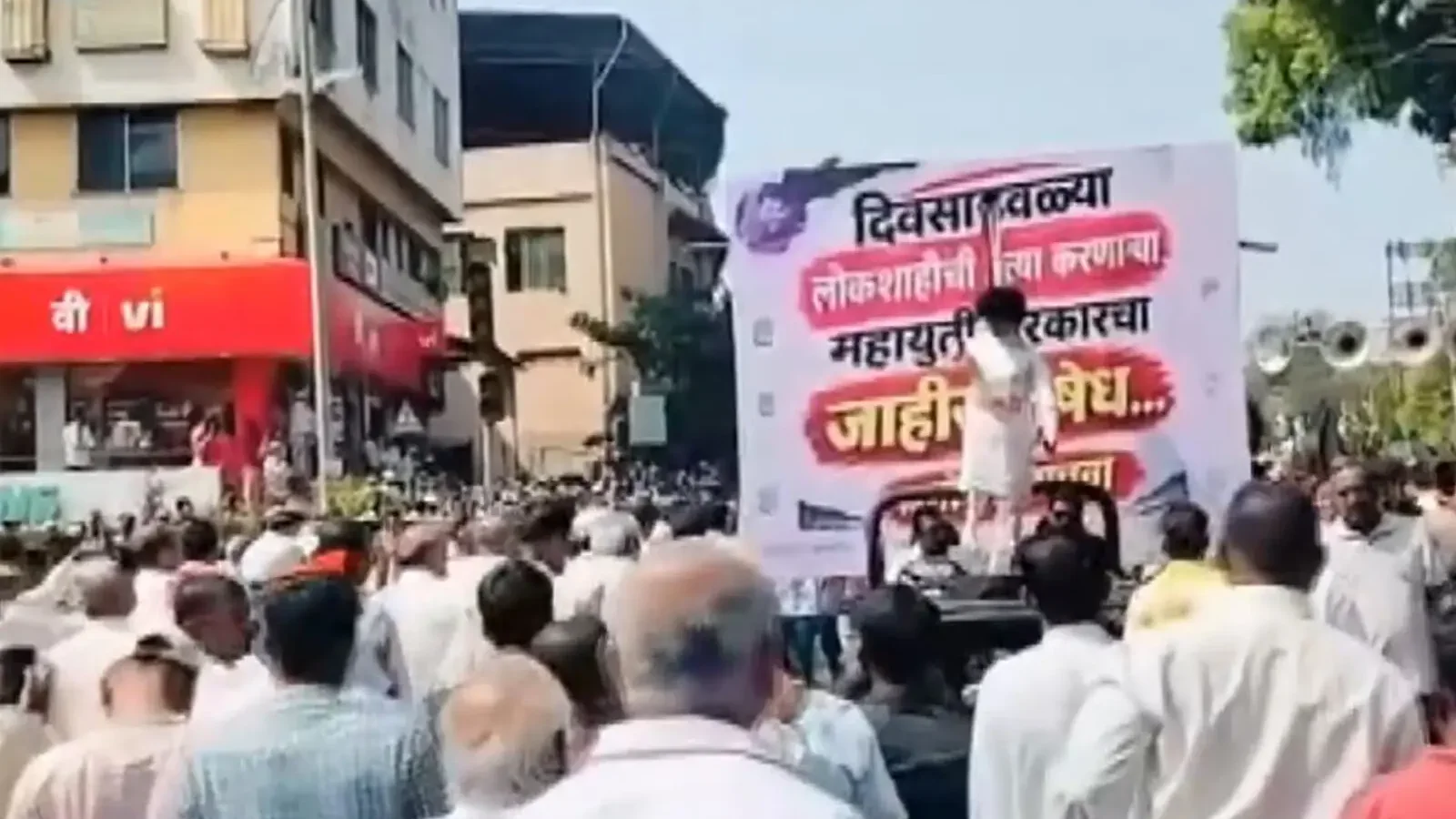
Dairy farmers and opposition leaders staged a major protest in Maharashtra's Kolhapur on Monday, 9 November 2026, against the state government's decision to grant voting rights to four government nominated directors in the Kolhapur District Cooperative Milk Producers Union, popularly known as Gokul Dairy. Led by the Rajarshi Shahu Shetkari Samvichari Aghadi, the protesters marched from Dasara Chowk to the district collectorate with cattle, carrying black flags and banners opposing the government's ordinance. The Times of India reported that more than 40,000 people joined the march.
The march and its leaders
The protest, called the Sangharsh Morcha, was led by Congress MLC Satej Patil, who heads the Rajarshi Shahu Shetkari Samvichari Aghadi, and former MP Raju Shetti, founder of the Swabhimani Shetkari Sanghatana. They were joined by NCP (SP) legislator Jayant Patil, Congress MLA Vishwajeet Kadam, Sangli MP Vishal Patil, Shiv Sena (UBT) district chief Viraj Patil, and members of the Kolhapur District Bar Association. The protesters have one core demand: the immediate withdrawal of the state ordinance and the preservation of Gokul's organisational autonomy. The Aghadi has also challenged the ordinance before the Bombay High Court, seeking its annulment.
How the Gokul row began
The row goes back to the Gokul board elections held on 19 October 2026. The Congress backed panel led by Satej Patil won 13 of the 25 seats, defeating the Mahayuti backed panel, which won 12. Gokul is a cooperative with an annual turnover of more than Rs 3,000 crore and around five lakh milk producer members. Trouble began when the new board met on 29 October to elect a chairman. Gokul's bylaws require 14 directors for a quorum. All 12 Mahayuti backed directors stayed away, leaving only 13 present, so the meeting was adjourned. Patil's 13 directors then met separately and declared Shashikant Patil Chuyekar chairman, but the dairy administration did not recognise the election. On 2 November, the Kolhapur bench of the Bombay High Court directed Gokul to convene a fresh meeting on 10 November, with seven days notice to all 25 elected directors.
The ordinance and the two sides
Two days later, on 4 November, the state cabinet approved an amendment allowing government nominated members to vote on the boards of large cooperative federations that receive government assistance, a category that includes Gokul. The government nominated five directors, four of whom would have voting rights, which the opposition says would raise the Mahayuti's strength on the 25 member board from 12 to 16. Congress leader Rahul Gandhi accused the BJP led government on 5 November of changing the rules after losing the election, saying the move steals the mandate of milk producers. Former Chief Justice of India Bhushan Gavai gave a legal opinion dated 3 November saying that allowing nominated directors to vote in office bearer elections would be arbitrary, and doing so by ordinance before the 10 November chairman election ordered by the High Court would interfere with the judicial process. Chief Minister Devendra Fadnavis has rejected the allegations. Speaking in Nagpur on 7 November, he said the state government has no intention of taking over Gokul and the intervention was technical, to fix the quorum deadlock. He said that if an election is cancelled three times for lack of quorum, all executive authority legally shifts to the District Deputy Registrar, and the nominations were made to prevent that paralysis and ensure a smooth election.
Court refuses stay on the ordinance
On 9 November, the Aurangabad bench of the Bombay High Court heard petitions challenging the ordinance for about four hours. Vacation judge Neeraj Dhote rejected the opposition plea to stay the ordinance and the appointment of the four directors, so the chairman election on 10 November will go ahead as scheduled. Congress leader Vijay Wadettiwar, a former Leader of Opposition, also criticised Chief Minister Fadnavis over the Gokul decision on 9 November.