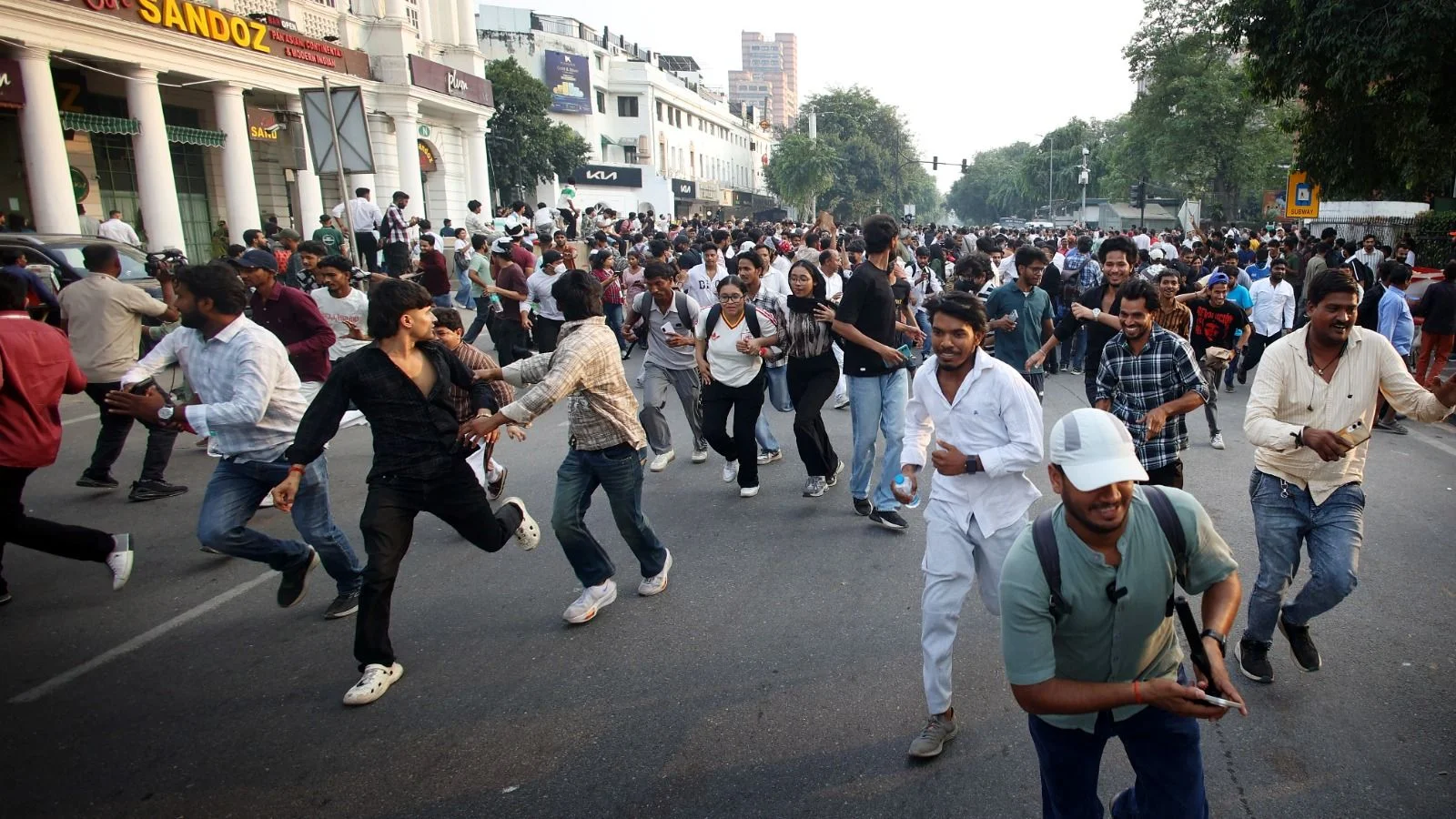
The Delhi Police have told the Supreme Court that its order directing authorities not to hinder journalists covering the protests against Chief Election Commissioner Gyanesh Kumar does not extend to "so-called reel-makers and social media influencers".
In a counter-affidavit filed before the Supreme Court, the police said several participants at the protests were content creators making YouTube reels while carrying cameras and microphones, making it difficult for personnel on the ground to distinguish between professional journalists and reel makers.
The affidavit was filed by Joint Commissioner of Police Surender Kumar in response to petitions filed by the Network of Women in Media, the Free Speech Collective, the Delhi Union of Journalists and the Kerala Union of Working Journalists, which alleged highhandedness against journalists covering the anti-CEC protests at Jantar Mantar last month.
The police said journalists "constitute a distinct class from other persons who carry cameras and microphones, not for the purpose of reporting through print, electronic or digital media, but for other purposes, including commercial exploitation of content".
A question yet to be determined
The Delhi Police added that there can be no objection to individuals making reels, uploading them and commercially exploiting the content they create in this era of evolving digital media. "The question as to whether such reel-makers can be elevated to the status of journalists or reporters is yet to be determined," the affidavit said.
The police referred to the Supreme Court's order of October 11, which recorded an assurance given by the Solicitor General and directed that "lawyers, journalists and other professionals shall not be hindered in discharge of their professional duties in any manner whatsoever".
That direction, the police submitted, "protects journalists in the discharge of their professional duties and does not, and was not intended to, exempt the so-called reel-makers and social media influencers or unruly elements from the operation of the general law or from compliance with the lawful directions of the Law Enforcement Agencies at the site of a prohibited assembly".
Press freedom held in the highest regard
The Delhi Police said they hold the freedom of the press in the highest regard and remain firmly committed to respecting and safeguarding the rights of professional journalists to gather, record and disseminate information, which they described as an integral facet of the freedom of speech and expression guaranteed under Article 19(1)(a) of the Constitution.
The force said it has "at no point, sought to obstruct, impede or interfere with the bona fide discharge of journalistic duties, whether during the protests in question or otherwise".
The affidavit pointed out that journalists from mainstream, national, international, regional, accredited and even unaccredited outlets freely recorded the events of the protests. It said several videos have surfaced on social media and media posts by Brut India, The Lallantop, Jist, The Quint, the BBC, The Indian Express, Bharattgenz and others are available online.
Photographs and videos of the protests were widely published and broadcast by international, national and regional media houses, the police said, which "by itself belies the allegation that the press was prevented from witnessing and reporting the events".
Mistaken identity and crowd control
The police said no obstruction or hindrance was caused to the lawful reporting of events from the various locations. Any instance of confusion or interference, they said, was "purely inadvertent and bona fide, either on account of a mistaken identity or in the course of bona fide crowd control measures necessitated by the prevailing situation".
Wherever any individual was apprehended on account of a mistaken identity, the affidavit said, the person was immediately released upon verification of their actual identity.
The police said some of the protesters who took part in what they called the illegal protest were not journalists but were using a camera and a microphone while falsely claiming to be journalists. Even such reel makers, they added, were not obstructed except in cases where maintenance of public order and law and order so required.
The affidavit cited videos circulating on social media in which individuals identifying themselves as media personnel are seen raising slogans along with the protesters, and said such conduct indicates that some of these individuals were participating in the protest and were not at the spot in their capacity as journalists.
The police said that on several occasions, people carrying cameras were asked to keep a reasonable distance from operational areas and not to come close to where authorities were maintaining law and order. Given the sheer magnitude and density of the gathering and the rapidly evolving situation, it was not always possible for personnel on the ground to immediately distinguish media personnel from protesters, particularly where individuals were moving within the crowd and close to police operations.