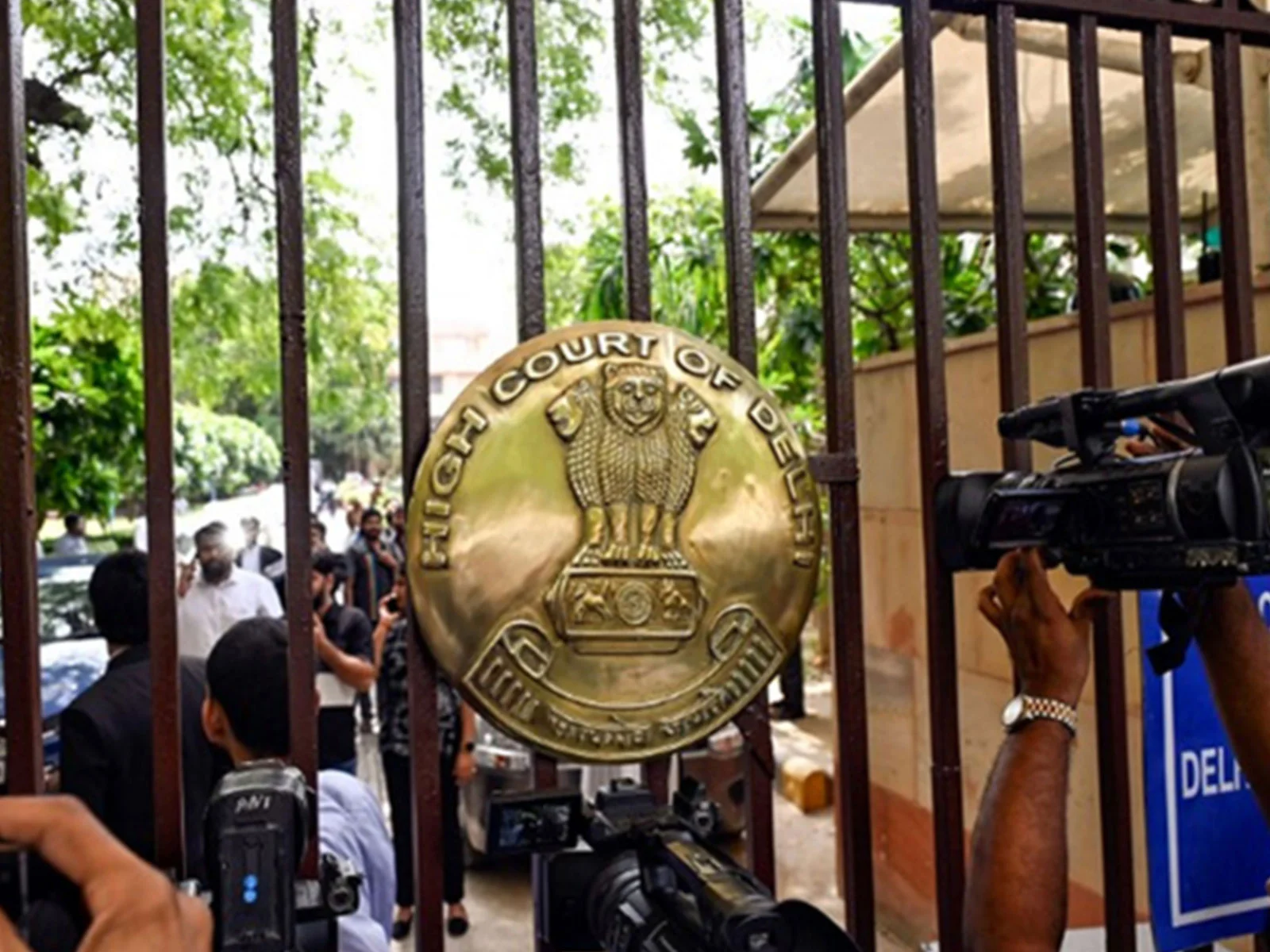
The Delhi High Court on Tuesday dismissed a petition by Jitendra alias Jitu Nainsingh Gehlot challenging the condition attached to the commutation of his death sentence, holding that he must remain in prison for the rest of his natural life without any further remission.
A bench of Justices Navin Chawla and Ravinder Dudeja held that the President had considered all relevant material before commuting Gehlot's death sentence in 2016, and that the court could not substitute its own opinion for that of the constitutional authority while exercising the limited power of judicial review.
Gehlot was convicted for his involvement in the murders of seven members and associates of a Pune-based family, including five women, one of whom was pregnant, and two children, during a robbery at their residence in August 1994. His death sentence was confirmed by the Bombay High Court and the Supreme Court, and his review petition was also dismissed.
The mercy petition and the 15-year delay
Gehlot submitted his mercy petition on June 27, 2001. More than 15 years later, on September 18, 2016, the President commuted the death sentence to life imprisonment, directing that he remain in prison for the rest of his natural life without any further remission by any authority. The decision was communicated in October 2016.
Gehlot sought removal of that condition so that his sentence would be subject to the remission powers. His counsel relied on the prolonged delay in deciding the mercy petition, alleged solitary confinement and evidence said to show rehabilitation. Those matters were advanced as grounds for relief, rather than findings establishing his entitlement to release.
The High Court noted that the President's file showed the delay had been considered. The President had specifically sought the Attorney General's advice on the application of the Supreme Court's decision in Shatrughan Chauhan v. Union of India, which deals with delay in deciding mercy petitions. The Attorney General recommended commutation because of the unexplained delay, while the Ministry of Home Affairs recommended rejection of mercy. The President considered both views before commuting the sentence with the no-remission condition.
How far judicial review of clemency goes
The court emphasised that judicial review of clemency examines how the power was exercised, and is not an appeal allowing the court to replace the President's assessment with its own. Review concerns matters such as mala fides, political considerations and failure to consider relevant materials or supervening circumstances, and delay is an important ground within that limited review.
Relying on governing precedents, including the Supreme Court's 2026 decision in Ramasrey @ Fakkad v. State of Uttar Pradesh, the High Court accepted that the President had the power to impose the no-remission condition. It held that once all relevant inputs and factors had been considered, the court could not interfere merely because it might have decided the mercy petition differently.
The court rejected the Union's objection on territorial jurisdiction, holding that the challenged decision arose from the President's exercise of power under Article 72 of the Constitution in Delhi. It also recognised that a writ challenge to a clemency decision can be maintained where a violation of Article 21 is alleged, so presidential mercy decisions are not entirely beyond judicial scrutiny.
The petition was dismissed without costs. The decision leaves the existing commutation condition intact; it does not restore the death sentence.