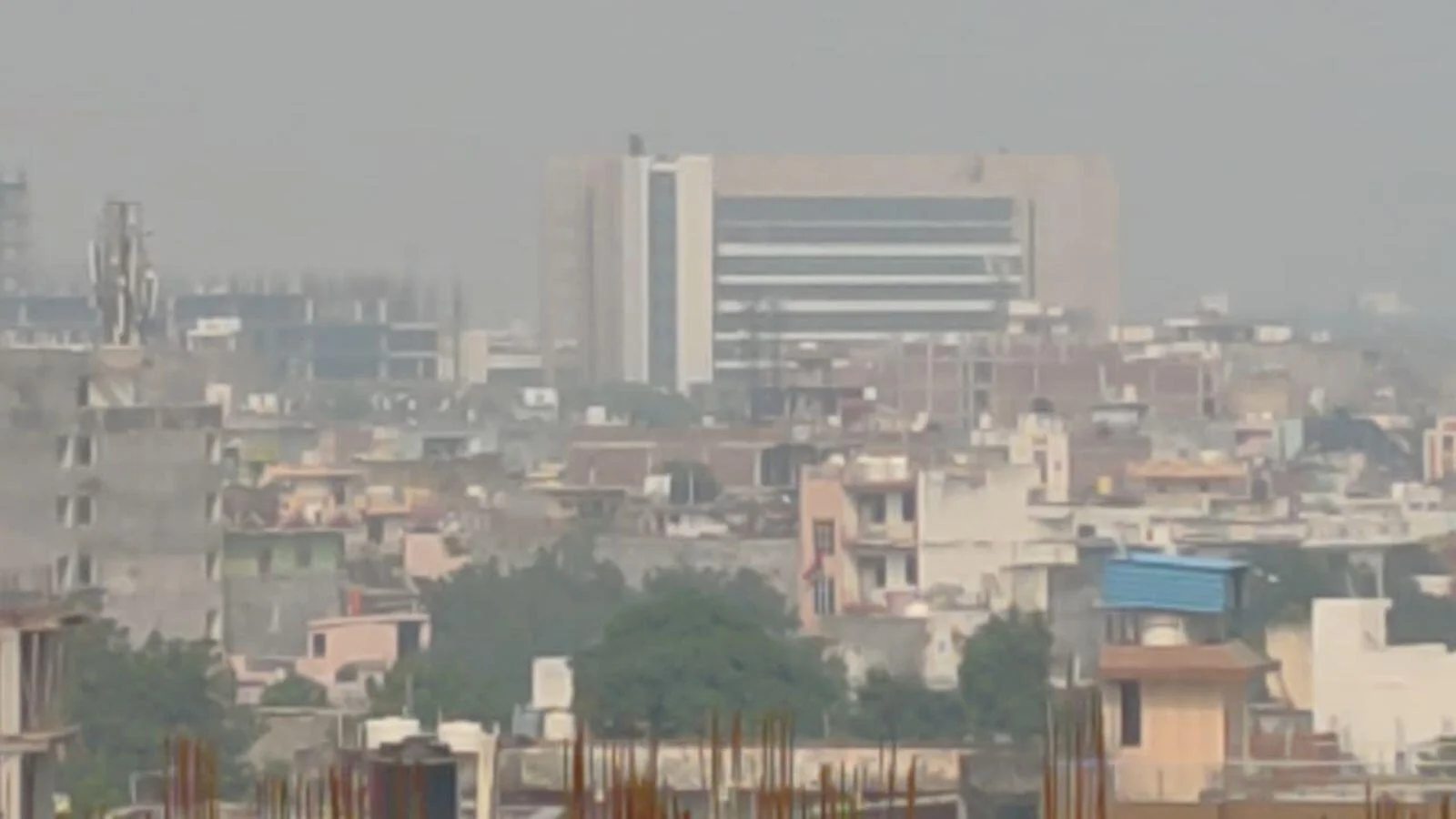
The sound of Diwali firecrackers had faded by Monday morning, but their smoke still hung over Delhi NCR. People in Delhi, Noida, Greater Noida and Ghaziabad woke to dense haze and toxic air, with Noida recording an average air quality index of 341 at 10 am, placing it in the very poor category. Sector 62 was the worst affected part of the city, with an index of 420.
Sector 62 worst, city average 341
Noida recorded its worst air in Sector 62, where the index touched 420 on Monday morning. The city average stood at 341 at 10 am, which falls in the very poor category. Sector 110 recorded 373, Sector 150 recorded 341, Sector 39 recorded 340, Sector 1 recorded 327, Sector 125 recorded 308 and Sector 116 recorded 278. The readings show that poor air covered the whole city rather than one pocket, and the worst levels crossed into the severe range.
Eyes sting and breathing turns difficult
People stepping out in the morning reported stinging eyes, sore throats and difficulty in breathing. Doctors and officials warn that air at this level is a serious health risk, because it can cause eye irritation, throat pain and breathing trouble. Children, elderly people and people with breathing or heart conditions have been advised to take special care while the air stays this bad. The concern is not limited to a single day, because pollution deepens every year as winter begins and affects crores of people across the region.
Delhi and Ghaziabad also choke
Delhi recorded an index of 441, underlining that the problem covers the whole National Capital Region and not just Noida. Ghaziabad also stayed in the severe range, with Vasundhara, Loni and Wave City among the worst hit areas. The picture is the same across Noida, Greater Noida and Ghaziabad, with the entire NCR belt affected by the post-Diwali smoke. The Graded Response Action Plan stage 2 is in force to control pollution in Delhi NCR, but there has been no clear improvement in air quality so far.
A recurring winter problem
Pollution in Delhi NCR is no longer limited to a single day or a single festival. Every year, as winter begins, the problem turns more serious and affects the lives of crores of people. The smoke from Diwali fireworks added to pollution that was already present before the festival, and the haze stayed in the air through Monday morning. Until the air clears, the advice is to limit outdoor exposure, especially for children, elderly people and those with breathing or heart conditions.