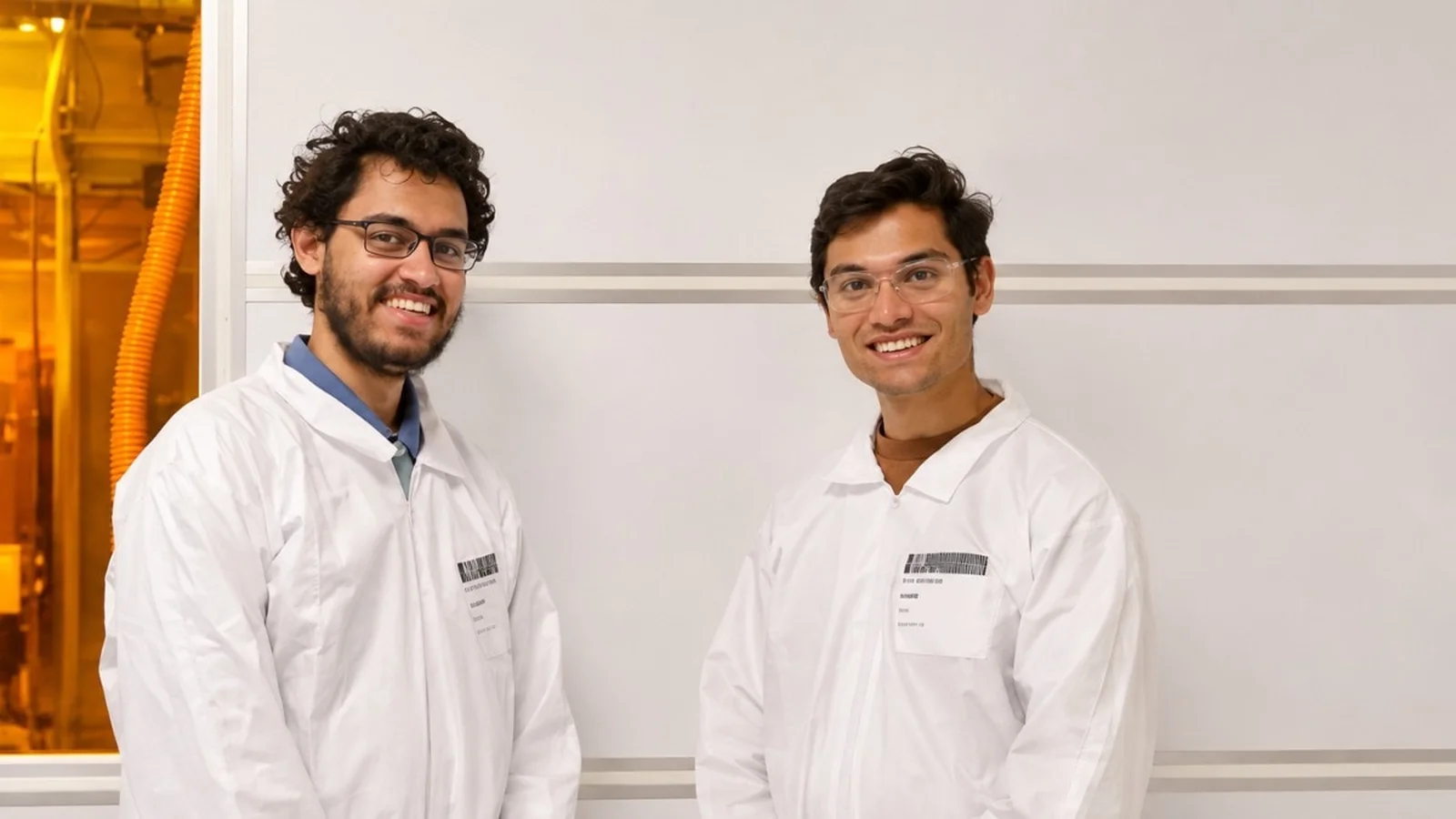
A startup founded by alumni of the Indian Institute of Technology Madras has offered a one million dollar prize for solving five long standing problems in materials science. The challenge, announced by Discovered Materials, targets problems that scientists have struggled with for years, from designing materials that conduct electricity without resistance at room temperature to building better batteries.
The five problems worth one million dollars
The five problems cover some of the hardest questions in materials science. They include finding a room temperature superconductor, a material that carries electricity with no resistance at normal temperatures, and discovering new materials for next generation batteries and clean energy. The other problems involve designing materials atom by atom for specific uses, a goal that has remained out of reach despite decades of research. The startup says the prize is open to researchers anywhere in the world, and the money will go to whoever cracks any one of the five problems first.
Why these problems have stayed unsolved
Materials science has long depended on trial and error. Scientists mix elements, test the result and repeat, a process that can take years for a single new material. The number of possible combinations is so large that traditional methods can only explore a tiny fraction of them. Discovered Materials says its approach uses artificial intelligence to search this vast space far faster, predicting which combinations are worth testing in a laboratory before any physical experiment begins.
The startup behind the prize
Discovered Materials was founded by IIT Madras alumni and has already raised 9 million dollars in seed funding in August to advance its research into semiconductors and new materials. The company works on using AI to design materials for electronics and energy applications, areas where better materials can unlock faster chips and cleaner power. The one million dollar prize is meant to draw the wider scientific community into problems the founders believe AI can now help solve.
What the prize could unlock
A room temperature superconductor alone would transform power grids, transport and computing, while better battery materials would make electric vehicles cheaper and renewable energy easier to store. The prize follows a growing trend of large bounties for scientific breakthroughs, from mathematics to biology, where a clear financial reward is used to focus global talent on a single hard problem. Whether anyone claims the money soon is uncertain, but the challenge puts Indian alumni founders at the centre of one of science's oldest hunts.