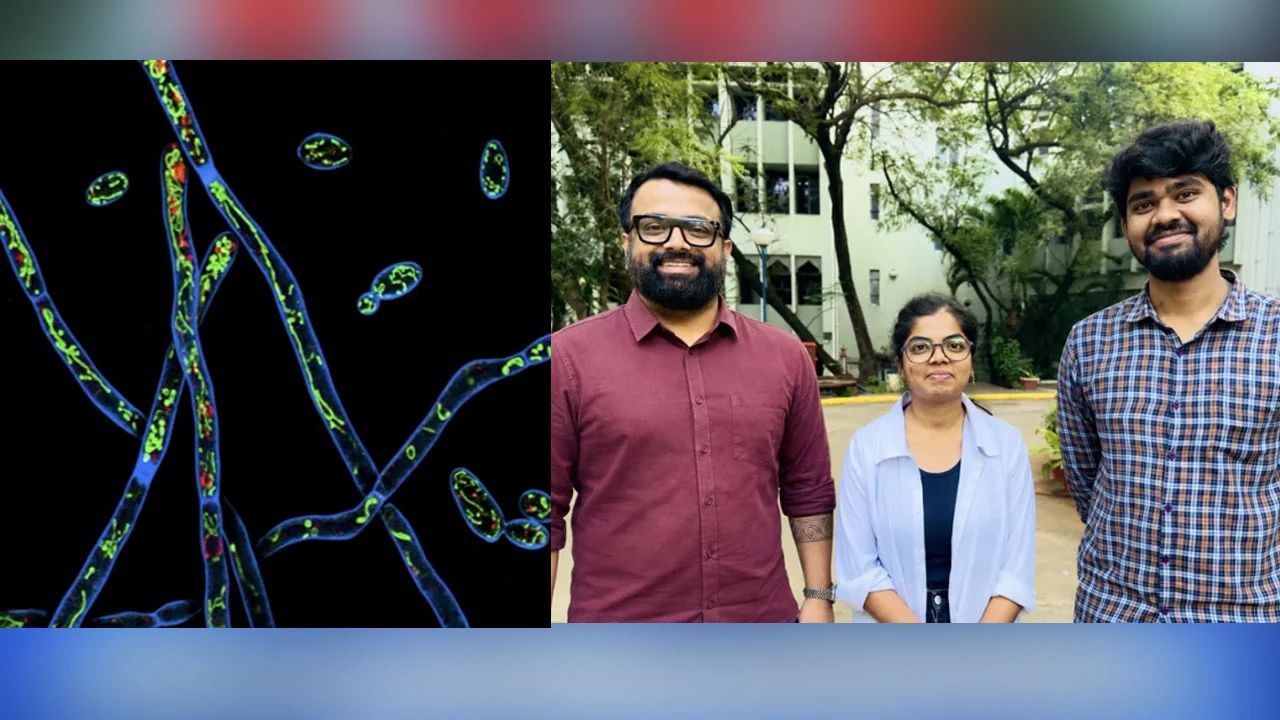
Scientists at the CSIR-Centre for Cellular and Molecular Biology (CCMB) in Hyderabad have identified a promising new strategy to combat fungal infections, by preventing disease-causing fungi from becoming invasive rather than killing them outright.
Most current antifungal drugs work by destroying fungal cells. Fungi can gradually develop resistance to these medicines, making infections increasingly difficult to treat, and the range of antifungal drugs available is limited.
A team led by Dr Sriram Varahan at CCMB studied Candida albicans, a fungus commonly found on human skin and in the body. While generally harmless, it can cause serious infections when it enters the bloodstream or internal organs.
The findings, published in the journal ACS Infectious Diseases, emerged from a collaboration between CSIR-CCMB and the BRIC-Translational Health Science and Technology Institute, according to a press release issued on Tuesday.
Blocking the shape change that makes the fungus dangerous
The researchers focused on morphogenesis, the process in which the fungus changes from a round-cell form into long, filament-like structures. That transformation allows the pathogen to evade the body's immune defences and spread more effectively within tissues.
Earlier studies had shown that glycolysis, the process through which cells metabolise sugar, plays a key role in controlling this shape change. Building on these findings, the team screened a library of small molecules that target glycolysis and identified two compounds capable of blocking the transformation.
Although the fungus continued to grow, it remained in its harmless rounded form. The researchers said the compounds could serve as anti-infective agents that reduce the fungus's ability to cause disease without necessarily eliminating it.
The study also identified pyruvate kinase, an enzyme involved in sugar metabolism, as a crucial regulator of fungal morphogenesis.
Existing drugs work better alongside the compounds
The researchers found that one of the compounds reduced biofilm formation, the protective layer that helps fungi resist treatment. The compound also increased the effectiveness of widely used antifungal drugs such as fluconazole and amphotericin B.
In a mouse model of systemic Candida infection, treatment with the lead compound significantly improved survival rates, highlighting its potential for future therapeutic development.
"Our findings suggest that fungal disease-associated behaviour can be targeted without necessarily stopping fungal growth," said Dhrumi Shah, first author of the study.
Not yet a medicine, but a new direction
The researchers stressed that the compounds are not yet approved medicines and require further testing for safety and effectiveness. They offer a fresh path forward against drug-resistant fungal strains rather than an established treatment.
"We need further studies to evaluate the compounds effectiveness and safety but by blocking the fungus from becoming invasive, they could complement existing treatments," said Varahan.
He added that the study does not establish the compounds as approved antifungal drugs, but identifies promising candidates and a potential strategy for further development.
Fungal infections are a growing concern worldwide, with drug resistance rising and few new antifungal drugs in development. A strategy that disarms the pathogen instead of killing it could put less pressure on fungi to evolve resistance, the researchers said.