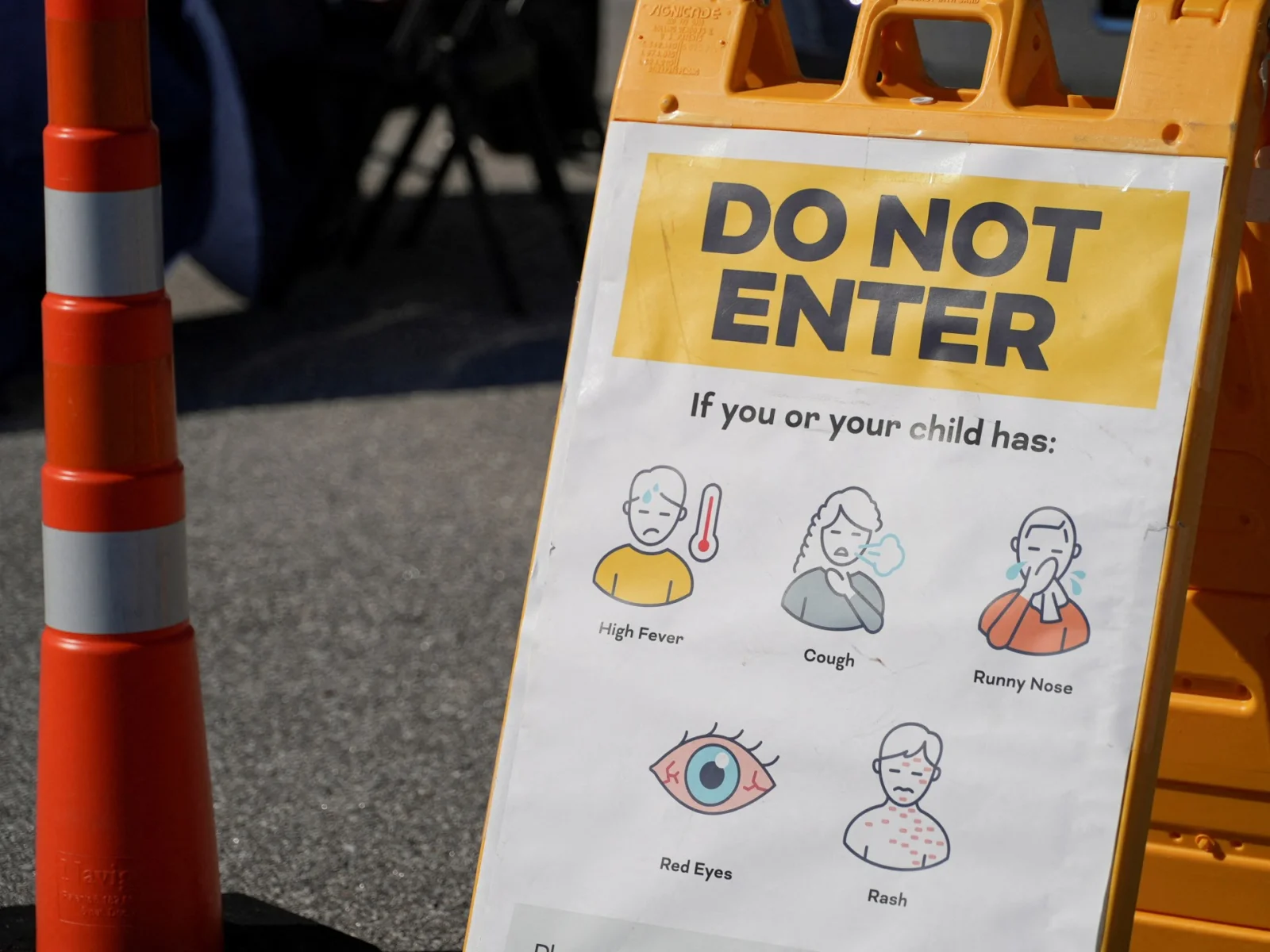
The United States has officially lost its measles elimination status after 26 years, the Pan American Health Organization (PAHO) said on Tuesday, reversing a public health achievement that dates back to 2000.
PAHO, the Americas arm of the World Health Organization, said the same strain of the measles virus had circulated continuously in the United States for more than 12 months, which under its rules ends the elimination designation. Bolivia and Mexico also lost their measles elimination status in the same decision.
"Endemic measles transmission has restarted in Bolivia, Mexico and the United States," PAHO director Jarbas Barbosa said at a press briefing on Tuesday, adding that an international panel of experts had recommended the status be withdrawn and that he had accepted the recommendation.
The decision follows a review of measles cases across all US states and territories between January 2025 and January 2026, based on epidemiological and laboratory evidence submitted by the US Centers for Disease Control and Prevention (CDC). The panel's decision was first reported last week, and PAHO made the formal announcement on Tuesday.
Largest outbreak in more than 30 years
The United States is battling the highest number of measles cases it has seen in more than three decades. As of November 12, the CDC had confirmed 5,412 measles cases in 45 states in 2026, more than double the 2,289 cases reported in 2025 and the highest annual tally since 1991.
About 7,700 people in the United States have been infected with measles since the start of 2025, and 13 have died, according to CDC figures. States have reported 10 measles-associated deaths in 2026, while the CDC's own count records six deaths.
The outbreaks began in Texas in January 2025 and spread across the country through the year. Pennsylvania has reported seven measles-associated deaths, the most of any state, while Wisconsin has reported two.
PAHO had already removed Canada's elimination status in November 2025 after three decades, as the vaccine-preventable disease continues to resurge across the Americas.
Vaccination, not the designation, protects people
In a joint statement issued on Tuesday, the CDC said it remained committed to stopping measles outbreaks and regaining the country's elimination status.
"The measles elimination designation is not what protects Americans. Vaccination does," CDC Director Erica Schwartz said in the statement.
Health officials say measles is one of the most contagious diseases known, and that high vaccination coverage is the only reliable way to stop its spread. The United States achieved elimination in 2000 after decades of widespread vaccination, in what the CDC called a major public health victory.
The loss of status is more than a label, Barbosa said, because it shows the country has lost the ability to control the spread of a disease it had once beaten.
A long road back to elimination
To regain its measles elimination status, the United States must submit a corrective action plan to PAHO outlining the strategies and measures it will implement, and then prove it is free of the virus for 12 months.
The US is expected to submit its plan in the coming weeks, said Dr Daniel Salas, executive manager of PAHO's Special Programme for Comprehensive Immunisation. PAHO said it would send its recommendations to the affected countries in the next few days.
Experts say it will take years for the United States to regain the status, because the country must first bring the current epidemic fully under control and then demonstrate a sustained period without endemic transmission.
The United States withdrew from the World Health Organization but remains a member of PAHO, its regional branch for the Americas, which continues to track infectious disease across the region.